

I give you my art from the heart, development by hand (!), insights about my research (PhD) in management and AI (before it became the gospel). Join the order!
Hamburg
Joined June 2008
- Tweets16.9K
- Following1.1K
- Followers1.3K
- Likes92.1K








Roman Glass retweeted

"Why is Houthi intelligence so effective? How do they manage to strike with such precision the moment their enemies assemble at their camps?"
Guess who established Yemen's pre-unification intelligence apparatus.
Roman Glass retweeted

As the possibility of machine consciousness is doing the rounds today, here is my PhD thesis, published last year, about that very topic.
TLDR: I am reasonably certain Claude isn't conscious.
dspace-prod.anu.edu.au/bitst…


Roman Glass retweeted

Déjà Vu Has a Stranger, Lesser-Known Opposite – And Scientists May Have Just Found Where It Starts | Fiona MacDonald, ScienceAlert
Try this: write your own name on a scrap of paper. Now write it again. And again – ten, twenty, thirty times in a row, as fast as you can manage.
Somewhere around the middle of that list, there's a decent chance something strange will happen.
The letters will start to look off.
The word will stop reading like a word at all – more like a string of marks someone is making you copy out for reasons you can no longer quite recall.
For a second or two, your own name might feel like it belongs to somebody else.
That flicker of weird unreality has a name, and it's the mirror image of a much more famous one.
We all know déjà vu – the eerie conviction that a brand-new moment has happened before.
The opposite of déjà vu gets far less attention: a familiar face, word, or place suddenly striking you as wrong, alien, or unreal, even though you know perfectly well it isn't.
Psychologists call it jamais vu – literally, "never seen."
It shows up in strange, small ways.
Musicians describe losing their place in a passage they've played hundreds of times. Some people report staring at a familiar face until it stops looking like anyone they know.
One of the scientists who's spent the most time studying it, neuropsychologist Akira O'Connor of the University of St Andrews, has had it happen mid-drive – forced to pull onto the hard shoulder because the pedals and steering wheel had briefly stopped feeling like his.
Unlike déjà vu, which most people experience at some point, jamais vu is rarer, and rarer still to talk about.
In 2023, a team including O'Connor and long-time collaborator Chris Moulin, a cognitive neuropsychologist at Université Grenoble Alpes, won an Ig Nobel Prize – the satirical award for research that "first makes people laugh, then makes them think".
The award was for figuring out how to trigger jamais vu on demand, in a lab, using nothing but a pen and paper.
Their method was almost embarrassingly simple.
Ninety-four undergraduates were asked to copy out the same word over and over – from common ones like "door" to obscure ones like "sward" – and stop whenever it started to feel wrong. (Sort of like the name experiment we did above).
About 70 percent did, typically after a minute or roughly 33 repetitions. A second version using only the word "the" got 55 percent of people stopping after just 27 repetitions.
"While writing in my exams, I write a word correctly like 'appetite', but I keep looking at the word over and over again because I have second thoughts that it might be wrong."
Their own descriptions of the moment are the best part of the published study:
"They lose their meaning the more you look at them."
"Seemed to lose control of hand."
"It doesn't seem right, almost looks like it's not really a word, but someone's tricked me into thinking it is."
One participant, describing the same feeling striking outside the lab, put it this way: "While writing in my exams, I write a word correctly like 'appetite', but I keep looking at the word over and over again because I have second thoughts that it might be wrong."
It's a feeling many people have brushed up against, even if they've never had a name for it.
The going explanation is something psychologists call satiation – the idea that a word, face, or object can be looked at, or thought about, so intensely and repetitively that the brain's representation of it temporarily overloads and stops making sense.
It's an old idea that had to be rediscovered.
O'Connor and Moulin spent close to 15 years developing what they thought was a novel experiment, only to later find that a psychologist named Margaret Floy Washburn – one of the field's most overlooked early figures – had already published something almost identical with a student named Elizabeth Severance in 1907, describing "the loss of associative power in words after long fixation".
Stare at a printed word for around three minutes, Severance and Washburn found, and it starts to come apart.
For a long time, satiation was assumed to be top-down – a glitch in the brain's language and meaning systems, high up the cognitive chain.
A 2024 study in Communications Biology complicates that picture considerably.
Researchers built a deep-learning model wired to mimic the visual cortex – the brain region that processes raw shapes, well before anything resembling 'meaning' enters the picture – then fed it repeating visual patterns and watched its ability to classify them over time.
Accuracy rose, peaked, and then – with no other changes – began to fall. Just from looking.
The team's conclusion: satiation may be, in their words, a 'bottom-up process' rooted in low-level visual processing, rather than something imposed from higher up.
If that holds up in living brains, it suggests jamais vu doesn't start with your brain losing faith in what a word means. It may start with your visual system quietly giving up on what a word even is.
We do know that not everyone is equally prone to it: a 2023 study found older adults are markedly less sensitive to satiation than younger ones.
Jamais vu has a darker cousin, too. In people with temporal lobe epilepsy, it can arrive as a seizure aura – an involuntary wave of unfamiliarity over a familiar room or face, often tangled with fear.
On the flipside, satiation may play a role in OCD.
Repeatedly checking something – a locked door, a stove dial – can trigger the same satiation effect that undoes a word on a page: the door stops looking locked, so you check again, and the checking is what keeps it from ever looking "locked enough."
Researchers are still only scratching the surface of it.
Exactly how satiation, the verbal transformation effect, and jamais vu connect – and whether the visual cortex finding changes how any of it should be treated in people who experience it as a symptom rather than a curiosity – remains genuinely open.
Which means, next time your own name looks like a stranger wrote it, you're not imagining things. You're just watching your brain do something scientists are still working out how to explain.
sciencealert.com/dj-vu-has-a…

Roman Glass retweeted
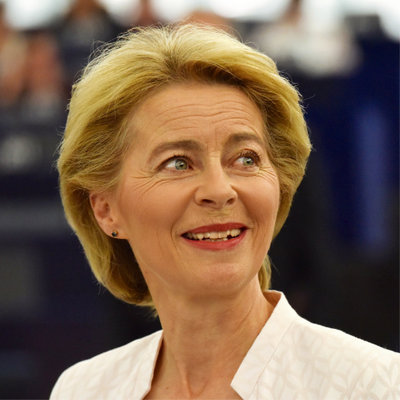
AI is the most important technology of our time.
Europe wants to become the first AI Continent.
For advanced healthcare, for the transport sector and so much more.
European AI Gigafactories will provide the necessary computing power to make this possible.
Together with our Member States, we are funding their construction with up to €10 billion, which are set to unlock at least €20 billion in private investements across the EU.
Together, we are building our technological sovereignty.
link.europa.eu/qGDhv3
Readers added context they thought people might want to know
Claiming Europe can become the "AI Continent" with a €10B public investment contrasts sharply with reality.
Big Tech alone has invested over $1 TRILLION in AI infrastructure since 2023 (around 100 times the EU's funding).
ft.com/content/dcf387…
Roman Glass retweeted

I am pleased to announce that a memorandum of understanding has been signed between the Republic of Kazakhstan and Network School.
Our new campus will become a haven for global techno-optimism, with expedited visas, streamlined redomiciliation, and active recruitment of talent.
Roman Glass retweeted

When I joined a US firm 12 years ago, I was convinced there was no need to learn their legacy software because it seemed so out-of-date.
So I pioneered new tools and made some innovative progress with that. Though it was lonely and there was slow adoption.
10 years later most were still using the old stuff. It was reliable and familiar. And most people don’t like taking risks. Even with tremendous upside.

My work at multinationals shows German firms with complex processes and strong digitization.
It was the US firms that use file-based integrations and outdated software.
Talent flows differ. Big German companies attract talent. In the US tech companies are the strange attractor, that have the state of the art systems. But the Fortune 500 firms keep legacy systems.


Roman Glass retweeted

USA, Staat der Extreme? Anscheinend investierte man dort viele Jahre lang anteilsmäßig deutlich weniger in "Medium Tech" als in Deutschland:

Roman Glass retweeted

Jürgen Habermas, whose work on communication, rationality and sociology made him one of the world’s most influential philosophers and a key intellectual figure in his native Germany, has died. He was 96. apnews.com/article/juergen-h…


Roman Glass retweeted

Deutsche Entwicklungshelfer können seit Wochen Rechnungen nicht zahlen. Der Grund: Probleme bei einer SAP-Umstellung der GIZ. Intern liegen die Nerven teils blank. Und das Ganze droht zum Sicherheitsproblem zu werden. Denn Geschäftspartner sind wütend.
welt.de/politik/deutschland/…

Roman Glass retweeted


Today in #PHY533 #QuantumComputing: We had a Qubit Touchdown tournament, with $20 of prize money at stake. In the finals, the students tied 5 touchdowns each and opted to split the money $10 each. Then we discussed the Bloch sphere, quantum gates, and complex numbers.

Roman Glass retweeted

Hat eigentlich schon jemand Trump gedroht, das wir der US-Army SAP abschalten, wenn er uns Microsoft Office wegnimmt?
Roman Glass retweeted

Quantum algorithms are getting better
“we show that 2048-bit RSA integers can be factored with less than one hundred thousand physical qubits, given a physical
error rate of 10−3, code cycle time of 1 µs and a reaction time of 10 µs.”
“We thereby demonstrate the feasibility of utility-scale quantum computing with an order of magnitude fewer physical qubits than has previously been believed necessary.”
Great work from the @IcebergQuantum team


Roman Glass retweeted

I don’t know what is the right PPP exchange rate to adjust GDP between Europe and the US, but this is the primary school lunch menu for January 2026 in La Roque-Gageac, France, population 439, median income 23,030€.


