

Advocate for people w/ALS & Amyloidosis (that killed Mom). FDA must do more for Rare Diseases. #DyingWaiting Dodgers Rams & Trojans Fan
Phoenix, Arizona, USA
Joined January 2020
- Tweets20.1K
- Following5.5K
- Followers4.3K
- Likes115K

Pinned Tweet
Most important quote:
“In #rarediseases... every case is just very different and you have to apply judgment.... the change that we need is not incremental. It is really big and will require a lot of effort and collaboration."
People with #ALS #Duchenne and #Huntingtons and #Ataxia need really big change NOW. We need @FDADrugs to act urgently to approve #NurOwn #deramiocel #AMT130 and #troriluzole.
#EndALS #EndDuchenne #EndHD #EndDMD

After a turbulent period at the FDA, CBER Director Karim Mikhail tells Fierce he's focused on restoring stability, rebuilding morale and rethinking rare disease regulation. "I'm not going to hide," he said. fiercebiotech.com/biotech/cb…

AZ Latina ☮️🌊🟦 retweeted

Current policy requires Veterans to live with ALS for 8 years for their spouses to get DIC benefits. Most people with ALS live only 2- 5 years; ALS Veterans' spouses usually don’t qualify.
Tell your lawmakers to cosponsor Justice for ALS Veterans: bit.ly/ALSvets
AZ Latina ☮️🌊🟦 retweeted

This is exactly what we need to see for rare disease! Patients are often facing a shortened life expectancy and deserve to have a place at the table in decisions over treatments that could give them a shot at longer lives.

FDA is transforming rare disease drug approvals. The new Rare Disease Framework Initiative will work to give patients more voice, give developers more clarity, and eliminate surprises in the regulatory process. bloomberg.com/news/articles/…

Grateful for @FDA_KyleD's leadership to transform regulatory policy. The #raredisease community desperately needs these regulations to be implemented ASAP.
But while we await this multi-year process, we need @FDADrugs to act wth existing regulatory flexibility to get drugs like #NurOwn, #deramiocel and #AMT130 to people with #ALS #Duchenne and #Huntingtons. People are #DyingWaiting.
#EndALS #EndHD #EndDMD #EndDuchenne

AEI senior fellow @ScottGottliebMD joins CNBC ‘Squawk Box’ to discuss the FDA’s new Rare Disease Framework Initiative and its guidance for developing drugs for unmet patient needs.
BRAVO! "The absence of treatment is not the absence of risk."
Only people living with terminal #rarediseases understand the irreparable harm that comes with the absence of treatment. That risk has long been missing from @FDA's risk-benefit calculus.
This brilliant response captures the message for the @FDA @FDADrugs and @FDA_KyleD to consider when evaluating therapies for #Huntingtons, #ALS, #Duchenne, #ataxia and so many other rare neuro diseases.
#EndALS #EndHD #EndDuchenne #DyingWaiting

@mahesh_shenai, Although we have never met, I addressed Dr. Mallika Mundkur at the @FDA's CNPV public meeting, whom I understand is your wife.
After reading nearly 20 of your posts concerning Huntington’s disease (HD) and AMT-130, I have to ask: Are you evaluating the totality of the evidence, or predominantly searching for reasons to discount it?
You repeatedly express hope that you will someday treat Huntington’s disease patients. But how much direct experience have you had with our community? Have you spent meaningful time with symptomatic patients across disease stages, witnessed their progressive neurological decline, or spoken with families about their risk tolerance?
I ask because I have.
HD has devastated three generations of my family. My grandmother died after years of suffering. Her chorea was so severe that she wore padded mittens for nearly four years to prevent her involuntary movements from dislodging her feeding tube.
I was nearly my daughter’s age when my grandmother developed symptoms. Now both my daughter and son are watching their grandfather and aunt experience the same disease. My father is in the middle stages of Huntington’s disease, while my aunt is further along in its devastating progression. As a mother, I live with the painful reality that my children may one day witness this same deterioration in me—or, even more heartbreaking, experience it themselves.
What I witnessed as a little girl, my children are witnessing today. Different generations, the same devastating cycle we are desperately trying to break.
The psychological consequences are equally profound. A fellow Michigander and HD advocate recently lost her father to suicide. Another Michigan chapter board member nearly lost her niece, and several HD friends have lost loved ones to suicide. Suicide risk among people with Huntington’s disease is substantially higher than in the general population.
Why? Imagine caring for someone you love while witnessing years of relentless neurological deterioration, all while knowing you could face the same fate. And even if you escape inheriting the mutation, you may carry the lifelong burden of survivor’s guilt as those you love continue to suffer. This is the profound, multigenerational trauma of Huntington’s disease.
More than 40,000 Americans live with HD, and over 200,000 are at risk. Those figures do not include the countless caregivers and relatives whose lives are also affected.
Your anecdote about a surgeon with another movement disorder reinventing his professional life was particularly revealing. When I read it, I immediately questioned your firsthand understanding of HD.
HD does not afford patients the luxury of simply reinventing their lives. It progressively damages the brain circuits responsible for cognition, judgment, behavior, movement, and independence. Symptoms can worsen over 10–25 years, gradually taking away the ability to work, communicate, maintain relationships, swallow, walk, talk, and care for oneself.
The ability to reinvent one's life requires precisely the neurological capacities HD progressively destroys. HD takes away the ability to meaningfully participate in life altogether.
The 2024 HD Symptoms and Treatment Impact Survey found that nearly three-quarters of respondents would accept treatment risks for five years without progression, while approximately 35% would accept risks for even three years.
Three more years raising children. Five more years working, communicating, remembering, and living independently. More birthdays, graduations, and time with family.
Then consider the economic consequences of inaction. Over 10–25 years, HD families will face neurologists, psychiatrists, hospitalizations, expensive chorea and psychiatric medications, physical and occupational therapy, speech and swallowing therapy, mobility equipment, home modifications, specialized residential care, and eventually around-the-clock assistance.
HD removes two people from the workforce: the patient and the family member who becomes their caregiver. Families lose wages, insurance benefits, retirement savings, and years of financial security. Many conventional care facilities lack the specialized neurological and behavioral resources required for HD, leaving families with limited options.
These costs accumulate across households, employers, Medicare, Medicaid, disability programs, and society.
When evaluating the risks and costs of treatment, why is the cost of inaction so often treated as though it were zero?
If AMT-130 meaningfully preserves independence, the potential economic and societal benefits deserve consideration.
You have described yourself as one of approximately 80 U.S. neurosurgeons with expertise relevant to this procedure. If AMT-130 does not meet your personal threshold for clinical adoption, that is your judgment. But your threshold is not the FDA's regulatory standard, nor should it determine the choices available to every informed patient and qualified physician.
Other neurosurgeons may recognize the broader significance of this investigational gene therapy. If its clinical benefits are confirmed, AMT-130 could help transform how we approach inherited neurodegenerative disorders beyond HD.
Regarding surgical risk, stereotactic neurosurgery has been performed in humans since 1947. Trial experience suggests the procedure has generally been tolerated.
But the question is not whether neurosurgery carries risk. It does. The question is whether those risks are acceptable relative to the potential benefit for patients facing a progressive, fatal disease without an approved disease-modifying treatment.
Your professional risks and our personal risks may look entirely different.
For you, this is a discussion of procedural complications, evidence, and professional responsibility. For us, it is progressive neurological deterioration, dependency, and premature death.
The reported AMT-130 findings, including favorable Total Functional Capacity trajectories compared with external controls, deserve serious consideration. TFC measures employment, financial management, domestic responsibilities, daily living, and care requirements. It measures the independence HD progressively takes away.
Scientific skepticism is essential, but it must be applied symmetrically.
Our community has also been wounded by regulatory rhetoric. @VPrasadMDMPH, your wife’s former boss, recently compared patients pursuing unproven treatments to a drowning person reaching for a blade. Regardless of the intended scientific warning, such language risks reducing informed, deeply personal benefit-risk decisions to acts of desperation, overlooking the devastating consequences patients and families face without treatment.
Our willingness to accept uncertainty is not desperation. It reflects a rational understanding of what HD will otherwise take from us.
Imagine watching someone you love progressively lose the ability to think, communicate, walk, swallow, or even recognize the people they love most. Now imagine living with the knowledge that the same devastating disease could one day affect you, your children, your siblings, or generations of your extended family. This is the reality of Huntington’s disease.
What would a few additional years together mean? What would you do to break the cycle?
I am not asking you to abandon scientific standards. I am asking you to recognize that the consequences of waiting are as real as the risks of treatment.
The absence of treatment is not the absence of risk. It is continued disease progression, escalating dependency, enormous psychological and economic suffering, and irreversible neurological loss.
You may see an investigational neurosurgical procedure that has not met your preferred evidentiary threshold. We see a potential opportunity to preserve the ability to think, communicate, work, love, and remain present in our families' lives.
We are asking for scientific judgment that accounts for the full reality of Huntington’s disease.
P.S. Go Blue! 〽️💙💛
#HuntingtonsDisease
#RareDisease

AZ Latina ☮️🌊🟦 retweeted
The Healthy Brains Act would help us better understand the root causes of ALS and other neurodegenerative diseases. Once passed, it will launch the first-ever research program on environmental risk factors.
Tell your legislators to support it → bit.ly/HBA-26
Amen!

The FDA has responded to the high level of advocacy in the rare disease community, particularly over the last 18 months. By “responded,” I mean actually “listened.”
Prasad, Makary, gone. Many statements and stories from FDA acknowledging the unique medical and human circumstances of rare diseases in children and adults. No more tacit Malthusian Arnold Ventures type attitude, please. Let’s go, FDA. @FDA @FDA_KyleD @HarrieScarlet @FDACDERDirector @FDACDERDirector @minoShah @cdoug @peter_mantas @RTWInstitute @mike98572986 @DrToonces @houmanhemmati @Elijahjstacy @SenRonJohnson @SenRickScott @FDACBER @pan_accindex @US_FDA @HHSGov @RaeTennant50178 @rareRevolutionM @checkorphan
@SecKennedy @laurencurehd @gillibrandny @SavingSadieRae @bradloncar @chrispiaOTM29 @CDCgov @LauraMclinn @dirod923 @RighttoTryGuy
@RainConsulting @FDA_KyleD @cyabydac1 @RareDiseases @RareAction @PatientWo @twotreesthere @CheckRare @DrOz @mike98572986
bloomberg.com/news/articles/…


AZ Latina ☮️🌊🟦 retweeted
The FDA today launched the Rare Disease Framework Initiative to reimagine rare disease drug development.
The new framework will adapt aspects of the agency’s long-standing approach designed for larger diseases. It will adopt an optimized, fit-for-purpose framework for rare disease drug development that considers the nuances of a specific disease, patient needs, product type, and attainable evidence. fda.gov/news-events/press-an…
FDA will host a meeting on Oct. 28 at the White Oak campus to collect feedback on the Rare Disease Framework Initiative from patients, disease advocates, industry, and other stakeholders. fda.gov/news-events/fda-meet…

AZ Latina ☮️🌊🟦 retweeted
In my short time on social media, I’ve seen other boys with Duchenne get the treatment my son doesn’t qualify for. Of course I’m happy for them, but my heart breaks too.
These boys are getting a little stronger. They aren’t losing muscle as fast. And their families have a hope mine has only dreamed of.
My son doesn’t qualify because he is in a wheelchair. That’s it. Not because his organs don’t work (they do). Not because a doctor has said it wouldn’t be good for him (she says quite the opposite). But because he is non ambulatory.
I’m not asking the @FDA to ignore science. Rather I’m asking them to put the choice in the hands of patients, families, and their medical teams.
Stop blocking treatments without a full medical workup of the patient. Leave that to the doctor to decide if they qualify.

AZ Latina ☮️🌊🟦 retweeted

If Russia laid down its arms, there would be peace. If Ukraine laid down its arms, there would be no Ukraine.
The fastest way to achieve peace is for Biden to stop pussyfooting around and give Ukraine the weapons it needs to take back its territory. Then Putin will negotiate.
AZ Latina ☮️🌊🟦 retweeted

I first met Amy Turner LaDow at HDSA’s EL-PFDD meeting with the FDA, where she courageously shared the heartbreaking story of losing her father to suicide and the staggering number of family members affected by Huntington’s disease.
Amy’s family has endured an unimaginable generational burden. Twenty-eight family members across four generations have been affected by HD. She has lost three sisters to the disease, another sister is living with it, and Amy herself is gene-positive.
You may remember Amy from her feature in The New York Times earlier this year, where she spoke about the FDA’s reversal regarding uniQure’s AMT-130 gene therapy and the hope that progress toward an approved treatment could bring families like hers.
A fellow Midwesterner, Amy serves as President of the HDSA Indiana Chapter, an Advocacy Leader, and State Captain. Despite decades of profound personal loss, she continues fighting for her siblings, nieces, nephews, future generations, and our entire HD community.
Huntington’s disease inflicts a uniquely devastating form of generational trauma. It is not enough that families must endure the progressive loss of those they love. Because HD is inherited, every child of an affected parent faces a 50% chance of inheriting the disease-causing gene. Families must navigate grief while confronting the possibility of the same fate for themselves, their children, and future generations. It is an extraordinary psychological burden layered upon an already devastating neurological disease.
Behind every HD diagnosis is an entire family living with its consequences. We cannot separate the urgency of finding effective treatments from the mental health suffering this disease inflicts.
Amy, thank you for sharing such a deeply personal story and for transforming unimaginable loss into unwavering advocacy. I am honored to stand alongside you in this fight.
💙💜
#HuntingtonsDisease #WorldMentalHealthDay #CureHD

AZ Latina ☮️🌊🟦 retweeted

#ALS - this terminal illness is physically, mentally and emotionally draining. The grief of not being able to do what your heart wants. The slow loss of independence. Not being able to fulfill dreams. Each day you lose more and more. The uncertainty weighs heavy.
AZ Latina ☮️🌊🟦 retweeted
"Today, Oct. 10, is the birthday of my son, Daniel Pearl, who would have been 63 years old today.
Lacking eloquent words to describe his life, his work, and his vision until his brutal murder in 2002, I am posting a poem I wrote in his memory, called 'The Lion's Den': ucla.in/4AT0ddW
followed by David Broza's recording, written for that poem: youtube.com/watch?v=L0yUsBN3…, ending with Benjamin Lapidus "Kaddish Para Daniel" open.spotify.com/track/2VOZK…"
Join me in Yitgadal V'Yitkadash Shmei Rabah


AZ Latina ☮️🌊🟦 retweeted

Tough to beat Quad Aces 😮💨
Yoshinobu Yamamoto, Tarik Skubal, Blake Snell and Tyler Glasnow will pitch next in the NLCS!

ALT Yoshinobu Yamamoto, Tarik Skubal, Blake Snell and Tyler Glasnow pose for a picture in the Dodgers clubhouse after winning the NLDS.
No child should have to crawl up stairs because his government won't give him access to a cell therapy that could help him retain function.
What are you waiting for @FDA?
@FDA_KyleD, Karim Mikhail and @FDADrugs please approve @capricor's #deramiocel with the same urgency as you did the pancreatic cancer drug that only extended survival by 6 months. The boys and young men with #Duchenne deserve the same chance at life.
#EndDMD #EndDuchenne #rarediseases
#MuscularDystrophy
@POTUS @SecKennedy @SenRonJohnson @SenRickScott @SenGillibrand @SenateAging
@LeaderJohnThune @SenatorWicker @GOPHELP @RandPaul @SenJohnBarrasso @HouseCommerce

I asked Ryu what it is like to live with #Duchenne and this is what he told me.
“At first it was really hard to understand my diagnosis, and some days it’s still really hard. But God helps me with it everyday.”
15 million American children like him are living with a rare disease. So many are waiting for the FDA approved treatments that could extend their lives or ease the symptoms of their disease. @FDA, what are you waiting for?
@FDA_KyleD @FDADrugs @SecKennedy @HHSGov @realDonaldTrump
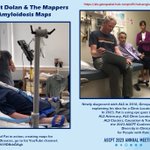
When you work in the #ALS community, every week brings news of another friend lost. Some weeks are especially hard. Today's news is unbearable. ALS took the life of an amazing man, my brilliant friend Pat Dolan (@Team_Thriving) the founder of #GeoALS. He was a hero with an eye gaze and a heart of gold.
When he was diagnosed with ALS in July of 2016, Pat was a geospatial engineer with @Esri. He channeled that expertise into leaving a lasting impact on the ALS community.
Pat was a problem-solver. When he was diagnosed, he didn't know about an ALS clinic in his own backyard at Loma Linda so he designed a mapping program that people with ALS could use to find the closest clinic, and eventually ALS clinical trial sites & a YELP-like clinic rating system.
Those first ideas morphed into an entire platform of using his mapping skills to help others.
We first met in 2020 when we were trying to pass the ACT FOR ALS. By that time, paralysis had consumed his body and Pat was using eye gaze to develop his maps. Pat developed legislative maps to track which Congressional members (including committee & caucus members) had sponsored that & other ALS-related bills. The community continued to use those maps to pass the reauthorization.
Although he wasn't a veteran, when Pat learned that #veterans were disproportionately affected by ALS, he not only mapped the prevalence of veterans with ALS in each Congressional district but he helped them find the closest VA clinic with neurologists who had ALS expertise in their VISNs.
We also shared a passion about finding the causes of #ALSclusters. He found out that I was doing research manually on CDC's websites so he instead built a platform to match those clusters with Superfund sites, CDC's toxic release inventory data, Ag data on pesticide & herbicide exposures. Pat soon took hs expertise to work together with CDC officials on the ALS Registry.
Pat also helped identify how minority communities had less access to ALS Centers of Excellence & clinical trials. When I was asked to speak at an ASCPT conference about lack of minority representation in #raredisease trials, I asked him if he could do the same for the #amyloidosis community -- the disease that killed my Mom. Two subtypes of amyloidosis disproportionately affect the Black (#ATTR V122i) and Mexican (#ALECT2) communities. Pat's maps helped expose a glaring discrepancy in access for people that need it most.
At that time, he was in the middle of a big project for the ALS community with an upcoming deadline. Pat didn't hesitate to help. Pat's intellect was only surpassed by the size of his heart.
At his side through all this work was his equally brilliant wife and caregiver MaraDolan (@farmstronginfo). My heart is broken for her.
Rest in peace warrior. We'll never forget you.
#rarediseases #Mapping #geospatial #patientadvocacy #neurology #neurologist #geomapping #ALSobit
@GreeleyTribune @iamalsorg

AZ Latina ☮️🌊🟦 retweeted

Great article on possible links to Parkinson's. "Most of the paraquat used in the United States is manufactured in Britain and China — where it cannot legally be used. But it’s fine to produce it there and sell it to America, where regulation is more lax."
nytimes.com/2025/09/08/opini…
