

ML researcher, loves geometry. Mostly on bluesky 🦋
Finslerian manifold
Joined November 2016
- Tweets269
- Following833
- Followers857
- Likes1.6K



Alison Pouplin retweeted

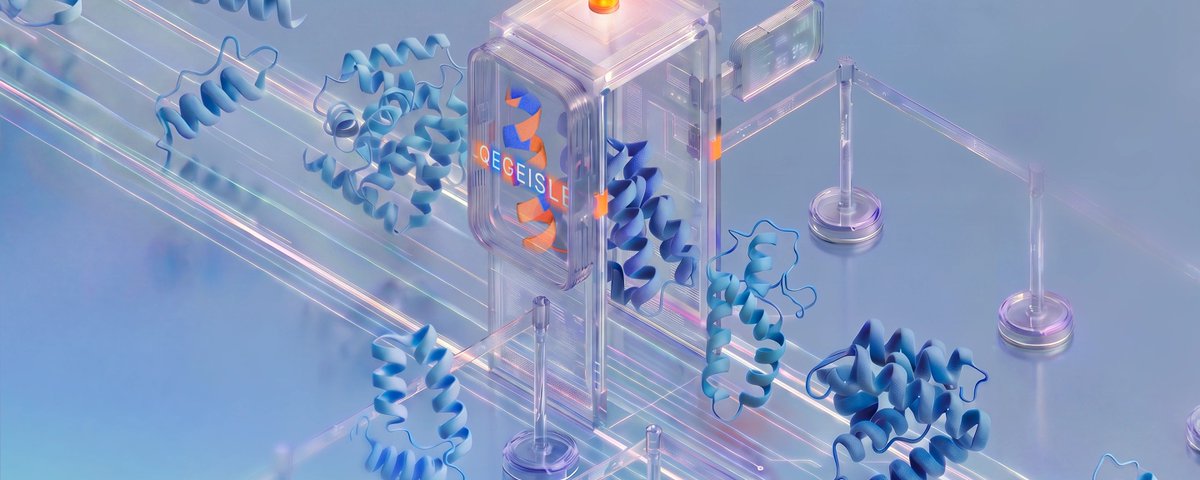
Avengers assemble: 1 year BakerLab + NVIDIA GenAIR = 🔥 rfd4-proteina.org
Presenting RFD4-Proteina, our latest protein design model, significantly better and faster than everything we compared against, both in silico and in the lab! 1/30


Alison Pouplin retweeted

Nabil is amazing, his positivity and mathematical prowess are exceptional. If you are looking for a PhD position at AMLab consider reaching out :)

Alison Pouplin retweeted

Hilbert Bregman Divergences and kernelized Bregman Divergences including deformed Maximum Mean Discrepancies
accepted to NeurIPS 2026 Workshop on Symmetry and Geometry in Neural Representations (NeurReps)
arxiv.org/abs/2604.24047
neurreps.org/

Alison Pouplin retweeted

Things are heating up on Terry Tao’s blog. In “If Math Is More Than Proof, We Need to Better Celebrate the Rest of It,” Grant Sanderson of @3blue1brown proposes “open exposition problems” -- rewarding the work of making math genuinely understandable.
terrytao.wordpress.com/2026/…

Alison Pouplin retweeted

Finally getting around to sharing our Riemannian Metric Matching paper! We presented it as an oral at ICML this summer, and it also received the Best Short Paper Award at the ICLR GRAM workshop 🎉


Alison Pouplin retweeted

The output of a research project is much more than the paper itself: it is the people who ask fundamental questions and gain intuition + process knowledge. This is very different from digesting textbook knowledge, which is usually a condensed product of decades of deep thinking.


Alison Pouplin retweeted

As we build the next generation of biomolecular OpenFold models, we are looking to increase our staffing on both the scientific and engineering fronts. I thought it'd be worthwhile to write down our philosophy and what we're offering, as well as what we're looking for. If this resonates with you, please apply at the link below.
What we're offering:
True open source: we are contractually obligated by our funding streams to open source everything we do, including our training code infrastructure and training data, which no other group in the space has done. All the results we publish are fully reproducible with no missing "training enhancements" that keep the recipes hidden. We will not become a startup and we will not pivot to an API model. We are doing this exclusively as a public good for the public commons. Of course, commercial companies can and are encouraged to build on top of our models, but you will be contributing to an ecosystem guaranteed to remain open source.
Long horizon research: because we are not trying to turn a profit or satisfy investment trends, we can focus on hard problems that commercial labs are disincentivized to tackle. Our research vision spans years, not months, even while we release updates on a quarterly basis. This translates to problems spanning conformational ensembles, novel regions of chemical space, antibodies, nucleic acids, IDRs, macromolecular machines, and more.
Reach for the frontier: the open source ecosystem currently lags the industrial frontier by a few years. We aim to eliminate this gap. The two big deltas are engineering expertise and compute resources. We're doing alright on the latter, but it is the former where we need to grow. To make this possible we offer salaries and compute resources competitive with industry.
We are looking primarily for types of people, or the intersection of the two!
Machine learning scientists and engineers: people who have built and trained models at scale, whose command of the literature extends to the latent developments in efficient diffusion, optimization, recurrence, and reasoning.
Bioinformaticians and computational biologists: people who can assemble large and complex heterogeneous datasets, who write efficient data pipelines, and who deeply understand the structural biology domain.
If this is of interest to your network, please reshare. And if this interests you directly, please apply using the link below. This link is a catch-all site and so the job description and salary range are generic. It's there to help us streamline collection and review of resumes.
opportunities.columbia.edu/j…

Alison Pouplin retweeted

Calling all experimental and computational neuroscientists!
Non-archival venue to submit your work and present your work to ML researchers in Sydney this year!


Alison Pouplin retweeted

📢 Reminder!
The submission deadline for NeurReps 2026 is 2 weeks away (Monday, August 24th) 📷
Come join us in Sydney! 🦘neurreps.org/#cfp
Alison Pouplin retweeted

Reviewers wanted for NeurReps 2026🦘, the NeurIPS workshop on Symmetry & Geometry in Neural Representations!
Seeking expertise in geometric deep learning, topology, computational neuroscience & mechanistic interpretability. Interested? Fill out the form: forms.gle/GvoqNNqfwQwvPYSN7

It’s out ☀️
Lots of love to @GRaM_org_, @erikjbekkers, @SharvVadgama, @sukjulian, @manuel_lecha, @HLawrenceCS and many others.
Congrats to all the authors :)

Volume 326
Proceedings of Second Workshop on Geometry-grounded Representation Learning and Generative Modeling
proceedings.mlr.press/v326/
Is now available on PMLR
When you are at ICML, be sure to chat with @olgazaghen — especially if you love geometry… Korea, or shuffling.
She is our Jacobi Queen 👑

Attending #ICML2026 in Seoul? 🇰🇷🤔
If it’s your first time in Korea, I’ve put together a (personal) mini-guide to help you navigate and make the most of your trip! 🗺️✨
Check it out here: olgatticus.github.io/blog/ko… 💗:)
Alison Pouplin retweeted
Equivariance is dead😢
Or is it?😈
Genie 3 is out! Our latest protein design model yields SoTA results for binder design & motif scaffolding, greatly improving on BindCraft & Proteina-Complexa
It does so using all-atom SE(3)-equivariance on a branched polymer representation👇

Alison Pouplin retweeted

I had an amazing time in Rio for #ICLR2026 🇧🇷
Thanks to everyone I met during conference for all the inspiring conversations, and to everyone who passed by our super pink poster 🌸🦄🫶🏻
And ofc to all my new and old friends for making it x10000 more fun 💗


Alison Pouplin retweeted

Results for the GRaM Competition are online. Congratulations to the winner and runners-up 🎉
🥇 github.com/julka01 with SmoothSplatNet
🥈 github.com/jorgesarrato with CDFDoubleGridNet
🥉 github.com/v3ctr0id with VRTEnsemble
gram-competition.github.io

Alison Pouplin retweeted

In the competition for the best #ICLR2026 poster with @olgazaghen @noranta4 I can probably claim the prize for the smallest one


Alison Pouplin retweeted

We're excited to kick off the GRaM Workshop tomorrow (Sunday) at 9am in Room 101A! Check out the paper search tool on our website, where you can find posters at the intersection of your interests :)
Full schedule + speakers at gram-workshop.github.io
#doitfortheGRaM
Alison Pouplin retweeted

Happening now :D #iclr2026 - Hall 3, poster 722
Come talk about variational flow matching over manifolds for proteins and materials
