Amy Kaplan retweeted

What if scientific AI could do more than explain a hypothesis?
@nvidia Nemotron for Science is designed to help researchers build agents that use specialized data and tools to tackle research tasks.
The key test will be whether scientists can verify the results. #AI #Science
👉 nvidianews.nvidia.com/news/n…

Amy Kaplan retweeted
Could quantum computing become more useful by working alongside supercomputers?
@nvidia @IBM and Fermilab plan to explore that with a codesign platform combining quantum processors and accelerated computing, alongside new work on error correction. #QuantumComputing #HPC #SC26
nvidianews.nvidia.com/news/n…

Amy Kaplan retweeted
What could researchers discover if AI agents could test more ideas through simulation?
NVIDIA says its Rubin HPC GPU is designed to accelerate science and engineering workloads that help agents evaluate hypotheses and refine designs.
#AI #SC26
👉 blogs.nvidia.com/blog/rubin-…

Amy Kaplan retweeted
$NVDA ANNOUNCES QUANTUM COMPUTING BREAKTHROUGH
Nvidia says its new CUDA-Q algorithm delivers up to 13,000x faster decoding for quantum error-correction research, reducing one computation from 12 weeks to just 45 minutes.
Alongside the breakthrough, Nvidia announced a collaboration with $IBM and Fermilab to develop a modular quantum-classical computing platform.
The project will connect Nvidia DGX B200 systems with IBM quantum computers, including those powered by its Nighthawk processor, to help researchers develop error-correction methods, explore scientific applications and investigate how multiple quantum processors can operate together.
Nvidia is also expanding Slurm to allow quantum processors to be scheduled alongside CPUs and GPUs within existing supercomputing environments.
Separately, IBM and RIKEN used Nvidia-powered systems to model molecular complexes containing up to 12,635 atoms, more than 40x the previous quantum-classical benchmark. The research is a finalist for the 2026 Gordon Bell Prize.
Together, these developments aim to accelerate progress toward practical, fault-tolerant quantum computing.

Amy Kaplan retweeted

Two weeks ago, I concluded over four years driving influencer & creator initiatives at @NVIDIA.
One thing I'm most grateful for is the community. The creators and developers that showed up with real curiosity, thoughtful questions, and candor always helped push myself and the team further. I've loved watching the different ways creators dig into AI and the NVIDIA stack while finding a way to explain in a way that lands with their audience.
To everyone I got to work with - creators, developers, researchers, NVIDIANs, agencies, partners, the lot - thank you for your trust, wisdom, and time. I'm leaving with relationships I'm proud of, and I'll be right there cheering as you keep building.
Special shoutout to my former teammates (tagging some here: @michaelcooper1, @jjang236, @aakap22, @marcpion, @jonah_chin) - it’s a privilege to work with them since they’re awesome at what they do.
If you're working on something cool or want to chat, feel free to send me a message!


Amy Kaplan retweeted

Watching my father-in-law battle Alzheimer’s felt like a silent, slow goodbye. Too many families know that pain.
That’s why NVIDIA’s work with C-BRAIN matters to me: 64 GPUs powering research, with BioNeMo and MONAI being incorporated to help scientists study biology and medical images.
Faster research isn’t a cure. But better tools give scientists more chances to find one.
This is AI for good. The goal is more time for families and faster cures!
blogs.nvidia.com/blog/open-s…

Having lost a loved one to dementia, this is personal. AI helping researchers move faster, where every advance matters. This is the AI progress I want to see: open, collaborative and focused on improving lives.
blogs.nvidia.com/blog/open-s…
1
102
Amy Kaplan retweeted

How open source AI helps doctors plan surgery on a child’s heart 🫀
At @ChildrensPhila (CHOP), Dr. Matthew Jolley’s team models a child’s heart in 3D before surgery: in one case, two repairs had failed until the model clarified the anatomy.
💡 TLDR: open-source AI turns a child’s heart scan into a 3D model in seconds instead of hours, and because the tools are open, other children’s hospitals can use them and build on them.
How a scan becomes a 3D heart 👇
➡️ The team trains AI on scans where researchers already marked the anatomy
➡️ On a new scan it predicts which regions belong to which heart structure (that’s segmentation)
➡️ It runs on MONAI, an open-source medical imaging framework NVIDIA co-founded
➡️ Doctors explore that anatomy in 3D and plan around one specific child’s heart
A modeling step that took a skilled researcher about four hours now finishes in seconds.
Why open source?
Kids’ heart defects are too rare and too varied for traditional device companies to invest in. No single company has built these tools, and no single hospital could build them alone. So Dr. Jolley’s lab built them with the open-source community and made them free to use and build on. Stanford and Boston Children’s now contribute tools alongside CHOP, and more than 20 children’s hospitals in the US run cardiac modeling programs. Each team builds on the others’ progress.
Next: CHOP is working with NVIDIA on physics simulations of how a device will deploy inside a specific child’s heart, with the long-term goal of bringing real-time simulations into clinical workflows.
📚Full story on the NVIDIA blog: blogs.nvidia.com/blog/childr…
Amy Kaplan retweeted

AI x bio has had an insane week.
> Radical Numerics: Omnii-1 designed phages given to a human patient
> Claude: 17 scorpion-toxin binders validated in the lab
> OpenAI: acquired Orchestra Bio
> OpenAI + PerturbAI: agents found new neurodegeneration leads in 32 minutes
> RFD4-Proteina: open programmable protein design model
> BioEmu2: new biomolecular simulation model
> Chaperone: agent framework connecting 50+ protein design tools
> Xaira: launched X-Scientist for agentic drug discovery
> Sophont: Holon-S1 predicts gene activity from pathology slides
> Boltz + BMS: bringing biomolecular models into pharma workflows
> Phylo + Bayer: deploying Biomni Lab across research teams
> Kevin Weil, ex-OpenAI, launches Warp Sciences: AI + robotic labs for drug discovery
> Carbon-X: open DNA model its team says matches GPT-6.1 Sol at ~1,000x lower cost
This is happening across the whole stack: models, protein design, simulation, agents, robotic labs, pathology, pharma workflows, and actual patient use. Bio is becoming computer.
Amy Kaplan retweeted

🚨 NVIDIA × Nobel laureate David Baker’s team just unveiled RFD4-Proteina.
Protein design is entering the reasoning era.
The model unifies proteins, noncanonical amino acids, sugars, DNA, and RNA in a shared latent space, enabling iterative refinement and inference-time search.
🧬 10.6% computational success rate on protein binder design benchmarks, with 42× the throughput of BindCraft.
Even more impressive: wet-lab validation includes a de novo designed enzyme for a key step in the synthesis of the HIV drug lenacapavir.
Code and model weights are now available.
🔗 rfd4-proteina.org/


Amy Kaplan retweeted

NVIDIA and @UWproteindesign introduce RFD4-Proteina, an open model to design proteins and refine candidates for lab testing, paving the way for new medicines and diagnostics.
Announced at GTC Berlin: nvda.ws/4ywvAss

Amy Kaplan retweeted

🔬 RFD4-Proteina joins Nemotron, Kumo, Cosmos, Alpamayo and Ising in today's NVIDIA open model release.

We’re releasing more open models to help teams across Europe build AI with their own data, on infrastructure they control.
Announced at GTC Berlin, the models help developers, researchers and enterprises build specialized AI agents, train robots, design proteins and develop quantum computers.
See what’s new: nvda.ws/4iwBMvF

Amy Kaplan retweeted
🧪 @UWproteindesign + 💚 NVIDIA = 👶 RFD4-Proteina
Proud parents ✨ Gifted kid
Amy Kaplan retweeted

$NVDA just ran a record 104-qubit fault-tolerant quantum simulation using 8,192 GPUs at Europe's JUPITER supercomputer validating a technique that could require 90% fewer physical qubits.
This comes as $GOOGL advances same approach on actual quantum hardware and Anthropic uses AI to design more efficient quantum circuits bringing hardware development, AI and classical simulation closer together.


Amy Kaplan retweeted

Pod up! Some good nuggets on lab revs, Nvidia supply unlock, AI capex & millions of Nvidia agents to employees as we enter the singularity & recursive flywheel starts spinning. 🧐🇺🇸🚀 @JensenHuang @BG2Pod
Big day for UK AI: NVIDIA commits $250M in compute over 5 years to advance agentic AI safety & security research and joins the Earthshot Prize to help scale climate solutions. Safer AI, real-world impact. 🇬🇧🌍
blogs.nvidia.com/blog/uk-eco…
#NVIDIA #ClimateTech #AI

3
66
Amy Kaplan retweeted

Just wrapped up an incredible conversation with @JensenHuang, CEO of @nvidia, here in Paris.
I've been looking forward to this one for a long time.
We went beyond the headlines and explored some of the biggest questions shaping the future of AI:
🔹 AI safety and security
🔹 Open vs. closed models and the economics of AI
🔹 The next AI breakthroughs and bottlenecks
🔹 The AI chip race: Microsoft's latest chip announcement, the evolving competitive landscape, and what comes next.

Ahead of NVIDIA’s GTC Berlin keynote on Oct. 21, France’s AI ecosystem is turning ambition into action. 🇫🇷 Discover how agentic computing is transforming space, finance, public services and scientific research. blogs.nvidia.com/blog/france…
#GTCBerlin #NVIDIA #FranceAI

1
61
Amy Kaplan retweeted

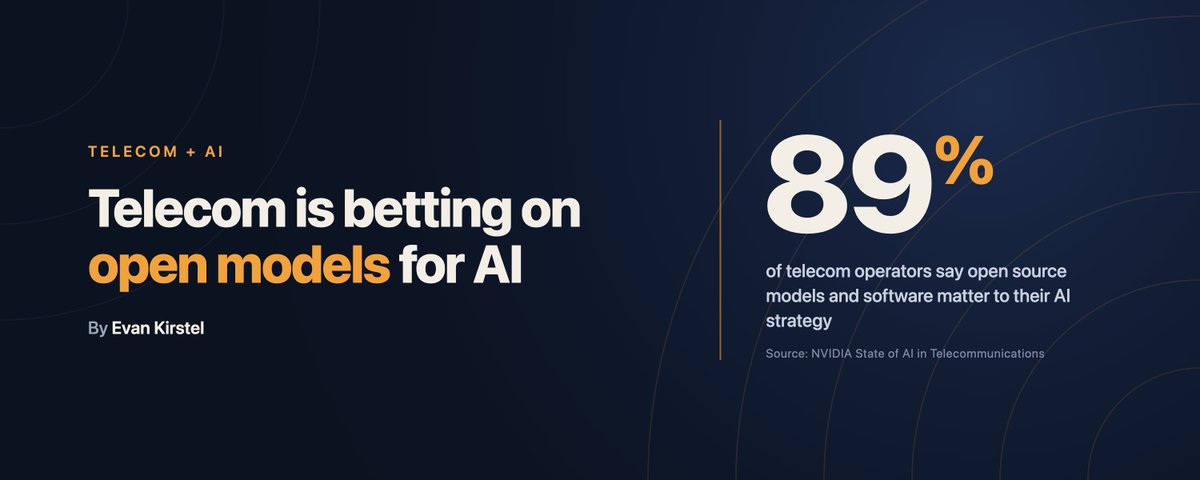
89% of telecom operators say open models matter to their AI strategy. My take on why, with @nvidia @NVIDIAAI @NVIDIAAIInfra @nvidianewsroom @NVIDIAGTC @SoftBank @indosat @AdaptKeyAI. Let's discuss on @techimpactTV #Telecom #AI