

Barone retweeted

A retired Warren Spector is unstoppable.


Warren Spector calls out massive EA exec pay amidst BioWare closure: 'Is there ANY accountability?' pcgamer.com/gaming-industry/…


Barone retweeted

When a Sega CD game does amazing affine transformations, do people credit the Genesis? No, they say the Sega CD did that. How about the 32X? They credit the 32X. Yet, when people put a super processor inside a cartridge, suddenly it's totally different. I don't get the hype...
Barone retweeted

These are still dual-core, 150Mhz chips, which while cheap today wouldn't have been realistic or affordable even in the Playstation 2 generation.
I do think it's neat to see, but it's still a mismatch in power once you have something like that in the cart.

This is a very common misconception!
There are many different types of Raspberry Pi products, and the cartridge I designed does not contain a "Raspberry Pi board."
When people hear "Raspberry Pi," they probably imagine a board running Linux, with a multi-GHz CPU, several gigabytes of DDR memory, and HDMI video output.
However, what I'm using is a chip called the RP2350B, which costs only about 200 yen. I use this chip in place of the ROM chips in the cartridge.
This allows me to build Famicom cartridges at a lower cost without relying on components such as 5V parallel ROM chips, which have become expensive and difficult to source.
The game itself still runs entirely on the Famicom's original 6502 CPU, and the PPU handles the video output.
The primary goal of this design is to reduce manufacturing costs and make mass production easier. As a secondary benefit, it also enables enhanced visual effects such as pseudo-3D graphics.
Barone retweeted

MD版パワードリフト Side Street(笑)
今回はYouTubeではなく、ここだけで。
~解説~
原曲はYM2151+SegaPCMですが、メガドライブなので当然音が足りません。
おまけに原曲はベースとギターがPCMです。
原曲と同じようにベースとギターをPCMで鳴らせばいいんですが、ゲームとして組み込まなければならず、容量をできるだけ小さくする必要がありました。
なので、ドラム以外は全てFM音源で鳴らす。
またドラムはPCM2chで抑えて、ハイハットはDCSGのノイズ。その他にボリューム違いの音などもできるだけ無くし、PCMの音数も極力少なくすることで容量を節約しました。
これだけ原曲と構成が違うと、別物になるかと思いましたが、意外にうまくいきました。
音数も効果音モードを使うことで全6音鳴らすことができています。
ちなみにベースもギターもPCMで作って本気モードで作れば軽く1曲1MBは超えそうですね…
Barone retweeted
While it looks impressive, it's not really original hardware if you're having to put 2 raspberry pi boards in the carts; they're not comparable to hardware of the period.
Barone retweeted
If I ever do YouTube again (or Rumble) in a serious way, I'll NOT make cliché clickbait videos like "THE FALL OF SEGA" and "WHAT COULD HAVE BEEN". Am I the only one who's bored of this crap? Where's the value in saying the same thing that's been said so many times before?
Barone retweeted

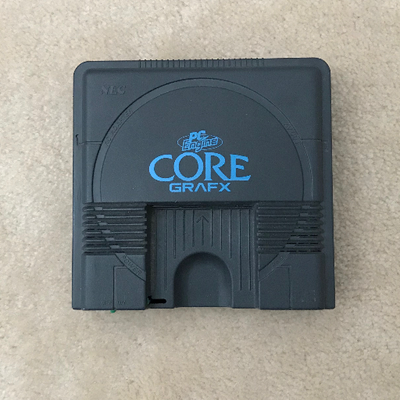
#PCエンジン #pcengine #tg16 #RETROGAMING #turbografx
This is something that gets overlooked.. realtime pixel based effects. The 4th gen systems were powerful enough to do this sort of thing, but most devs skipped over it. Kinda weird when you think about it, because it gives you additional graphic effects that you normally can't do with the hardware.. and computers at the time had to do in software.
What am I talking about here, specifically? This kind of vertical smearing effect. I mean, if it was a BG layer.. then it wouldn't be that surprising to see this. But this is sprite. And most sprites on these systems are vanilla in the effects capability - it's the BG that gets all the attention and hardware support. So.. line scrolls, warping, etc.. that stuff doesn't have native hardware support for sprites.
So what did they do here? The old manual method.. just do it yourself with manual writes to the sprite cells as pixel-based effects. Maybe it's because most developers on these consoles didn't come from the home computer side of things, but it's typically rare to see and tends to get overlooked when it is implemented on the PCE/MD/SFC.
I always thought these types of effects were cool and not nearly used as much as they should have (Rondo does a good amount of them - though mostly for death animations). You can do some pretty neat things with software pixel-based effects. You had enough cpu grunt in that 4th gen era to pull it off at a reasonable rate.


Barone retweeted

** SEGA GENESIS - RUFF-N-TUMBLE WIP PORT **
I love Ruff-n-Tumble on the Amiga, its got it all - Amazing pixel art / aggressive Soundtrack / Fun but tough Gameplay to boot.
One of the negatives is the frame rate however, it targets 25 FPS, this was not uncommon for Amiga games , its understandable with the 5 bitplanes the Amiga needed to shift around ( supporting 32 colors in the game area ) , the more bitplanes the more processing that's needed to move screen/objects around.
So part of me always wanted to rectify the frame rate - and that's how this port came about !
How does the port stack up ?
- 60 FPS solid gameplay . All movements / animations / timings were reworked from 25 FPS of the Amiga to 60 FPS for the MD port , so the port just has a smoother feel to it. This wasn't a given by any stretch and streaming animation was a key issue , the first stage uses up to 1450 tiles in its map tiles alone , so once you get HUD / Video Planes / Sprite List & Tiles for player and player attacks theres nothing left for enemy objects and thats just the first world. So both layers had to shift to streaming scrolling tech i developed for SOTA, so things are only in vram if they are onscreen presently , once that was in tile usage on the 1st world dropped to 850 tiles ( from 1450 ) for the backgrounds, this left some breathing room for Enemies and effects. However it still wasn't enough vram without a strong DMA object streaming system to send the tiles to VRAM , a lot of optimisation went into it so the game could run 60 FPS will full animation and nothing cut . If DMA streaming lagged that means the frame rate has to slow so i didn't want that .
- larger viewable game area on MD : 200 pixels high + 24 pixels high semi transparent HUD vs 192 pixels on Amiga + 24 solid HUD . This was almost by mistake , I thought the Amiga port was using a 256 high pixel screen size so I designed the engine to get close to that on MD with a transparent shadowed hud for contrast so you could see through it a little. The MDs (NTSC) display is 224 pixels high and the Amiga (PAL) is 256 pixels high. The hud is 24 lines high but it overlaps on the MD but with transparency you can still see critical things in the hud area . What i didn't realise at first was the Amiga uses less than its native resolution which was common to save ram / blitter time etc. So hence MD comes out favourably here still as it was a bit overdesigned !
- Despite having 8x less colors in the palette 512 MD vs 4096 Amiga , the MD does amazingly well here . I also had to put both background planes into Lock-Step so both are layered 1:1 , which gives up to 30 colors per tile on the MD rather than 15 so it compares well to the Amiga original which can have > 15 colors ( normal single plane tile limit on MD ) . I think from the side by side comparison you can see there isn't a noticeable quality drop and since it looked amazing in the first place I was very happy with the result !
- PCM SFX are in an all working with similar quality to the Amiga , XGM2 driver is in use so 13.3 khz PCM samples are used , which is more than enough to do a good replication of the Amiga SFX. FM / PSG soundtrack is been worked on currently hence video has no sound at present. I'm confident with the guy doing the music that its going to be a very close match to Amiga. On MD we can use 2 SFX channels where Amiga used 1 SFX channel and would play the last SFX over the top of the current SFX , the MD one moves low volume SFX to one channel and higher volume SFX to another channel and mixes it up a bit .
- Controls , there are some nice options to utilise the extra buttons on the MD controller and that should help the gameplay a bit also.
- Size, did i just throw ROM at this to make it work ? not really . The Amiga has 1024kb of combined chip ram required for the game , the MD has 136 kb of Ram/VRAM so i couldn't compress and decompress everything the amiga could but i got close . Without optimal music yet ( it should drop overall rom size ) we are about 19 mbit on MD vs the 14 mbit version of the Amiga . So whilst there's a bit more rom been used on MD its still well below the typcial 32 mbit rom that's in common use these days and a lot of efforts were made to minimise rom where possible . It started out prior to optimising rom heavily at 31 mbits of assets, i could have left it there but thats not how i do things haha.
- The game is fully complete apart from waiting on Music and a few playthroughs to catch remaining bugs.
- I did use some AI to aid this project , its 20 levels - its a lot of work and its not happening without some help , I used code from my SOTA / Parodius and EBH projects to make the engine , there has been no compromises . I think you can see some love went into this and the end result is what matters / garbage in is garbage out and vice versa.
- Game is written in C/SGDK for some parts ( cold pathes ) but a lot of custom assembly / custom modules are used for hot path also .
- Once music is done it will get a full release !
#Amiga #SegaGenesis #Megadrive #SGDK
Barone retweeted
Check this one out, it's fantastic!
The SNES scene is really shaping up.

Our Super NES Demo of Triple Impact is now available! Download it today and give it a try:
gangeekstyle.com/wp-content/…
#snes #RetroGame #gamedev


Most AI models would have at least objected decisions such as ripping off, mangling and squishing Wolverine animation frames.


Barone retweeted

Here's this week's #retrorgbweeklyroundup! Search any video or podcast app for #RetroRGB Weekly, or head to the main link: retrorgb.com/week537.html
.
#classicgaming #retrogaming #morph4k #pixelfxmorph #PokémonMini #MiSTerLaggy #fightbox #sonic #hdmisplitter