

Science Lead @temple. Biomed Scientist in #longevity. Mentor & Investor in Health startups. Past CTO @BioVivaScience, Researcher @CASMIORG, Founders Health.
Oxford, England
Joined May 2008
- Tweets10.2K
- Following2.8K
- Followers13.4K
- Likes7.5K




Pinned Tweet
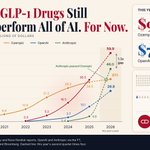
A weekly jab in the belly is generating more revenue than the entire AI industry.
Ozempic + Mounjaro: $71B in 2025.
OpenAI + Anthropic: $29B.
And they've barely started. ~2% of the 800 million eligible patients can currently access them.
h/t @DrSamuelBHume
🤖 Made with AI

Sources and Notes
1. THE TWO PAPERS
- Bilal, Mehra, Rogers and colleagues, Cleveland Clinic and IBM Research, Nature Communications, August 2026. An AI read 9,608 full overnight sleep studies from 9,297 sleep clinic patients and sorted them into five groups, then followed them in medical records. The image is their Figure 2A, CC BY 4.0, with plain labels and notes added.
doi.org/10.1038/s41467-026-7…
- Thapa, Mignot, Zou and colleagues, Stanford, Nature Medicine. SleepFM learned from about 585,000 hours of sleep recordings and was tested on 5,019 Stanford sleep clinic patients.
doi.org/10.1038/s41591-025-0…
- Rachel Rowe's Nature News and Views on both, 12 October 2026.
doi.org/10.1038/d41586-026-0…
· · · · ·
2. WHAT THE AI READ
- Cleveland used 14 channels from in-lab sleep studies, including brain waves (EEG), heart rhythm (ECG), oxygen, airflow and breathing effort. Blanking the brain-wave or heart channels moved many patients into different groups.
· · · · ·
3. THE CLEVELAND NUMBERS
- 7,043 patients and 544 deaths in the death analysis. After adjusting for age, sex, BMI, other illnesses and the breathing-pause count (apnea-hypopnea index), the highest-risk group died at 2.38 times the rate of the lowest (95% CI 1.73 to 3.28). Leaving out patients prescribed CPAP, it was 1.76 (1.12 to 2.78).
- Compared with people with normal counts, people with mild, moderate or severe apnea by that count didn't die more often. Mild (0.71) and moderate (0.52) groups had lower death rates, and severe was 0.77 (0.58 to 1.02).
- The 6 in 100 and 18 in 100 by year 6 are read from Figure 2A, whose curves are weighted so the groups match on age, sex and other factors. Median follow-up was 4.4 years, so the later part of the curves rests on fewer people.
- In the Sleep Heart Health Study, a community group recorded at home, the highest-risk group died at 1.58 times the rate (1.07 to 2.32).
· · · · ·
4. THE STANFORD NUMBERS
- The C-index asks, for two patients where one died sooner, how often the model ranks that one higher. 0.5 is a coin toss. SleepFM, which saw the night plus age and sex, scored 0.84 for death (0.81 to 0.87). A small neural network given only age, sex, BMI and race or ethnicity scored 0.79 (0.75 to 0.82).
- For stroke, the four-fact model scored about the same as SleepFM's 0.78 (Supplementary Figure 11).
· · · · ·
5. LIMITS
- Both main groups were people sent to sleep clinics, who are sicker than the general public. Neither paper tested a watch, ring or headband, and no trial has tested whether acting on these scores helps.

One night of sleep can hint at how long you might live.
When doctors suspect sleep apnea, they send you for a sleep test. You spend the night wired up in a clinic, and the main score is simple: how many times an hour you stop breathing.
At Cleveland Clinic, that number did not predict who was more likely to die. An AI that read the rest of the night did. Using brain waves, heartbeat and breathing, it sorted about 9,300 patients into five risk groups.
Six years later, about 18 in 100 in the highest-risk group had died, versus 6 in 100 in the lowest. Even among people the same age and weight, with the same number of breathing stops, the highest-risk group still died at more than twice the rate.
Age, sex and weight do much of the work. At Stanford, a similar AI looked at pairs of patients where one died first and picked the right one 84 times out of 100. A simple model using only age, sex, weight and race got 79.
Both studies looked at people referred to sleep clinics, and neither tested a smartwatch or ring.

Avi Roy retweeted

The wait is over.
Temple Batch 01 pre orders open November 1. Each @temple is hand-made to order and delivered to you within three months of your purchase.


If you wake up at night to pee and wonder when it is too much, one big Finnish survey puts the line at two.
This post has a million views and no numbers. In adults aged 18 to 79, one trip rarely bothered people, and quality of life dropped meaningfully from two on. Twice is common after 70. Roughly a third to over half of older adults do it, and up to about 1 in 6 adults aged 20 to 40.
Sometimes the cause is a blocked airway. In sleep apnea, breathing in against a closed throat is thought to stretch the heart, which releases a hormone that makes the kidneys pass more salt and water. In a small before-and-after study, 40 people with apnea who stuck with CPAP for three months went from 2.1 trips a night to 1.2.
Two or more trips is linked to about 27% higher risk of death in observational studies, or 1.6 extra deaths per 100 people over five years at 60. It is likely a marker of other illness.
If that is you, keep a three-day bladder diary for your doctor, and mention if you snore or wake up unrested.

86.7% skin cancer cure rate? Not quite. That headline comes from 13 spots out of 15 at one clinic in Boise, Idaho.
In a 2022 trial, two researchers there brushed vitamin C dissolved in DMSO, a solvent that soaks through skin, onto basal cell cancers twice a day. At 8 weeks, biopsies found no cancer left in 13 of 15, while a prescription cream cleared 8 of 14. In a second, not yet peer reviewed study, 15 of 27 squamous cell cancers confined to the skin's top layer cleared. That's the 56%.
Basal cell is the most common cancer in America, but it's also among the most curable. In a UK trial of 501 patients, surgery still worked for 98% of those followed to 5 years. With 15 and 14 spots, vitamin C's edge could be luck.
The squamous study only reports to 12 weeks, far too soon to know whether cancers come back. If a bigger trial holds up, a simple brush-on could spare some people surgery.
Until then, if you have a diagnosed spot, ask your dermatologist about treatments with at least 5 years of results.

Rectal cancer treatment can be brutal. But for a small group of patients, the FDA just approved a much lighter option.
Once rectal cancer has grown into nearby tissue or lymph nodes, treatment often means chemo, pelvic radiation and then surgery. Some people end up with a permanent bag.
In 2022, a Memorial Sloan Kettering team gave the immunotherapy drug Jemperli to 12 patients whose tumors had a DNA repair fault called mismatch repair deficiency. All 12 showed no sign of cancer when the team reported, and none needed surgery.
Yesterday, the @FDA approved Jemperli for the roughly 3% of these tumors with that fault. In a larger trial, about half to two-thirds of patients reached a year with no detectable cancer and no operation, depending on who was doing the counting.
The fault often runs in families. If you or a relative has colon or rectal cancer, ask whether the biopsy was tested for it.

FDA has granted accelerated approval of an immunotherapy for adults with previously untreated stage II or III locally advanced rectal cancer whose tumors are dMMR or MSI-H.
In a phase 2 study, almost three-fourths of patients did not need surgery, radiotherapy, or chemotherapy after a median follow-up of more than 2 years. For eligible patients, treatment may help avoid chemotherapy, radiation and surgery and their lasting effects.
This is the 11th approval under the Commissioner’s National Priority Voucher pilot program.

ALT Illustration showing two cells representing immunotherapy interacting, with a small inset image of a highlighted colon. Text states: "FDA grants accelerated approval of immunotherapy for certain patients with rectal cancer.
If antibiotics fail, the backup may be a virus. A San Francisco company says its AI redesigned one to kill bacteria, and a doctor gave it to a patient.
The virus is a phage. Felix d'Herelle named them in 1917, and doctors in Soviet Georgia kept using them after the West switched to antibiotics in the 1940s. The hard part is the match. Each phage kills only certain strains, so teams search collections for one that fits.
Radical Numerics says a cocktail of its redesigned phages killed the patient's resistant bacteria in the lab. A doctor then gave it under compassionate use, the route for unapproved treatments when options run out. The company calls it the first AI-designed virus given to a person.
It has not said whether the patient improved. If redesigned phages work in trials, treatment could be written for each infection instead of hunted for.

About 695,000 Americans died of heart disease last year. One of the biggest inherited cholesterol risks behind it is hiding in plain sight, on a blood test almost nobody gets.
It is Lp(a), a cholesterol particle your genes largely set for life. About 1 in 5 people have a high level, and genetic data suggest its heart risk, particle for particle, is nearly seven times that of LDL, the "bad cholesterol" on a routine blood test.
At the University of California's hospitals, only 0.3% of 5.6 million adults had it measured between 2012 and 2021. Even among patients with coronary heart disease, just 2.9% were tested.
Diet and exercise barely move it. The first big trial of a drug designed to lower it missed its main heart endpoint, with full results due on 7 November.
The current guidance is simple: test Lp(a) once in your life. If it is high, treat that as a warning to be much more aggressive about the risks you can change, especially LDL.


No drug is approved to lower Lp(a) yet. Five approved drugs lower it as a side effect, by about 20 to 37%, and the drugs built for it cut it by 70 to 100% in trials. I track them all in one place, with brand names for the US, UK, EU and India, and I'll update it after Novartis presents the full trial results on 7 November.
docs.google.com/spreadsheets…

If you've ever wondered whether eating less slows aging, eight people sealed inside a glass dome found out the hard way.
In 1991, they locked themselves into Biosphere 2—a three-acre greenhouse in the Arizona desert—for two years. The farm couldn't grow enough food, so they went hungry. Their doctor, Roy Walford, was a UCLA aging researcher who had made mice live up to 65% longer by underfeeding them, and he tracked everyone's blood. Within six months, cholesterol had fallen by a third, and blood pressure and blood sugar dropped too.
Almost no one can eat that little for years. Drugs like Ozempic and Mounjaro can do some of the work for you. People on Ozempic ate about a third less at an all-you-can-eat lunch, and Berkeley scientists showed this year that it slowed aging and extended life in old female mice, much as cutting calories does.
No trial has shown it slows aging in people yet. If one does, the oldest anti-aging result in the lab may come from a weekly dose of GLP-1.

In 1991 eight people were sealed inside three acres of glass in the Arizona desert to prove that a carefully designed farm could feed humans without the outside world, and the design had almost no room in it for animals. Two years later the only thing inside that had reliably fed them was a handful of goats.
Biosphere 2 cost a hundred and fifty million dollars. A rainforest, an ocean, a savannah and a farm under one roof, with the door welded shut for two years and nothing allowed in or out. The farm was the heart of it, and the farm was built on the modern idea: crops first, grown intensively, with livestock as an afterthought at the edges. A few African pygmy goats for milk, a flock of chickens, and four small feral pigs chosen because they could live on scraps.
The pigs did not last the year. In a sealed box short of calories a pig is a competitor, and the crew killed and ate them. The chickens barely laid, because the glass cut the light and there was nothing to feed them that would make an egg. That left the goats, and for two years the goats were the only source of fat in a world designed around vegetables.
The accounts the crew wrote afterwards return to them again and again. The half glass of milk a day was the thing people lived for. When a kid was born it was eaten and the meal was written up like a feast. The men lost nearly a fifth of their body weight, the women a tenth, and the food they dreamed of was never the sweet potatoes they had in abundance. It was the animal they had been given too few of.
The plants were also taking the air. To make the crops grow the soil had been enriched with compost, and the microbes in that soil breathed oxygen faster than anyone had calculated. The level fell from twenty-one per cent to fourteen, the air of a high mountain, until the crew could not climb a staircase without resting and oxygen had to be trucked in from outside. The design that put plants first had removed the thing everyone needed most.
Nobody has ever run the experiment the other way, with a herd at the centre and the crops at the edge. It would not have needed a doctor to explain the results.
They were given three acres and told to feed themselves on plants. They ate the pigs, worshipped the goats, and suffocated.

The hair-loss pill all over your feed is a 47-year-old blood pressure drug.
It is minoxidil, the stuff in Rogaine. Veradermics made a slow-release tablet, and in a trial of 536 men it grew about four times as much new hair as a placebo in six months. The catch: extra body hair in 9% of men on the higher dose.
Dermatologists already prescribe plain minoxidil tablets off-label, and no trial has put the new pill up against them. The women's trial reports next year.
If you are losing hair, ask your dermatologist about the old tablet now instead of waiting for the new one.
Pope Leo XIV has lung cancer, despite never smoking. That is not unusual. About 1 in 4 people with lung cancer worldwide never smoked, but US and UK screening usually focuses only on smokers.
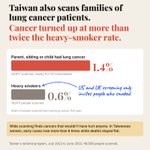
Taiwan goes further. It also scans people with a parent, sibling, or child who had lung cancer. In its first year, it found cancer in 1.4% of them, more than double the 0.6% seen in heavy smokers. Nearly 9 in 10 of those relatives were nonsmokers.
But broader screening has a cost. CT scans also catch cancers that would never have caused harm. In Taiwanese women, almost none of whom smoke, early lung cancers found rose more than sixfold from 2004 to 2018, while deaths stayed flat.
If your parents or siblings had lung cancer and you are over 50, ask your doctor whether a scan makes sense, even if you have never smoked.

1 in 8 cancers worldwide starts with a germ you can catch.
That matters because it creates a target years before a tumor exists. Six examples of how prevention and early action can blunt cancer risk:
1. HPV and cervical cancer. In England, girls offered the vaccine at 12 or 13 had 87% less cervical cancer in their twenties.
2. HPV and throat cancer. HPV causes more than 8 in 10 back-of-throat cancers in the US. In one survey, about 1 in 60 unvaccinated young adults carried vaccine strains in the mouth, versus about 1 in 900 vaccinated ones.
3. Hepatitis B and liver cancer. In a Chinese trial, newborns who got the shot had 72% less liver cancer over 37 years.
4. H. pylori and stomach cancer. A week of antibiotics cut stomach cancers from 23 to 10 in a Korean trial of 1,838 people with an affected close relative. In China, a 10-day course for infected villagers cut risk by 14% compared with a symptom pill.
5. Hepatitis C and liver cancer. In records of 22,500 US veterans, people cured with newer pills got liver cancer at about a quarter the rate of those still infected.
6. HIV. Starting HIV pills right away, rather than waiting, cut infection-linked cancers from 23 to 6 in a trial of 4,684 adults.
Epstein-Barr virus, which causes mono, has no vaccine yet. In Hong Kong, a blood test for its DNA found 71% of the nose cancers it detected at an early stage, versus 20% before screening.
The punchline: cancers that start with a germ can often be stopped by targeting the germ.
🤖 Made with AI

Sources and Notes
1. HOW MANY CANCERS START WITH A GERM
- de Martel and colleagues at the WHO cancer agency IARC (Lancet Glob Health, 2020): 2.2 million cancers in 2018 were caused by infections, led by H. pylori (810,000) and HPV.
doi.org/10.1016/S2214-109X(1…
- IARC's World Cancer Report: 2.2 million of 18 million new cases, about one eighth. With 17.0 million GLOBOCAN cases (no non-melanoma skin cancer), it's 13%.
ncbi.nlm.nih.gov/books/NBK60…
doi.org/10.3322/caac.21492
- The 2026 update (Rumgay and colleagues, Lancet Oncology, 2024 data): 2.3 million cases, 12%.
doi.org/10.1016/S1470-2045(2…
· · · · ·
2. HPV AND CERVICAL CANCER
- Falcaro and colleagues (Lancet, 2021), England's cancer registry, women 20 to 29: cervical cancer was 87% lower in girls offered the vaccine at 12 to 13. Funder: Cancer Research UK.
doi.org/10.1016/S0140-6736(2…
· · · · ·
3. HPV IN THE THROAT
- More than 80% of US oropharyngeal cancers (the back of the throat) are caused by HPV, per a 2022 National Cancer Institute review.
doi.org/10.1158/0008-5472.CA…
- A US survey of 2,627 adults aged 18 to 33 found vaccine-type oral HPV in 1.61% of the unvaccinated (about 1 in 60) and 0.11% of the vaccinated (about 1 in 900). That's infection, measured once, not cancer.
doi.org/10.1200/JCO.2017.75.…
· · · · ·
4. HEPATITIS B
- The Qidong trial in China randomized newborns by group to the vaccine or nothing. At 37 years (41,136 vaccinated, 41,730 controls), liver cancer hazard ratio was 0.28 (0.11 to 0.70): the 72%. Most controls got a catch-up shot at 10 to 14.
doi.org/10.1016/j.canlet.202…
doi.org/10.1371/journal.pmed…
· · · · ·
5. H. PYLORI
- Choi and colleagues (NEJM, 2020) randomized 1,838 infected Koreans whose parent, sibling or child had stomach cancer to 7 days of two antibiotics and an acid pill, or placebo. In the 1,676 analyzed over 9.2 years: 10 of 832 against 23 of 844.
doi.org/10.1056/NEJMoa190966…
- Linqu County, China: 180,284 villagers were breath-tested. The infected were randomized to 10 days of four drugs or a symptom pill. Over 11.8 years, hazard ratio 0.86 (0.74 to 0.99): the 14%.
doi.org/10.1038/s41591-024-0…
· · · · ·
6. HEPATITIS C
- Kanwal and colleagues (Gastroenterology, 2017), 22,500 US veterans on the newer pills: 0.90 liver cancers per 100 person-years if cured, 3.45 if not, about a quarter.
doi.org/10.1053/j.gastro.201…
· · · · ·
7. HIV
- START randomized 4,684 adults with healthy immune counts to start HIV pills now or wait. Infection-related cancers: 6 against 23 (hazard ratio 0.26). In the 9-year follow-up, after the waiting group was told to start pills in 2016, the gap narrowed (hazard ratio 0.53, 0.23 to 1.18).
doi.org/10.1093/cid/ciw621
doi.org/10.1186/s12885-026-1…
· · · · ·
8. EPSTEIN-BARR VIRUS
- Chan and colleagues (NEJM, 2017) tested 20,174 Hong Kong men aged 40 to 62. It found 34 nasopharyngeal cancers, 71% at stage I or II, against 20% in earlier unscreened patients.
doi.org/10.1056/NEJMoa170171…
· · · · ·
9. LIMITS
- Infection shares are modelled estimates. Each row is a different group, design and outcome, so the percentages can't be ranked. The England, veterans and Hong Kong rows aren't randomized.
- The EBV test found cancers earlier. It hasn't yet been shown to cut deaths. Not medical advice.
Update, six months on. This chart set the AI labs' year-end run rate against booked drug sales. On booked sales for both, 2025 was $71B for the drugs and $18B for OpenAI and Anthropic, and this year AI has nearly caught up. xitter.cf/agingroy/status/211183…

Six months on, a weekly shot that shrinks your jeans size still makes more money than @OpenAI and @AnthropicAI combined.
The shots are Ozempic and Mounjaro. Last year they brought in $71B, four times the $18B the two AI labs booked.
This year AI almost caught up, mostly because Anthropic’s sales exploded. It sold $11.5B from April to June alone, more than Ozempic, after $4.6B in all of 2025. The drugs still lead by about a third.
Only about 1 in 50 people with obesity worldwide takes one. Two obesity pills arrived this year: @novonordisk's Wegovy in January and @EliLillyandCo's Foundayo in April, both priced at $149 a month, and more than 30 new obesity drugs are in late-stage trials.
AI already has 1.2 billion weekly users. The drugs have barely started.

Drugs like Ozempic cut appetite. In trials, enjoyment, energy, and drive mostly held steady and sometimes rose.
In a 16-week study of 73 people on an older drug in the same family, milkshake ratings stayed about the same, even as the placebo group lost less weight.
Energy scores rose on top-dose Mounjaro in a trial of 2,539 adults, two-thirds women. In a 72-person depression trial, Ozempic's pill version made people more willing to put in effort for bigger rewards.
A few people did report feeling flat. A US clinic described three women on the top dose who lost interest in things they had enjoyed, but the feeling eased after the dose came down, and the weight stayed off.
So far, for most people, wanting less food has not meant wanting less of life.

Six months on, a weekly shot that shrinks your jeans size still makes more money than @OpenAI and @AnthropicAI combined.
The shots are Ozempic and Mounjaro. Last year they brought in $71B, four times the $18B the two AI labs booked.
This year AI almost caught up, mostly because Anthropic’s sales exploded. It sold $11.5B from April to June alone, more than Ozempic, after $4.6B in all of 2025. The drugs still lead by about a third.
Only about 1 in 50 people with obesity worldwide takes one. Two obesity pills arrived this year: @novonordisk's Wegovy in January and @EliLillyandCo's Foundayo in April, both priced at $149 a month, and more than 30 new obesity drugs are in late-stage trials.
AI already has 1.2 billion weekly users. The drugs have barely started.
A weekly jab in the belly is generating more revenue than the entire AI industry.
Ozempic + Mounjaro: $71B in 2025.
OpenAI + Anthropic: $29B.
And they've barely started. ~2% of the 800 million eligible patients can currently access them.
h/t @DrSamuelBHume
Sources and Notes
1. THE DRUGS
- Mounjaro and Zepbound are the same drug (tirzepatide, Eli Lilly) at doses for diabetes and for weight. Ozempic, Wegovy and the Rybelsus pill are all semaglutide (Novo Nordisk). Here "Mounjaro" and "Ozempic" mean each whole family.
- Lilly, 2025: $36.5B (Mounjaro $23.0B, Zepbound $13.5B).
investor.lilly.com/news-rele…
- Novo, 2025: DKK 228.3 billion, about $34.5B.
sec.gov/Archives/edgar/data/…
- Lilly, Q2 2026: $15.0B. That includes $98M from its new Foundayo pill, a different molecule.
investor.lilly.com/news-rele…
- Novo, Q2 2026: DKK 59.3 billion, about $9.3B, including the Wegovy pill.
sec.gov/Archives/edgar/data/…
· · · · ·
2. THE AI LABS
- OpenAI: $13.1B in 2025 (audited accounts, verified by the FT) and $6.7B in Q2 2026 (WSJ). It's private and doesn't publish its accounts.
wheresyoured.at/exclusive-op…
outlookbusiness.com/deeptech…
- Anthropic: $4.6B in 2025 (IPO prospectus, via Reuters) and more than $11.5B in Q2 2026 (Bloomberg).
officechai.com/ai/anthropics…
thenextweb.com/news/anthropi…
- Anthropic counts sales through cloud partners at full value. Counted OpenAI's way, it would be 6% to 10% lower, and still ahead of Ozempic.
axios.com/2026/09/03/anthrop…
· · · · ·
3. THE MATHS
- 2025: $71B for the drugs, $18B for the labs. 4 to 1.
- This year (second quarter times four): $97B against $73B. About 1.3 to 1.
- The drugs grew 37%. The labs grew 4 times. Anthropic alone grew 10 times.
- My April chart used the AI labs' year-end pace (their run-rate, $29B). This one uses what each company booked in the year.
· · · · ·
4. WHO USES THEM
- About 2% of people with obesity worldwide take a GLP-1 drug (JPMorgan). In the US it's about 6% of people with obesity or diabetes (Morgan Stanley).
jpmorgan.com/insights/global…
morganstanley.com/insights/a…
- More than 1 billion people live with obesity (WHO).
who.int/news-room/fact-sheet…
- ChatGPT has 1.2 billion weekly users (OpenAI, 29 September 2026). That's about 1 in 7 of the world's 8.2 billion people. Users are counted by account, so it's approximate.
openai.com/index/devday-2026…
population.un.org/wpp/
· · · · ·
5. WHAT'S NEXT
- More than 30 obesity drugs are in late-stage trials, by DelveInsight's count (15 October 2026). Many add other gut hormones (GIP, glucagon or amylin) to GLP-1.
globenewswire.com/news-relea…
- Two pills launched this year, the Wegovy pill (5 January) and Lilly's Foundayo (1 April), both from $149 a month.
globalnews.ca/news/11601218/…
investor.lilly.com/node/5411…
- OpenAI and Anthropic are valued at about $1.8 trillion together ($852B and $965B).
letsdatascience.com/news/ope…
orrick.com/en/News/2026/05/A…
- Lilly reports its third quarter on 29 October, Novo on 4 November.
lilly.gcs-web.com/news-relea…

A Chinese supplier sold black-market retatrutide with a certificate saying it was pure. One buyer paid for a germ test anyway. It failed.
That is the problem: a purity certificate only measures the main peptide. It does not show whether the vial is sterile or what else is in it. When an Australian lab tested 18 samples sold as retatrutide this year, just one matched its label.
To find out what is actually in a vial, buyers have to mail it to a lab, choose the tests and pay a few hundred dollars. Chainalysis estimates they now spend about $8 each on testing, so most test nothing.
Victoria's health department has tied six liver injuries to products labelled retatrutide, possibly from a contaminant, and the FDA holds two death reports, though neither proves the drug was to blame.
And retatrutide is not unique. Semaglutide, tanning peptides and dozens more are sold the same way, as "research use only" powder people inject at home. The FDA does not check any of it before sale.
Two people have died from black market "ret" peptides (retatrutide). Most of these unapproved drugs come from China. wsj.com/health/pharma/chines…
@kowsmann @saraashleyo
