

For those working a day job with a side thing and posting into the void. Here we shape the person shaping the business. You're going to make it.
Joined April 2023
- Tweets7.9K
- Following197
- Followers330
- Likes7.4K


Pinned Tweet
At 13, I survived a brain tumour.
I spent 10 years as an NHS radiotherapist, giving cancer patients the same kind of treatment that saved me.
Now I'm an ICF coach for founders. Entrepreneurship is self-development with a paycheck.
Want to talk it through? DM me BUILD.

2
7
186
Your followers don't have to buy from you.
And yet, you can still make money from them.
My followers are full of people who know me, who care for me and can vouch for me.
To most of them, I haven't sold a single thing.
But I've helped many of them in some way, completely for free.
I know them.
That's what makes them valuable. That's what actually gets me clients.
My first client came from word of mouth and so have the rest.
I started posting and my friends started sharing what I was doing in real life.
They told my story at dinner parties and in conversations.
Then the introductions came.
And I didn't have to 'sell' myself.
They had done all the selling for me.
All I had to do was understand what it was that I could help them with.
Then say 'yes' to taking a payment.
An online business just needs to provide a presence.
Somewhere people can find you, somewhere you can point people to, a way to contact you.
Tomorrow I'll show you how you already have the skills, qualities and connections you need to monetise your side hustle.
Follow and you'll have a place you can come to for help.

1
1
63
So you press post.
Eleven views.
Three of them are yours and a like from your mum.
Now wait 3 minutes till you refresh your feed again, then again after 6 then 9. All while, the number stays the same.
The algo must be broken right?
But your mate posts a video of their cat in a hat and it seems to work just fine.
I've been watching the same circus play out too. EVERY SINGLE DAY since leaving my job for something better.
And still, with fewer than 500 followers, I've got my income replaced and I'm paid to talk to people.
Would the algo matter if your money wasn't tied to it?
I'll tell you what really matters tomorrow and I'm asking as many people as I can to follow.

1
1
45
Ahaab Syed retweeted

Matt is right. And I want to add something he didn't cover. (from a builder to another)
Everything he describes is real. I use Opus 4.6 every single day (well Opus 4.5 before). I built a full business platform with it. Bookings, payments, messaging, video, voice transmissions. No dev team. No investors.
Weeks of work that would have taken a team months. I have paying users. I ship daily. What I'm sharing is lived experience, not theory. I'm building with it every day in multiple instances in my terminal.
Matt covered the ground. I want to cover the sky.
His advice on learning the tools is great. You do that you can only expand. Whether you're a lawyer, a designer, a coach, a parent with a side project. Learning the tools. Use them daily. He's right about all of it.
Fear is a valid response. Build from it and everything you build will carry it. The state you learn from is the state you'll operate from. It translates into everything you create.
It feels that his article gravitates more towards survival energy (I felt it in my body when reading this).
Adapt or die. Get ahead or get left behind.
The water is rising (it surely does). Position yourself. And at the same time that survival energy is what got most people stuck in the careers AI is now threatening to replace.
I've spent 25+ years as a music producer. I know what happens when technology replaces craft or creation. Digital killed tape. Streaming killed albums. AI is now writing music that sounds like it's been created by humans. I've watched literally three generations of technological disruption from inside my studio.
But every time the tools got smarter, the people who thrive are not the ones who adapt the fastest but the people who who know who they are before the tools arrive.
AI can write your emails. Build your app. Draft your legal stuff. Analyze your data. Even be your 24hours employee now with a MacMini. That's all true.
But AI cannot transmit your presence. It cannot hold space for another human being. It cannot create from a lived experience that took decades to feel into, encoded in your DNA.
Matt says AI now has something that feels like judgment. Like taste. I sat with that. And I think what AI has is really powerful and deep pattern recognition sophisticated enough to simulate taste. The difference between simulated taste and actual taste is the difference between a technically perfect master and the rough demo that gives you goosebumps.
I've killed too many demos chasing technical perfection to confuse the two.
The question everyone is asking: How do I stay relevant when AI can do my job?
Different question:
Who am I being when the tools do everything (for me)?
Because that's where this is clearly going. And the answer to that question doesn't come from spending an hour a day with AI. It comes from spending an hour a day with yourself.
Your body emits a measurable electromagnetic field. Other nervous systems read that field before language can communicate anything.
When you're in a state of genuine presence you synchronize your brainwaves at 7.8 to 8 Hz, matching the Schumann resonance of the Earth itself. Both brain hemispheres balanced. Your field becomes coherent. And the people around you respond accordingly. No need to actually even exchange words.
This is the thing AI cannot replicate because it's biological. Your body carries a signal. Other bodies read that signal faster than any language model processes text. When you sit with a client, a patient, a student, a friend, your kids, your partner and something shifts in the room before either of you speaks, that's your field doing what no training will ever be able to reproduce.
Matt's entire piece operates within the paradigm that intelligence is the scarce resource. That whoever has the most cognitive power wins.
I'd love to offer a different angle to this: What if intelligence was never a scarce resource? What if it has always been presence and coherence? The ability to show up so fully that another human being trusts you before you've finished your first sentence. That has always been rare. And maybe it's becoming even more valuable as we continue to race towards further expansion.
AI is making intelligence free. Epic! That means the premium shifts permanently to the one thing that can't be downloaded, outputted, automated: Who you are when you're fully here.
Operating from presence vs operating from survival.
You can call it whatever you want. Flow. Coherence. Groundedness. The label doesn't matter at all. The felt experience does.
You know the difference in your own body between creating from panic (or fear, lack) and creating from clarity and giving.
Everything you build carries the energy it was built from. Your clients feel it. Your audience feels it. Your team feels it. Your kids feel it. And your partner feels it as well. Immediately!
So AI amplifies whichever state you're in.
I'm not anti-AI. I built my entire ecosystem of frequency-attuned apps with it. I use it to create, think, build, and ship faster than I ever could alone.
AI amplifies whatever state you operate from. If you operate from survival, AI makes you a faster, more efficient survivor lol.
If you operate from presence, AI becomes the most precise instrument or co-creator you've ever played with.
The biggest risk right now is that millions of people read Matt's piece, feel the fear in their chest, stomach, wherever contraction lives, and sprint toward becoming better AI operators from a place of panic.
The people who will thrive are the ones where their nervous system stays regulated while the ground is shaking. Speed is secondary.
Real people who know what they stand for before the algorithm tells them what to optimize.
Real people who can sit with another human being and create something no model can replicate: Real trust, recognition, and presence.
Whether you have five years or five months, the principle is the same. What you build from panic will need rebuilding. What you build from clarity compounds.
AI is the most powerful amplifier ever built.
The question is what signal you're feeding it.
My invitation: Tune yourself first. Then build.

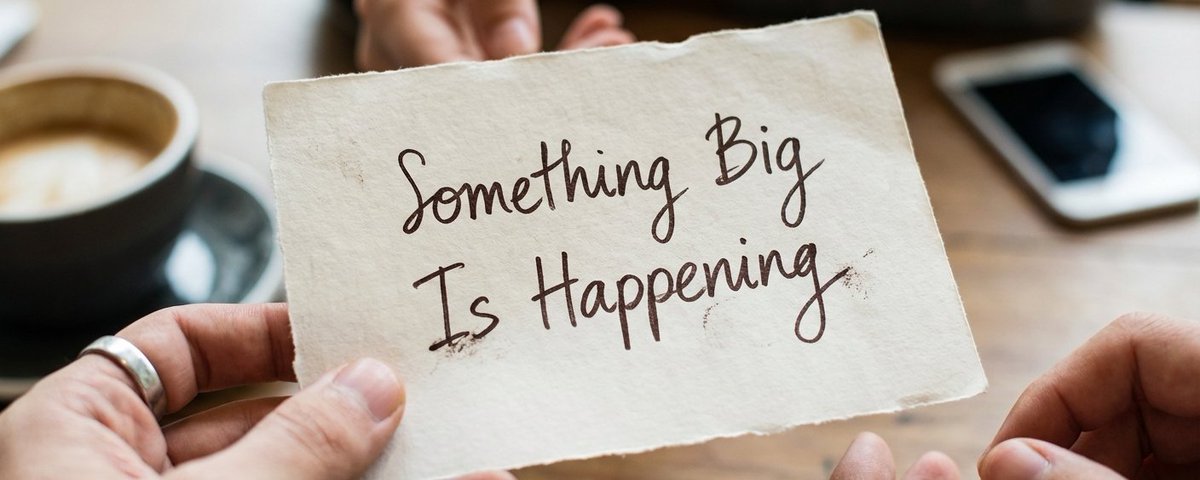
"Always believe something wonderful is about to happen" 😌 – at Hounslow, London

When Vinnie Jones returned to Watford after signing for Chelsea, he had a couple of football mates staying with him.
One day, one of them looked out of the window and spotted a woman roller-skating outside.
“Wahey, look at this!”
Jones looked out.
“Oh my God! I can’t believe it!”
It was Tanya.
They had first met at 12, briefly dated as teenagers, then gone their separate ways. Now, years later, Jones had moved back into his old house, and Tanya was living next-door-but-one. She was going through a divorce.
“Do I believe in fate? It’s all very spooky.”
By then, Jones was known as one of English football’s hardest men. But Tanya had survived something extraordinary. At 21, after giving birth to her daughter Kaley, her heart failed, and she needed an emergency transplant. She would live with the consequences for the rest of her life.
When Jones decided to marry her, he spoke to her father.
“You know what you’re taking on?”
“Yeah, I do know and I’m going to take care of her and look after her.”
But Jones never believed he was rescuing Tanya.
“I feel she was saved to save me, and I was meant to look after her.”
They married in 1994. Jones later adopted Kaley, and the couple built a life together, eventually settling in Los Angeles as he moved from football into acting.
Tanya survived cervical cancer twice, and both of them tried to live without letting their health problems define them.
“We haven’t got time to think about ‘what if’ and ‘what about’. We make the most of life.”
“We’ve been through a lot, so I just want her to enjoy life and for us to grow old together.”
Then, in 2013, both were diagnosed with melanoma. Jones had a malignant growth removed beneath his eye and recovered. Tanya’s cancer kept returning.
For six years, he stood beside her through hospital visits and treatments, keeping the promise he had made to her father.
On Christmas Eve 2018, they learned the cancer had spread to Tanya’s brain.
“That was the first time we broke down together.”
Even then, Tanya wanted to make Christmas special for everyone.
“She wanted to get through the Christmas.”
Jones later reflected:
“I think she knew she wasn’t going to make next Christmas.”
By July 2019, doctors told him there were no treatments left.
“In that last week of her life when the doctors said there were no more treatments, I never told her she was dying.”
“We never spoke of that, I didn’t want her to know.”
He slept beside her every night in hospital while Kaley visited every morning.
“She has never ever slept one night in hospital without me there. I have always been by her side.”
Eventually, Jones brought Tanya home so she could spend her final days surrounded by family.
On the morning of July 6, he heard her breathing change. Everyone gathered around her bed.
“We knew it was the end, we were cuddling her.”
“I kissed her a lot and told her I loved her. I kept saying, ‘I love you, I love you’.”
Tanya died at 53, with Jones and her family beside her, after 25 years of marriage.
After her death, Jones discovered a card she had left with her diaries.
On the front, it read:
“Always believe something wonderful is about to happen.”
Inside, Tanya had written:
“To my love Vin, something wonderful happens to me every day. It’s being with you.”
“You are my morning sunshine the moment I wake. All my love, Tanya.”
Jones broke down when he read it.
“I broke down when I read it because I loved her like that too.”
He still carries the card everywhere.
“Now I take it everywhere I go so Tanya is always with me.”
The world knew Vinnie Jones as a football hardman. Tanya knew the boy he had been since he was 12.
When people asked how their marriage lasted through so much, his answer was simple:
“People say, how did it last?”
“And I say because it was real, true love.”
“I think we found true love.” ❤️

41
Ahaab Syed retweeted

The secret to success according to John McAfee:
1) Success means "floating to the top" – not grinding, struggling, or fighting your way there
2) Human beings are like balloons tethered to the bottom of the ocean by negative emotions: fear, resentment, anger, disappointment.
3) Hard work alone won’t free you if those anchors are still in place.
4) His fix: get over things immediately. If you can’t move on in 10 seconds, you’re lost, because it’s already in the past. It doesn’t exist.
5) Once you cut the emotional anchors, you stop struggling and naturally rise.
I’ve had people steal tens of thousands from me. Betray me.
I just let it go.
And somehow, I keep floating higher and higher.
Lesson.
teapaw.org/officialmcafee/status/…

Everyone asks:
"What is the secret to success?"
I'm tired of ignoring you.
Here's the answer:
@theemrsmcafee
Ahaab Syed retweeted

Randomly feeling grateful to be on arguably the best team imaginable:
- @danwestworld
- @ahaabsyed
- @KasparsBarkans
- Claude, lol
Find long-term people who are willing to do long-term things and happily eat shit with you along the way.
Thank you, lads.
Ahaab Syed retweeted
Your next client is staring you right in the face.
I have a client who sells AI automations.
$10k-$30k offer.
Told her to offer a free system installation to get her foot in the door.
"Got anyone in mind?" I asked.
"Yeah, my friend Matt. Does $1M/year"
She offered it to him the next day.
1 week later? They were onboarded.
Obvious lesson.
I quit my job. My boss said, "You can come back."
I was still terrified.
10 years in the NHS. A place to come back to. My home rented out for £1,200 a month.
Every safety net you could ask for. The jump still felt scary.
Safe doesn't mean easy.
The fear doesn't go away because you have a plan. You go anyway.
I wanted to travel and be closer to my family. That was worth more than being comfortable.
Would you ask your boss for a sabbatical? 👇 – at Hounslow, London

1
3
105
Turns out I still don't trust myself enough yet.
Otherwise, would I really use AI to write my content?
Yesterday, for what seemed like an eternity, I'd been trying to get AI to write my content in just the right way, and I kept running into frustration.
I kept prompting, kept iterating, kept refining... Kept missing the mark.
Today I saw a tweet about 'doing the hard thing', and I saw it there and then; doing the hard thing is EXACTLY what I'd been avoiding.
I wanted to express my ideas without sitting down and wrestling with them first.
It's funny.
I'm an ICF-certified coach.
I've made a living out of sitting with clients and doing the hard stuff.
When I help clients build their own businesses, sometimes we'll spend hours on the smallest part of their offer.
I don't let them avoid it, so why was I allowing it for myself?
You must also be the fullest example of what you teach.
So here's how we do it in the sessions, and here's how I'll be writing these posts from now on:
1. Start with a blank page and some questions that prompt you towards the final outcome.
2. Write whatever comes to your mind.
3. Stay with each prompt until you have 5 ideas, or 'beats' to your answer; it might take longer than you think.
4. Ask yourself if there's anything else you want to add.
5. Cut away anything that isn't necessary.
Do these 5, and you'll see that clarity and creativity really come from trust.
Trust that you can persevere through the hard task ahead.
Trust that there's value hidden in the mess.
Trust that it will become clear in the end.
I'm writing my next 100 posts without AI, and I'm challenging everyone who reads this to do the same.
Why does that feel so freeing?

1
7
154
I'm getting the urge to write my next 100 posts without AI.
Who's with me? 👀 – at Hounslow, London
1
2
84
When did the job you loved stop stretching you?
I had my answer.
When I first started my career as a radiotherapist, it stretched me. It challenged me in all the right ways. I was dedicated to rising up and meeting that.
At some point over the years, the same role stopped inspiring me, and started limiting me instead.
That was the inflection point.
It went from exciting to a grind.
Groundhog Day.
That had to change.
66
Charging by the hour was never going to free me.
So what do you trade your hourly rate for?
I rebuilt it as one fourteen hundred pounds a month package.
That single move meant that just one client replaced the income I earned from my job at the time.
That's when freedom REALLY became a possibility.
1
1
58
A lot of the pressure of starting your own business comes from trying to do it all alone.
Myself included.
Building with a team of people who understand the journey that you're on is actually *priceless*

Being unhappy at work is one thing. Knowing you need to leave but having no backup plan is a completely different kind of pressure.
43
I've never told anyone this.
But I didn't need to leave.
Nothing was wrong. Everything was fine, and it was always going to be fine.
It's much harder to leave something that's just ok. Broken gives you a reason at least.
But if you want more, that's enough.
51
How didn't I see this before?
I had to apply for annual leave to go and see my mum, who wasn't well.
That had always seemed normal. Then it suddenly seemed completely absurd that I was asking permission.
The moment I noticed what I was asking for, I knew I had to leave.
53
I knew that I had to leave.
I quit a job that I loved and left the city I called home.
Some new technology was being rolled out in the department.
New techniques.
But I could see the same patterns playing out.
The same mistakes being made again.
And the thought that came to me was:
I don't actually want to do this again.
Soon after, I had to apply for annual leave to go and see my mum, who wasn't well.
That had always seemed so normal.
Then it suddenly seemed completely absurd that I was asking permission.
I thought safety and security were the key to happiness. It wasn't true.
It gave me comfort and stability. It didn't give me fulfilment, even though I loved the job for a time.
What it actually gave me was a platform to start asking for more than just surviving.
It opened the door to asking: well, what do I want? Before I had the safety, I just wanted the safety.
So the first step wasn't a plan. It was a conversation.
I went and talked to my managers and told them where I was at.
Then, one by one, the barriers dropped.
Work wouldn't let me leave?
They offered a sabbatical.
What about the apartment?
One meeting, six weeks to rent it out.
And then the only thing standing between me and this new life was me.
That's where things got real.
So the question isn't whether you can leave.
It's whether you'll ask for what you actually want.

2
65