
Map showing the geographical distribution of Neolithic and Copper Age ditched enclosures in southern Iberia, c. 4th–3rd millennia BC.
Compared to earlier enclosures in eastern Spain (6th–5th m. BC), these southern ditches are usually much larger and enclose residential areas.

1
3
148


How do we know what the top of the nuraghi looked like?
Su Nuraxi of Barumini still has its limestone corbel stones in place. This is because, around 1200 BC, the original towers were encased in a thicker basalt bastion with taller towers, which featured basalt corbels instead.


The original nuraghe, built around 1400 BC, featured large basalt blocks in its lower parts and finely worked limestone blocks at the top. The basalt corbels of the subsequent structure were much heavier, weighing around 1.3 tons each.


1
3
170


Table showing the makeup of galley crews under the Knights of the Order of Malta through time.
Forzati = convicts.
Buonavoglia = volunteers (often bound by debt, in reality).
Schiavi = slaves.

1
4
229
Ahahistory retweeted

Ostracon depicting Queen Ati of Punt, 20th Dynasty, c. 1150 BC
The drawing indicates that an artist was referencing the relief of Hatshepsut’s Punt expedition at the mortuary temple of Deir el-Bahri some 300 years after it took place.

This expedition was certainly not an isolated case. The Anonymi Barensis Chronicon reports several other cases of sailors from Bari traveling to the Eastern Mediterranean in the 11th century, such as when three Baresi ships en route to Constantinople sank off Cape Malea in 1062.


Nicephorus, who wrote shortly after the end of the expedition, also listed Nycolaus, Spararus, Lupus, and 8 people from Trani, while some sailors listed in the parchment are not mentioned by Nicephorus.
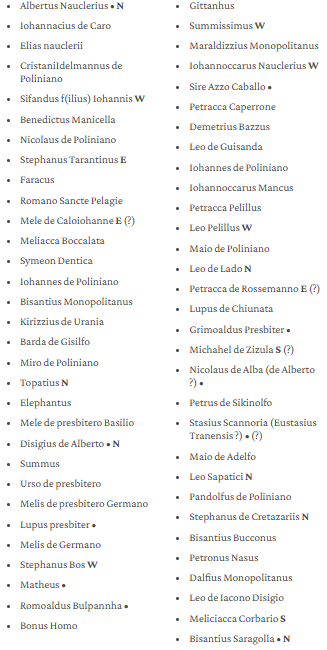
3
191
These stone artifacts from Neolithic Southern Italy might also have been anchors:
teapaw.org/ahahistory2/status/204…

Hallan en Noruega lo que podría ser el ancla más antigua del mundo, una piedra de 30 kilos de la Prehistoria ino.to/yIclymt

1
139
An inscription from Micia (Romania) documenting the restoration of the temple of the ancestral Gods (dii patrii) by Julius Evangelianus and the Mauri (a Berber population from modern-day Algeria and Morocco) during the consulship of Cilo and Libo (205 AD).


2
186
A depiction of a paddler on a reed boat from Ennedi, Chad.
Given that Lake Mega-Chad receded from this area around 3500–3000 BC, this environmental shift provides a terminus ante quem (its latest possible date range) for dating the artwork.


1
6
399
Monkeys brandishing swords, Xeste 3 building, Room 2, first floor, Akrotiri, Greece, Minoan / Minoanized Cycladic culture, c. 1600 BC.


The Tel Dan Gatehouse (18th-century BC, North Israel) features 3 consecutive basket-arch gateways.
Because their sun-dried mudbricks are rectangular instead of wedge-shaped, these archways sit conceptually between false corbelled arches and true arches.


Another Levantine city, Ashkelon, also features an arched city gate built with a similar technique, though its mudbrick vault collapsed in antiquity. This structure is roughly contemporary with, or perhaps slightly older than, the gatehouse at Tel Dan.


1
5
147
A wooden Byzantine boat model featuring a prominent stempost and rubbing strakes, recovered from Constantinople's Theodosian Harbour; c. 4th–11th century AD.
It might have been a child's toy, or perhaps a votive offering intended to bring protection while navigating the sea.


The Piceni may have invented the sternpost rudder before the Chinese.
A 7th-6th century BC stele from Novilara seems to depict it, predating Chinese Han models by 600 years. However, Adriatic shipbuilders abandoned this design and only reintroduced it in the Late Middle Ages.


