

PhD in AI @JKULinz | @OATML_Oxford | @ELLISforEurope | @Apple 👇 open to research roles in academia and industry
Joined December 2021
- Tweets74
- Following408
- Followers570
- Likes212





Pinned Tweet
We unlocked the working memory of LLMs 💥
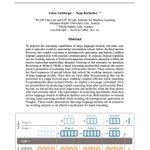
Reasoning in Memory (RiM) replaces autoregressive "thinking out loud" with fixed memory blocks that form a task-specific workspace for latent reasoning.
The key idea is simple: reasoning should happen inside the LLM, not in its output!
if you think about it, how crazy is it that we've found nonlinear functions that are better than us at doing stuff
my AC @NeurIPSConf can see the future.
before the rebuttal period had even started, the AC posted a meta-review stating that we did not submit a response -- so I guess the final justification was made a bit early.
but since it was already generated, why not ignore our rebuttal and just use it again, right?
peak peer review.


Isn’t the ultimate question whether AI can come up with the next NS-like problem, or really any genuinely new and meaningful problem?
To be clear, current progress is undeniably remarkable. But it’s also somewhat biased by how we measure it. We optimize models incredibly hard to solve math problems because we have a clear objective, then are surprised when they become very good at exactly those tasks. That does not necessarily generalize to all tasks.
My bet is that AI, if developed with care, makes humans dramatically more capable rather than replacing humans altogether.
LLMs can only think out loud: every thought is a token, every token a forward pass.
We trained LLMs to reason in a latent working memory instead. No reasoning trace, TTFT matches direct answering.
See it for yourself in my new interactive blog post:
👉 aichberger.github.io/blog/re…
Lukas Aichberger retweeted

ok this paper from hochreiter's lab (yes the LSTM inventor) is genuinely one of the most interesting latent reasoning results i've seen. it's called "Reasoning in Memory" and the idea is wild: what if models could think without generating any visible tokens
4/ Results
RiM consistently improves over direct-answer SFT, outperforms Coconut, and even becomes competitive with CoT-style reasoning across model families and scales on math reasoning tasks.
Crucially, RiM preserves direct-answer inference speed 🚀

5/ Takeaway
LLMs do not always need to externalize their thoughts.
They can learn to reason in working memory instead, decoupling intermediate computation from autoregressive generation 💡
Full paper:
arxiv.org/abs/2605.30343
Huge thanks to @HochreiterSepp for the guidance!

Lukas Aichberger retweeted

OATML group members and collaborators are proud to present 8 papers at NeurIPS 2025! Come say hi at the sessions below
More info: oatml.cs.ox.ac.uk/blog/2025/…

Excited to present my paper '𝗠𝗜𝗣 𝗮𝗴𝗮𝗶𝗻𝘀𝘁 𝗔𝗴𝗲𝗻𝘁' today at #NeurIPS2025 🚀
We show how adversaries can craft and post small malicious image patches on social media to hijack multimodal OS agents ⚡️🤖⚡️
Come by today’s first poster session if you're around 👋

Special thanks to Alasdair Paren, @guohao_li, @philiptorr, @yaringal, and @Adel_Bibi for making this possible 🙏
Why ask for 4 reviews if one AC can ignore them all? #NeurIPS2025

... even if that function was updated two months after the submission deadline — to match our method.

Thrilled to see my work from @OATML_Oxford @UniofOxford featured in @sciam! Huge thanks to my collaborators and mentors for all the support ✨

Congrats to Lukas @aichberger whose work from his visit at @OATML_Oxford @UniofOxford was just covered by @sciam Scientific American!
scientificamerican.com/artic…

Lukas Aichberger retweeted

Exciting new paper! We show how #Agentic #AI, web based Agentic AI in particular, can be jailbroken and made to propagate these jailbreaks at scale—just by posting images on social media. A system-level attack beyond just VLMs.
Great work led by @aichberger


