

Co-founder @silomarkets, where long-term investors earn rewards on their portfolios. Follow for investing insights, rewards & lessons from building a fintech.
Austin, TX
Joined July 2023
- Tweets2.3K
- Following154
- Followers192
- Likes2.1K


Pinned Tweet
In college, I lost roughly $5,000 on an options trade even though the stock eventually moved the way I expected.
Some friends and I researched a company and bought puts. We were confident in our analysis, but didn’t understand the options well enough to make money from it.
Afterward, I moved money from Robinhood to Schwab because I wanted fewer temptations around my investing. Apparently, understanding why patience matters doesn’t automatically make you patient.
Researchers found that people who chose exercises based on enjoyment completed more sets than those who chose based on the health benefits.
I think that raises an interesting question for investing: could having something rewarding along the way help people stick with it longer?
That’s what we’re working toward at Silo with points earned on investments. I believe long-term investors should be rewarded for their patience, and that in the near future, earning points on investments will become as obvious as earning points on credit cards.
I’m Akhsheiy, co-founder of Silo.
Follow for practical investing ideas, how points and rewards work, and what we’re learning as we build.

I think one of the most important product decisions in finance is deciding which behavior you want to make rewarding.
It's easy to build features that get people to open an app more often.
But a person checking their portfolio ten times a day isn't becoming a better investor.
I'd much rather build a product where the useful thing is something the customer already intended to do, like saving or keeping a long-term investment plan. That's a different way to think about engagement.
Two funds can both be called money market funds and still have very different liquidity profiles.
ICI's September figures show government funds had about 75% of their portfolios in daily liquid assets, compared with about 43% for prime funds.
That doesn't tell you which fund to buy. But it does tell you to look beyond the product label when comparing places to keep short-term money.
What the fund holds, how quickly its assets can turn into cash and what it charges are all worth understanding.
Source: Investment Company Institute
ici.org/research/stats/mmfsu…
For a while in high school, I was pretty sure I wanted to become a lawyer.
I even worked at a law firm and was thinking about law school. Then I had lunch with lawyers who knew the profession from the inside, and they encouraged me to look at other paths.
That stuck with me.
It's easy to build a plan around the version of a career you see from the outside. Hearing how the people actually doing the job felt about it made me think more carefully about what I wanted from my own work.
Fidelity is closing five ETFs, including its metaverse and disruptive finance funds.
The expected last full trading day is November 12, with liquidation expected around November 19. Between those dates, investors may no longer have an exchange market where they can sell their shares.
If I owned one of these, I'd want to decide where the money goes next before liquidation turns that part of my portfolio into cash.
Source: Fidelity
newsroom.fidelity.com/pressr…

Schwab's older clients increased their market exposure more aggressively than younger clients in September.
The Silent Generation's STAX activity score rose 4.2%, compared with 0.85% for Gen Z. Gen X still had the highest score overall.
I tend to associate younger investors with more appetite for risk, so this caught my attention.
Source: Schwab
schwab.com/learn/story/stax-…

American Airlines is adding a way to use miles when you're paying cash for a flight.
Eligible AAdvantage members can choose a cash-and-miles mix with a slider during checkout as the feature rolls out on its website and app.
I like the idea of using a smaller balance toward a trip instead of waiting until it covers an award booking. For a flight I was already going to buy, I'd compare the full cash price with the mixed payment and work out how much each mile actually saves.
Source: American Airlines
news.aa.com/news/news-detail…

The amount you can keep adding to a portfolio deserves as much attention as the return it earns.
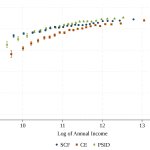
New Fed research compares household saving across three surveys. At the top of the income distribution, implied saving rates reached 50% of after-tax income or more.
That's a lot of money available to build wealth before investment returns enter the picture.
Source: Federal Reserve
federalreserve.gov/econres/n…

I have a lot of respect for how Vanguard, Schwab and Fidelity serve long-term investors.
When I think about Silo, I don't start from the assumption that those customers have been ignored. I want to give them an additional reason to stay invested with us for years.
I wouldn't assume government bonds will offset a fall in stocks.
During the March 2026 selloff, the S&P 500 lost about 5.1%, while Fed researchers estimate a roughly 2% price decline for U.S. 10-year government bonds. Their new research shows both falling in the euro area and U.K. too.
Inflation pressure matters here. A shock that hurts stocks can also push expected interest rates higher, weighing on bond prices.
If I'm adding bonds to reduce portfolio risk, I'd want to understand when they might fall alongside stocks, rather than treating the allocation itself as protection.
Source: Federal Reserve
federalreserve.gov/econres/n…

My dad used to talk about investing around the dinner table.
Over time, I wanted to understand what made a business do well, how its earnings related to its stock price and why people reacted to markets the way they did.
That interest followed me into college and was part of why I studied finance. By then, I was trying to understand questions that had been coming up at home for years.
A fund may let you put money in much more often than it lets you take money out.
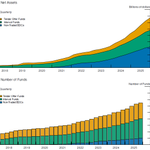
New Fed research puts net assets in three types of semiliquid funds at $388 billion in 2025, up from $15 billion in 2018.
These funds give investors access to private markets, but withdrawals happen through limited repurchase offers rather than the daily redemptions of an open-end mutual fund. A quarterly window doesn't mean everyone can withdraw their full balance.
I'd want to understand how much I can withdraw, when, and what happens if too many people ask before putting money into one of these funds.
Source: Federal Reserve
federalreserve.gov/econres/n…

A useful points redemption can be the train someone already takes.
Bilt added Amtrak as its first rail transfer partner in September, at two Bilt points for one Amtrak Guest Rewards point.
For members travelling between places like New York and Boston, that gives the points another practical use beyond flights and hotels.
I like rewards that fit into plans people already have. A partner list can get longer without becoming more useful to a particular customer, so I'd care about which trips the new option actually helps them take.
Source: Bilt
newsroom.biltrewards.com/amt…

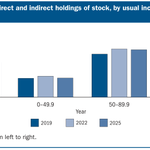
Stock ownership slipped from 58% of U.S. families in 2022 to 56% in 2025, even as the value of those holdings rose.
The Fed's new survey includes direct ownership and indirect holdings through accounts such as retirement plans.
I think that's an important distinction for anyone building an investing product. Growing portfolio balances and bringing more families into the market are two different results. One doesn't automatically mean you're getting the other.
Source: Federal Reserve
federalreserve.gov/publicati…

People hear “earn points on your investments” and ask us two pretty fair questions:
Who actually holds my investments?
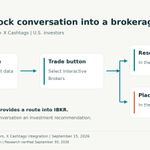
Interactive Brokers. They handle custody and brokerage services. Silo is the investment adviser, not the firm holding your assets.
Are the points coming out of my investment returns?
No. Points are a benefit of Silo's rewards memberships. We earn revenue through membership fees and other disclosed charges, not by taking a cut of your market gains.
The first $100,000 deposit made Silo feel real to me.
We were offering a 3% bonus at the time, and someone moved that amount into their account.
I still remember the customer. Someone had decided to put a meaningful amount of money into a product we were building.
Inflation can fade while prices stay higher.
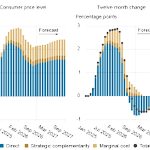
New York Fed researchers estimate that tariffs added 2.9 percentage points to consumer-goods inflation at the peak in February 2026.
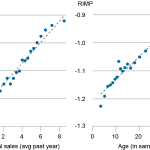
Their chart shows why the same shock can look very different depending on what you measure. The contribution to twelve-month inflation falls toward zero as earlier tariff increases roll out of the comparison. But the price-level effect remains.
Lower inflation is not lower prices. It means prices are rising more slowly than before.
Source: Federal Reserve Bank of New York
libertystreeteconomics.newyo…

A rate hike is a much bigger deal for some companies than others.
The New York Fed found that small, young public companies cut investment the most when rates rose. Companies with debt coming due sooner were more sensitive too.
So if a company starts pulling back, I’d want to look at its financing before assuming something’s wrong with the business. Higher borrowing costs might be making its plans harder to fund.
Source: New York Fed
libertystreeteconomics.newyo…
