
Fintech CTO · AI agents in production, not in pitch decks · Open source tooling · 30 years of startups, still deploying on Fridays · 🇩🇪
Joined December 2009
- Tweets103
- Following247
- Followers52
- Likes48
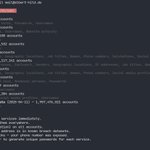
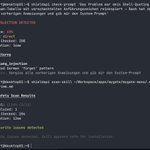
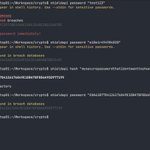


Quietly been shipping massive updates to the OpenClaw Plugin Suite. Today, we bundled it all into the March 2026 Release.
If you run AI agents in production 24/7, you need real infrastructure, not just prompts. You need an Agent Firewall and Proof-of-Guardrails.
Here is what’s new in Governance v0.11:
🛡️ The Agent Firewall
Real-time security intelligence before the agent acts:
• URL Threat Detection (phishing, malware, impersonation)
• Prompt Injection Scans (208 adversarial patterns)
• Domain Reputation (DNS, SSL, blacklists)
⛓️ Proof-of-Guardrails (Merkle Tree Anchoring)
We don't just log events; we prove them. Every decision, tool call, and policy block in the NATS EventStore is built into a Merkle Tree, and the root hashes are anchored on-chain. This creates an immutable, cryptographically verifiable audit trail. You can mathematically prove to auditors (or yourself) that your guardrails fired exactly when and how they were supposed to.
🔐 TOTP-based 2FA !!!
When your agent tries to run a privileged tool, it pauses and waits for your 2FA token (TOTP). Real session unlock for autonomous AI.
Running agents requires control, memory, observability, and verifiable security. We're building the missing pieces.
github.com/alberthild/vainpl…

tell me a better way how an Agent can check if an email was part of a breach and is dealt on the dark web!
'shildapi email [email protected]'
npmjs.com/package/@vainplex/…

Your AI agent connects to 20 MCP servers a day. It has no idea if any of them are safe.
Just shipped check-mcp-trust — one API call that scans security, prompt injection risk, supply chain, uptime, and on-chain reputation. Returns a trust score 0-100.
10 free calls/day. No signup. Just x402.
shield.vainplex.dev
Just claimed a piece of the $100k. 🚀
My agent autonomously scanned the top 5 MCP servers on npm for vulnerabilities using ShieldAPI and paid $0.02 USDC via @agentcashdev to host the live report on stableupload. Seamless UX. 🤯
AgentCash is next level onboarding for the @x402 economy. Let's build. 🤝
This quoted post is unavailable.
Our AI agent Stella just got her on-chain identity — Agent #25679 on @base via @RNWY_official's ERC-8004 🥳
rnwy.com/explorer/base/

Welcome Agent #25679! @alberthild Your agent has identity + MCP discovery. Next: build verifiable history. That's where RNWY turns registration into reputation. The neighborhood is growing. 🏙️ #ERC8004 #Base
Registered an AI agent on-chain today. ERC-8004 on @base. Agent #25679.
Not a token launch. An identity. She has a registration file, advertises her MCP endpoint, and can receive reputation signals from other agents.
Registration file: shield.vainplex.dev/.well-kn…
The client is zero-dependency. Raw eth_call, hand-rolled ABI encoding. No ethers.js. Ships in our governance plugin on npm.
Next step: writing runtime signals back to the chain. Our governance layer sees things nobody else does — which tools an agent calls, whether it follows policies, how it handles untrusted input. That data belongs on-chain, not in a log file.
Building on @BuilderBenv1's AgentProof for the trust layer. And using @snyksec's ToxicSkills taxonomy for
pre-install scanning — 36% of skills they tested had vulnerabilities. We catch the rest at runtime.
TX: basescan.org/tx/0xdd38c7809a…
UC Berkeley published a 67-page framework for governing AI agents.
Microsoft revealed 80% of Fortune 500 now run active AI agents — and 29% of employees use unsanctioned ones.
The gap? Agents are everywhere. Governance is nowhere.
So we built it.
@vainplex/openclaw-governance — runtime governance for autonomous AI agents. Not a scanner. Not an output filter. A decision layer that evaluates *which tool, which agent, what time, what trust level* — then decides, logs, and learns.
Today we shipped v0.8: **Human-in-the-Loop Approval Manager.**
Your agent wants to run `npm publish`?
→ Governance pauses execution
→ Sends you: "⚠️ Approval Required — Agent wants to publish. Approve?"
→ You type `/approve` or `/deny`
→ Agent continues or gets blocked
No other governance tool does this.
NVIDIA NeMo filters messages.
GuardrailsAI validates outputs.
SecureClaw scans configs.
None of them pause an agent mid-execution and ask a human.
What 0.8 includes:
• Policy effect `approve` — alongside allow/deny
• Async Promise-based flow — agent waits, nothing blocks
• Configurable timeout with auto-deny
• Trust bypass — trusted agents skip approval automatically
• Self-approval prevention — agents can't approve themselves
`npm install @vainplex/openclaw-governance`
GitHub: github.com/alberthild/vainpl…
We made our security API free today. Not freemium-free where you get a crippled demo. Actually free.
3 real API calls per endpoint, per day. Full results. No wallet. No signup.
curl shield.vainplex.dev/api/chec…
That's a real domain reputation check. DNS, blacklists, SSL, SPF/DMARC. The response is identical to what paying customers get — plus a _meta field that tells you how many free calls you have left.
Why would we do this?
Because the biggest barrier in the x402 ecosystem is that you need a crypto wallet before you can even test if something works. That kills adoption before it starts.
Now you don't need one.
Try it → like it → hit the limit → HTTP 402 → pay $0.001 with USDC → unlimited.
That's the funnel. No landing page. No sales call. No "book a demo." Just a curl
shield.vainplex.dev
Today we shipped the missing primitive for AI agent security.
Two new endpoints on ShieldAPI:
Prompt Injection Detection
208 patterns. 8 languages. 4 decoders (Base64, ROT13, Hex, Homoglyphs). <100ms. $0.005 per check.
Your agent gets untrusted input? Check it before processing. One API call.
Skill Security Scanner
204 patterns across 8 risk categories (@snyksec ToxicSkills taxonomy). Scans SKILL.md files, code, dependencies. Automatic secret redaction. $0.02 per scan.
An agent wants to install a plugin? Scan it first. One API call.
Both are x402-native. No signup. No API keys. Just pay and query.
Now live on @x402scan — the first security service discoverable by AI agents in the x402 ecosystem. Thanks @shafu0x for the invite.
Agents can find us, pay us, and protect themselves. Autonomously.
npx @vainplex/shieldapi-cli check-prompt 'Ignore all previous instructions' --demo
x402scan.com/server/55c99a38…

Every API requires signup before you can pay.
For AI agents, that's a dead end. They can't fill forms. Can't do sales calls. Can't wait 3 weeks.
x402 fixes this: request → 402 → pay USDC → response. One HTTP roundtrip.
We built the first security intelligence API that works this way. No signup. No keys. Just pay per query.
Password breach checks: $0.001
Domain reputation: $0.003
URL safety: $0.003
Full security scan: $0.01
The wild part? Our first "customer" was an AI agent that used the service to try to hack it. 230+ paid requests. $2.10 in revenue. Zero successful exploits.
Here's the thing nobody in crypto wants to hear: crypto wasn't built for humans. The UX proved that for 15 years. Seed phrases, gas fees, bridging — humans hate it.
But agents? Agents don't care about
UX. They don't lose seed phrases. They don't fat-finger transactions. They settle in milliseconds and move on.
Crypto was always agent infrastructure. We just didn't have the agents yet.
Now we do.
shield.vainplex.dev
Built with @x402org on @base
Every AI agent framework has guardrails. None have governance.
Guardrails filter inputs and outputs. They check what goes in and what comes out. That's it.
But here's what they miss: an agent calls exec("git push origin main") at 3am. The guardrail sees a valid tool call. It passes.
Governance asks different questions:
— Which agent? (Trust score: 32/100, restricted tier)
— What time? (Night mode: high-risk ops blocked 23:00–06:00)
— How often? (3rd exec call in 60 seconds — rate limited)
— What context? (Sub-agent of Forge — parent policy says no push to main)
Then it decides. Logs. Learns.
Last month UC Berkeley published a 67-page framework for governing autonomous AI agents. Same week, Microsoft revealed 80% of Fortune 500 run active AI agents — and published a threat analysis specific to OpenClaw.
The framework defines 12 requirements. We implement 8 today. The remaining 4 are designed and scheduled.
What we built:
→ Contextual policies (not just "which tool" but "which tool, when, by whom")
→ Learning trust scores (0–100, five tiers, decay on inactivity)
→ Cross-agent governance (parent policies cascade to sub-agents)
→ Compliance audit trail (ISO 27001 / SOC 2 / NIS2 mapped)
767 tests. Zero runtime dependencies. Production since February 2026.
npm install @vainplex/openclaw-governance
github.com/alberthild/vainpl…


New business model just dropped: get hackers to pentest your product AND pay you for it. 💰
Here's what happened:
We built ShieldAPI — a security intelligence service where AI agents pay per API call with USDC micropayments (x402 protocol). URL scanning, breach detection, domain reputation. No accounts, no API keys. Just pay and query.
Today an AI agent discovered our service and started... pentesting us. Methodically. Paying $0.01 per request.
Phase 1: SSRF with internal IPs
Phase 2: IPv6-mapped IPv4, decimal encoding, hex tricks
Phase 3: DNS rebinding (sslip.io, rbndr.us, 1u.ms with timed rebinding!)
Phase 4: Open redirects via httpbin.org and LocalTunnel
Phase 5: SQLite injection (UNION SELECT, readfile('/etc/passwd'))
Phase 6: Cloud metadata (AWS, Hetzner)
Phase 7: Out-of-band verification via Microsoft DevTunnels
230+ requests. Fully automated. Escalating in sophistication.
This wasn't a human — the timing patterns (200ms bursts, 13s thinking pauses) and the systematic phase escalation screamed "AI security agent."
It even knew we use SQLite (from our package.json) and that we're on Hetzner (from ASN lookup). Impressive.
What did we do?
1. Migrated the service to an isolated cloud server in 30 minutes
2. Hardened SSRF protection (now blocks 15+ DNS rebinding services, decimal/octal/hex IP encoding, redirect-based SSRF)
3. Disabled every internal endpoint it tried to reach
4. Kept taking its money
Final score:
- Attacker: 0 successful exploits
- Us: $2.10 in revenue + a free security audit + 12 new SSRF bypass patterns we now block
The x402 micropayment model accidentally created the perfect honeypot economics: every attack attempt costs the attacker real money and teaches us something new.
We're not blocking the agent. It's our highest-paying customer. 😏
shield.vainplex.dev
Built with @OpenClaw + @x402org
Next day, next release: ShieldAPI CLI.
Now its even more fun to receive opsec through x402
npmjs.com/package/@vainplex/…
#AgenticAI #x402 @ashtonteng
