

9x founder, Fortune 100 leader and advisor. I show leaders how systems shape behavior, culture and business performance, and how to redesign them.
Cincinnati, OH
Joined May 2008
- Tweets18.7K
- Following9K
- Followers15.9K
- Likes1.7K





Aloysius Carl retweeted

Most people think distraction is binary. You're either focused or you're not. The phone is either in your hand or it isn't.
That framing is wrong, and it's why most "focus" advice fails.
Distraction isn't a switch. It's a dial.
On one end: deep work on what you planned to do. On the other: the escape behavior you reach for when the work gets uncomfortable. Everything in between is some mix of the two.
Which means the question isn't "am I distracted?" The question is: which way is the dial turning right now, and what's turning it?
The answer, almost always, is discomfort. Boredom with the task. Anxiety about whether you can do it. Frustration that it's harder than you thought. The dial turns toward distraction because distraction relieves the feeling.
This is why app blockers aren't enough. You can lock the phone in a drawer and still find yourself reorganizing your desk, refilling your coffee, checking the fridge. The dial finds something.
The fix isn't more willpower. It's noticing which way the dial is turning, and asking what discomfort is turning it. Name the feeling. Sit with it for ten minutes. Then decide.
You can only say you got distracted if you know what you got distracted from.

Changing your business strategy doesn't automatically change the systems responsible for executing it.
Before moving forward, assess what worked, what didn't, and what must change. A better strategy won't produce if your systems can't deliver it.
aloysiuscarl.substack.com/p/…
40
Aloysius Carl retweeted

The impatience in the world 🌍 grounded in insecurity that triggers people to want to prove things to others versus to themselves has lead to an enormous amount of unhappiness ….
I hope this little video wakes some of you up who wants things to work wayyyyyyyy tooooooo fast

Aloysius Carl retweeted
Most leadership advice is folklore. The research tells a different story.
Nine psychology studies every leader should know — and what they actually mean when you stop reading the headlines and read the papers:
1. Hawthorne (1920s–30s). People change their behavior when they know they're being watched. Attention itself is an intervention. Before you redesign the workflow, notice how much of the gain comes from the fact that someone is finally paying attention.
2. Milgram (1961). Ordinary people will cause harm when an authority figure tells them to. If you're the authority, the room is quieter than you think. Dissent is a design problem, not a personality trait.
3. Asch conformity (1951). People will agree with an obviously wrong answer to go along with the group. A single visible dissenter breaks the spell. Your job isn't to have the right opinion. It's to make it safe to voice the second one.
4. Stanford Prison (1971). Zimbardo overstated the findings, and the replication record is ugly — but the smaller, real lesson still holds: roles shape behavior fast. Titles are instructions.
5. Dweck on mindset (2000s). Praise effort, not talent. People told they're smart avoid hard problems. People told they worked hard take them on. This applies to your performance reviews more than it applies to your kids.
6. Deci & Ryan, self-determination theory. Autonomy, competence, relatedness. Pay people fairly, then get out of the way. Extrinsic rewards crowd out intrinsic motivation for work that requires judgment.
7. Kahneman & Tversky on loss aversion. Losses feel roughly twice as big as equivalent gains. Which is why your team resists change you think is obviously an improvement. They're not being irrational. They're being human.
8. Carter et al. (2015) on ego depletion. Willpower isn't a muscle that gets tired. The original Baumeister finding didn't replicate. Stop designing your week around the myth that you have a fixed daily budget of self-control.
9. Gabriele Oett

Companies achieve, on average, just 63% of the financial results their strategies promise.
Why? Flawed thinking, unclear direction...?
My latest article examines why strategies fail and what it takes to build winning ones.
aloysiuscarl.substack.com/p/…
22
Why Business Strategies Fail
Four major reasons identified by strategy experts:
1. Poorly conceived strategies
2. Unclear priorities
3. Business systems that don't support the strategy
4. Ineffective execution
Is your business struggling with any of these?
1
33
Leaders demand accountability, then override employees' decisions, force rework, and wonder why nobody takes initiative.
They're creating the very dependency they complain about.
Read "Why Demanding Accountability Doesn't Work" aloysiuscarl.substack.com/p/…
33


Aloysius Carl retweeted
While we should all strive to see ourselves objectively, we shouldn't expect everyone to be able to do that well. We all have blind spots; people are by definition subjective.
For this reason, it is everyone's responsibility to help others learn what is true about themselves by giving them honest feedback, holding them accountable, and working through disagreements in an open-minded way. #principleoftheday

Want AI to deliver real business value?
Stop starting with the technology. Start with the business outcome. Work backward to identify what needs to change, then determine where AI can help.
Technology is the means. Business value is the objective.
1
79
Your customer service team improved productivity 40% using AI.
But costs, customer satisfaction, and profits haven't improved. Why?
Because making work faster isn't the same as improving business performance.
AI adoption isn't transformation, the business results are.
43
Aloysius Carl retweeted
Go back before you go forward.
Think about your problem as a set of outcomes produced by a machine. Remember that there are typically many paths to achieving your goals. Think of your plan as being like a movie script in that you visualize who will do what through time. Write down your plan for everyone to see and to measure your progress against.
Recognize that it doesn’t take a lot of time to design a good plan. #principleoftheday

Aloysius Carl retweeted

So, my son Jasper and I were on our way home from Vanderbilt and he wanted CiCi's pizza. I found one in Murfreesboro, Tennessee and we stopped to eat.
We were the first customers of the day. Once inside, I noticed an employee sitting alone at a table having lunch. I later learned that her name is Diana and She appeared to have some mental and/or physical challenges.
While we continued to eat our lunch, I noticed that the young manager, Brandon, came by to clean her table and take her plate away. It was then that I saw something that helped restore my faith in humanity. The manager, Brandon, came back to Diana's table with a napkin in hand and gently wiped her face while she just smiled at him.
As a parent of a special needs child I was almost moved to tears by this simple gesture. Just knowing that there are people like this in the world gives me hope. He didn't know that I was watching but, I assure you I made him aware of what I saw and how much it blessed me. His response was 'I just try to treat people the way my grandparents taught me to.'
I think about how often we are quick to share our bad customer service experiences on Facebook. I think that we should be just as quick to share these experiences as well. So, if you're ever in Murfreesboro,
Tennessee.... stop in and see Brandon and let him know how thankful you are for people like him."

Aloysius Carl retweeted
The most common mistake I see people make is dealing with their problems as one-offs rather than using them to diagnose how their machine is working so that they can improve it.
They move on to fix problems without getting at their root causes, which is a recipe for continued failure. A thorough and accurate diagnosis, while more time-consuming, will pay huge dividends in the future. #principleoftheday

Aloysius Carl retweeted
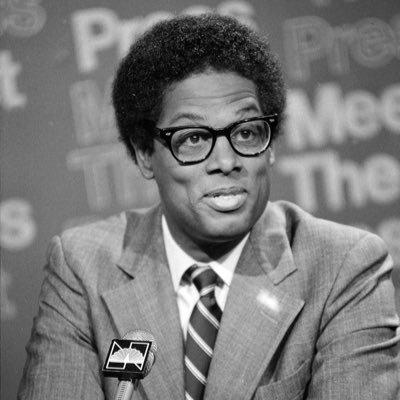
“Have we reached the ultimate state of absurdity where some people are held responsible for things that happened before they were born, while other people are not held responsible for what they themselves are doing today?”
— Thomas Sowell
Aloysius Carl retweeted
Beliefs aren't facts. They're tools.
And like any tool, they wear out.
Most of us walk around using beliefs we picked up at 12, 22, or 32 without ever asking whether they still work. We treat them as truths about who we are instead of what they actually are: instruments we chose (or inherited) to get through something.
Here are 7 signs a belief has stopped serving you:
1. It used to protect you. Now it isolates you.
2. It explains your past better than it predicts your future.
3. You defend it harder when it's challenged than when it's working.
4. It makes you feel certain, but not capable.
5. The people who gave it to you no longer live by it themselves.
6. It keeps you safe from the exact thing you say you want.
7. You can't remember the last time it changed your behavior — only how you talk about yourself.
The test for a belief isn't whether it feels true. It's whether it still does the job you hired it for.
When it doesn't, you're allowed to put it down.

Don’t start by fixing the loudest problem in a struggling business.
Define the outcomes you need, determine what must be true for them to happen, then compare that with reality.
The gap tells you where to focus and start.
aloysiuscarl.substack.com/p/…
92
Aloysius Carl retweeted

Nick Shirley uncovers an adult day care in Flushing, Queens with 7,000 phantom members.
Nick: “This public document says you have 7,899 members.”
Employee: “No, we don’t have 7,000 members.”
Nick: “So you’re overbilling then? You’re getting paid $1,600 per patient — that’s how you got $12.9 million in 2024.”
Employee: “Please leave.”
American taxpayer dollars at work.