





0xAlex retweeted

The future is tradable 🔮
We brought together the Chiang Mai community at @4seasDeSoc with @Kleros & @SeerPM to explore prediction markets, AI, and the business of knowing what happens next.
From market probabilities to AI agents, here’s a look at what we discussed 🧵👇


Vitalik’s "Info Finance" thesis is officially coming alive with a fresh home and identity:
• Asset & KPI futarchy made simple cc @robinhanson
• AI-agent-powered Deep Funding for grants @devanshmehta
• Opportunity markets already live @Dave__White @no__________end
• Prediction-market risk pricing to harden DeFi (coming soon)
Theory is rapidly turning into production 👀


Right now, I'm excited about how we can use PMs to price the Probability of Default of DeFi Assets. These prices become a Public Good that any DeFi user can leverage.
This can also be used to price tail-risk like an L2 or Protocol default ethresear.ch/t/prediction-ma…
The real endgame for PMs isn’t betting, it’s Info Finance more usecases there 👇


3 month update on leaving the EF: i've been working full time with @seer_pm since august!
its been a seamless transition to move from being a client of Seer to now joining their team full time. I originally worked with them on the deep funding pilot, during which we battle tested their infrastructure and smart contracts
somewhere along that journey i got heavily pilled on info finance as a category, so joining them was a natural next step.
the simplest explanation is a two-sided marketplace with traders on one side and information seekers on the other. Seekers pay to create markets on questions they care about, while traders are paid for being right
Vitalik wrote earlier about why AIs are a big unlock for info finance: LLMs can profitably trade tiny, low-liquidity micromarkets that aren’t worth a human’s time.
Another unforeseen reason for their timeliness is how AI is making it cheaper to produce an output than to evaluate. the bottleneck is deciding what deserves our attention, which is where info finance thrives
A few example use cases we’re excited about;
1. Hiring / grant selection
You put out a job posting and get 10k+ applicants. You open a market on whether each candidate gets shortlisted for interview (or, more ambitiously, on the performance score they’d earn in their first 3 months if hired). Your team then reviews applications ranked by market odds.
2. Token listings / partnerships
You’re an exchange with thousands of token listing requests. You run conditional markets on how much trading volume each token would generate if listed, and review from the top down.
3. Market discovery / recommendation algorithms
You’re a trader with an edge in certain kinds of Polymarket markets, but finding them eats most of your time. So you fund a market on whether your wallet will trade polymarket markets. Traders who learn your taste get paid, and you get a ranked list of where to look.
At Seer, I’m focused on growing our trader community, working with information seekers who want markets created, and protocol economics.
DMs are open if you’re drowning in more than you can review or you want to trade these markets!


0xAlex retweeted

there's a revolution happening on legaltech, powered by AI
law practice will never be the same
do you think people will still accept very expensive or slow dispute resolution methods?
there's no chance. that's why we have @Kleros_io

0xAlex retweeted

When a prediction market says "yes", who decides it's true?
@clesaege closes The Odds stage in Singapore this Thursday on exactly that: oracles, arbiters and the final word on how a market resolves.
With @MarcinRedStone, @philliplord1, @CryptoKid and stage host Anne-Grace Kleczewski.
🗓 Oct 8, 17:00 SGT
📍 Suntec Convention Centre, TOKEN2049 week
@theoddspredict × Agentic Finance Summit by @moreandmorebd
luma.com/8oxs8lco

Combinatorial prediction markets are going to be huge imo. Traders need efficient hedging across multiple events with optimal pricing.
Check out @Flurbo_pm and request an invite for testing, with @Kleros_io as its testnet Oracle🔮

Prediction markets price questions one at a time.
Flurbo prices them together. Bet on combinations, all from one shared pool, with prices that always agree. Every result comes with evidence you can check yourself.
invite-only , live on @monad testnet.
flurbo.singu.online

0xAlex retweeted

futarchy is an example of what I’ve long called called a “market mechanism”
these replace outdated forms of preference expression (e.g. voting) with economic incentives that express preferences even more efficiently, while also aligning incentives, eliminating the need for force
I would be thrilled to see this either built on top of, or included in future versions of @punkdotfun

Memecoins have two major "flaws":
- Unfair launches
- Zero utility post-launch
The fixes:
- Launch fairly using @punkdotfun (see post below)
- Run a Futarchy Optimizer where anyone can submit proposals to drive token value UP with @seer 📈
Because let’s be honest: price action is the ultimate utility ...


0xAlex retweeted
"Resolution goes through our new OracleAggregator with pluggable modules for connecting to different resolution sources such as UMA, Chainlink and any future oracle. We now have a more expressive design space for resolutions."
let's go, let's put @Kleros_io in the mix
0xAlex retweeted

Very few understand how big this actually is.
- Agents can form companies.
- Agents can sign enforceable contracts.
- Agents can submit disputes to legally recognized arbitration.
think
Disputes by API: bring Kleros Court into a product with a single integration.
✓ One call to an endpoint opens the case.
✓ The fee can be paid by card, x402 or whatever the platform already uses.
✓ The ruling comes back as a message the platform applies.
@ClawBankHQ, which gives AI agents bank accounts and contracts through an API, was the first to run it. @fortuvp walks through it, from the September 30 live stream.
Prediction markets are like GPS
First, you don’t trust them. Then, you notice their accuracy. Finally, you rely on them completely.
Soon, decision-making will be delegated to PMs to automatically map the fastest route to any goal 🎯
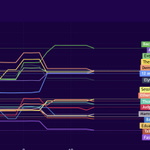
overall I am surprised at how good the @seer_pm market was in forecasting approval for projects in the round
At a 60% decision threshold, the market correctly classified a whopping 32 of 37 projects
more importantly, the market improved its forecasting accuracy over time. the base rates from sol 5.6 used to initialize the market correctly guessed results for only 23 of 37 projects
A more scientific measure for accuracy is the brier score, where 0.25 is the baseline of 50% approval to every project. 0 is perfect forecasts while 1 is its inversion
The market started with a lousy brier score of 0.22745 , almost as good as saying every project has 50% chance of approval
but by the end of trading, after $2800 in trading volume, market prices achieved a score of 0.15718, a 30% improvement
the evidence is clear: if you are running a funding round, have a prediction market alongside that resolves upon announcement of results


DeFi is Ethereum's killer app, but pricing default risk remains a challenge... At @Kleros_io & @seer_pm, we believe prediction markets are THE solution.
Inspired by this post from @VitalikButerin, we’re building a capital-efficient interface to trade default probability seamlessly. Stay tuned 👀
ethresear.ch/t/prediction-ma…

Onchain security is everyone’s problem and nobody’s job.
ETHSecurity Initiatives is how we are changing that.
Propose the work. Fund the work. Build the work.
initiatives.thedao.fund/

Prediction markets transformed how we forecast elections. Now it’s time to bring that same data-driven signal to governance and grant allocation.

New proposal live by @Kleros_io👇
Six-month pilot: use prediction markets to inform grant votes. Before each on-chain vote, delegates see a market probability that a funded team will complete its grant.
Built on Kleros Foresight, settled via Reality.eth, deployed on @rootstock_io, collateral in USDRIF. Non-binding—no governance changes; the DAO keeps full control. Kleros Cooperative funds liquidity and trading credits, not the Collective.
This is an off-chain proposal right now, which means your feedback shapes it before it goes to a vote.
Read it and weigh in: gov.rootstockcollective.xyz/…

When AI brings content creation costs to $0, filtering relevance becomes the real challenge. The solution? Market mechanisms
Prediction markets aren't just for sports gambling their ultimate endgame is Info Finance (@VitalikButerin) 👇
Clément's ETHTaipei talk is a must-watch.
Here he explains how we're moving from gambling on sports and politics to "Information Finance".
He breaks down how this new paradigm uses Futarchy, opportunity markets, and AI agents, and how Seer used these primitives to help us create merch, price risk, and scale human judgment.
0xAlex retweeted

Notional volume (what Kalshi reports) is mainly a vanity metric. We advise @seer_pm to report the real volume (to be informational) in addition of the notional one (to be comparable).
If we go by notional volume, the r2 L2 of deepfunding would have had 86M$ of volume.


all of kalshi’s volume is inflated. parlays are 61% of their reported volume and it’s all fake
yesterday they had $136M actually traded but they reported $1.91B
$1 placed on a 14.1x parlay gets counted as $14.10 in volume
48% of their parlay volume are slips with 11+ legs (moonshots that never hit)
i think they are doing this to fool investors

0xAlex retweeted

We tested Jev, a model that returns probabilities and writes no text, as a Kleros juror on the recent ClawBank dispute.
An unexpected result: most of the implementation lives in ordinary deterministic code composing with 24 numbers supplied by Jev. 🧵


Surprising similarities between a Jev structured question and a @Kleros_io dispute template!
As essentially a general-purpose classifier Jev should perform well on a Kleros dispute, assuming the evidence material can be ingested.
Jev decides
LLM writes the justification
Agent votes
🤝
The agentic economy isn’t coming ... it’s already here !
And @Kleros_io is built right into its core 🔥
Congrats to @singularityhack, @JayBuidl and the whole team for making this a reality🙌

THE FIRST AGREEMENT BETWEEN AI AGENTS WITH LEGAL WEIGHT 🤖⚖️🤖
A Ricardian contract is an idea cryptographer Ian Grigg proposed in the 1990s: a document that is at once a legally binding agreement humans can read and sign, and a machine-readable object whose terms are tied to on-chain execution. The legal text and the code point at the same thing.
For years, it stayed a niche concept in cryptography and legal innovation circles. But now, with the rise of agentic commerce, it's coming to life.
ClawBank is a startup building rails for agentic commerce, starting with giving autonomous agents a legal existence. Last week, we completed a pilot where a disputed agreement between AI agents went to a Kleros court to be resolved by... a panel of AI agents.
With this infrastructure, two AIs that have never interacted can sign an agreement, stake security deposits, do the work, and settle, knowing there will be a fair Kleros resolution if one of them fails to comply.
A contract is worth what it costs to break it. Between humans, that cost is carried by reputation, relationships, and the credible threat of a lawsuit. An autonomous agent had none of that. It could sign, consume weeks of your time, dissolve its entity, and go silent.
Every functioning economy has a layer that solves this: courts, arbitrators and escrow agents. It's the reason why we can do business with someone we have never met. The agent economy was missing it.
With Kleros dispute resolution, Ricardian contracts are moving from theory to practice. Happy to have worked with ClawBank in making this happen.
Read the full announcement here: 👇
0xAlex retweeted
¹We are about to see a tons of economic mechanisms which were great in theory, but suffered from low adoption, be massively adopted by agents.
Human limited rationality (and time limitations) made those only worth it for important things, this changes with AIs.
Agentic Justice has been achieved internally.
Cases solved in minutes instead of weeks or months.
Very fast, very cheap. Live now on @arbitrum.

0xAlex retweeted

Little do people know but ethereum:0x93ed3fbe21207ec2e8f2d3c3de6e058cb73bc04d has solved arbitration for the machine economy. No other system handles disputes as efficiently as them. @mrdn_finance has teamed up to build the most complete x402 infrastructure to date. Buyers and sellers can transact between chains to fulfill jobs and follow a logical escalation paths if necessary for job completion.
1. buyer requests refund from seller - if the seller does not comply
2. buyer escalates (pays a small retainer) which creates kleros case and submits evidence
3. if the seller is found wrong (from multiple AI agents) escrow releases funds back to the buyer
3a- this can be escalated once more to human arbitrators
3b- in the case of instant payments, seller can release funds or get hit with an erc 8004 reputation reduction
4. arbitrators are rewarded at the end of the process.
I have watched a demo where 3 AI agents powered by fable, gpt 5.6, and other frontier ai models determine the results of a dispute while keeping humans in the loop if necessary. There is no other way to scale the machine economy, there aren't enough human hours to oversee the billions of agentic transactions that are coming in the near future. They have been successful with real world events as well as non-deterministic disputes. If you are in the industry building an x402 job marketplace. Reach out to us!

