

Sunshine, pipelines, and everything in between. Relax I’m an environmentalist - my Porsche is electric. Committed to living below my means for peace of mind.
El Segundo, looking for wallet
Joined July 2019
- Tweets11.2K
- Following414
- Followers302
- Likes75.3K



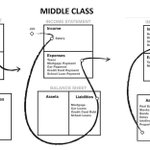
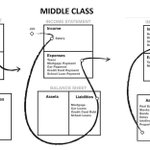


That’s called wealth.

Met up with an old friend for croissants and espresso this morning
Asked what he's been doing lately
"Taking walks, painting, dancing, thinking deeply about the meaning of life," he told me
Incredible
This man is a highly-successful tech entrepreneur who makes well over 80.000 Euro per annum
Yet he doesn't mention anything about "work" when asked what he's been doing lately
That's because Europeans understand the value of enjoying life and pursuing hobbies- and also because discussions about work related events are prohibited on weekends
Either way, greedy Americans who are obsessed with work have a lot to learn from my friend
1
189
Always Be Broke retweeted

tbh i kinda hate using claude as a chatbot
it makes extremely strong assertions and super overweights random bits of data to corroborate it and then you push back a tiny bit and it changes its entire thesis
the language it uses is super stiff and almost lawyerly
Always Be Broke retweeted

The burning alive of numerous ethnic Russians in Odessa on May 2, 2014, stands as one of the many contributing factors for Vladimir Putin's actions.
This is something the western mainstream media should be telling you.
But they won't.......
Always Be Broke retweeted

In 1906, the scientist Francis Galton visited a livestock fair in Plymouth and accidentally stumbled on something that explains why central planning fails.
Around 800 visitors had paid sixpence each to guess the weight of a slaughtered ox. Galton collected the tickets and analysed them, expecting the crowd to do badly. Individual guesses were all over the place, but their average was 1,197 pounds - the ox weighed 1,198. While supposed experts - butchers and farmers - guessed poorly on their won, taken together, ordinary fairgoers had come within a pound of the truth.
Nearly a century later, in 2004, the journalist James Surowiecki popularised this effect in The Wisdom of Crowds. His argument was that in large, diverse and independent groups, individual errors cancel each other out, and the collective estimate moves towards the truth.
This helps explain why government bureaucracies so rarely match the efficiency of free markets. Friedrich Hayek called this the “knowledge problem.” The information an economy runs on is scattered across millions of people, each knowing their own circumstances, preferences and opportunities. No planner can gather it all. Markets don’t need to: through prices, they condense that dispersed knowledge into a single number that anyone can act on. The result is what Hayek called “spontaneous order”, complex coordination that no one designed.
Markets condense dispersed information into a market price. When planners abolish markets and try to design an economy and fix prices, they replace the judgement of millions with the guesses of a small group working from incomplete information. As Galton’s ox shows, no committee of experts, however clever, knows as much as all of us together. Central planning fails because bureaucrats fail to guess what the market could have told them.

Always Be Broke retweeted

it’s such a highly unusual skillset to a) be so objectively intelligent & capable, while simultaneously b) being able to make concepts so incredibly relatable to the average listener

Always Be Broke retweeted

You can literally see Andrew Ross Sorkin sink in his chair as he realizes Palmer Luckey is going to dismantle everything his political party believes about Ukraine, Elon Musk and Donald Trump


