

Physics professor on the outside, student on the inside. Love quantum condensed matter: phenomena, materials, technologies, and making minimal models.
Joined September 2015
- Tweets3.3K
- Following157
- Followers176
- Likes5.4K






Pinned Tweet
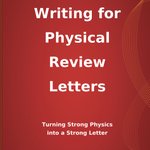
Strong physics still needs a strong PRL case.
This book shows how to turn a real physics advance into a clear, credible, PRL-ready Letter.
Writing for Physical Review Letters:
India paperback: lnkd.in/gbH25U-Y
Amazon paperback, hardcover, Kindle: lnkd.in/gsgniX5g

Check out my latest article: QUANTUM PHYSICS | MOLECULAR VIBRATIONS AND ROTATIONS
What can a molecular absorbtion spectrum tell us about a bond strength, and moment of inertia?
linkedin.com/pulse/quantum-p… via @LinkedIn

Check out my latest article: QUANTUM PHYSICS | HARMONIC OSCILLATOR
A classical oscillator can sit at the bottom of its potential well with zero energy. The quantum oscillator has a ground-state energy of ℏω/2, where ω is its angular frequency. What does its wave function look like, and what sets its width?
linkedin.com/pulse/quantum-p… via @LinkedIn

Check out my latest article: QUANTUM PHYSICS | ALPHA DECAY
How can an alpha particle leave a nucleus when its energy lies below the barrier at the nuclear surface?
linkedin.com/pulse/quantum-p… via @LinkedIn

Check out my latest article: QUANTUM PHYSICS | TRANSMISSION THROUGH A BARRIER
“The original idea then was not to build a microscope but rather to perform spectroscopy locally …”
Gerd Binnig and Heinrich Rohrer, Nobel lecture (1986).
linkedin.com/pulse/quantum-p… via @LinkedIn

Quantum Physics: a reading series from my classroom and book
Sharing notes from my Quantum Physics for 1st year B. Tech students at IITK (class of ~255), and chapters from my upcoming book on basic Quantum Physics.
linkedin.com/pulse/quantum-p…

Check out my latest article: QUANTUM PHYSICS | BOUND STATES WITH TAILS
A particle's wave function extends beyond the edges of a finite potential well. Does that mean the particle is gradually escaping from the well?
linkedin.com/pulse/quantum-p… via @LinkedIn

Check out my latest article: QUANTUM PHYSICS | REFLECTION AT A POTENTIAL STEP
"“It was almost as incredible as if you fired a 15-inch shell at a piece of tissue paper and it came back and hit you.”
Ernest Rutherford
linkedin.com/pulse/quantum-p… via @LinkedIn

Check out my latest article: QUANTUM PHYSICS | THE INFINITE SQUARE WELL
How does spatial confinement force particles to have only discrete energy levels?
linkedin.com/pulse/quantum-p… via @LinkedIn

Amit Agarwal retweeted

Delighted to share that our group's recent work has been featured as a Synopsis in Physics Magazine (American Physical Society)!
physics.aps.org/articles/v19…
@sudeep_iitk
@isisneutronmuon
@phy_iiserb
@iitk
@LibraryIISERB
@iiserbhopal
@ANRFIndia
@EduMinOfIndia

Amit Agarwal retweeted
First evidence of time-reversal symmetry breaking in a Type-I superconductor (YbSb₂) — out now in PRL, Editors' Suggestion + Physics Magazine Synopsis (APS)
journals.aps.org/prl/abstrac…
@sudeep_iitk @isisneutronmuon @phy_iiserb @iitk @LibraryIISERB @iiserbhopal @ANRFIndia

Amit Agarwal retweeted

Our review is out in Advanced Materials—and invited to the journal’s rare “Hall of Fame” collection
We show how crystal structure & chemical bonding govern thermal conductivity, offering a chemistry-guided route to tune heat transport.
@jncasr @IndiaDST
advanced.onlinelibrary.wiley…

Wow!

Just out in Science Advances: We uncover wave-like phonon transport beyond the phonon-gas model in a complex crystal, TlCu5Se3.
Confined disorder driven strong anharmonicity → ultralow κₗ and high zT ~1.7 at 673 K.
A new paradigm for thermoelectrics.
science.org/doi/10.1126/scia…

Amit Agarwal retweeted

AI lets people move from confusion to confidence without passing through understanding.
Amit Agarwal retweeted

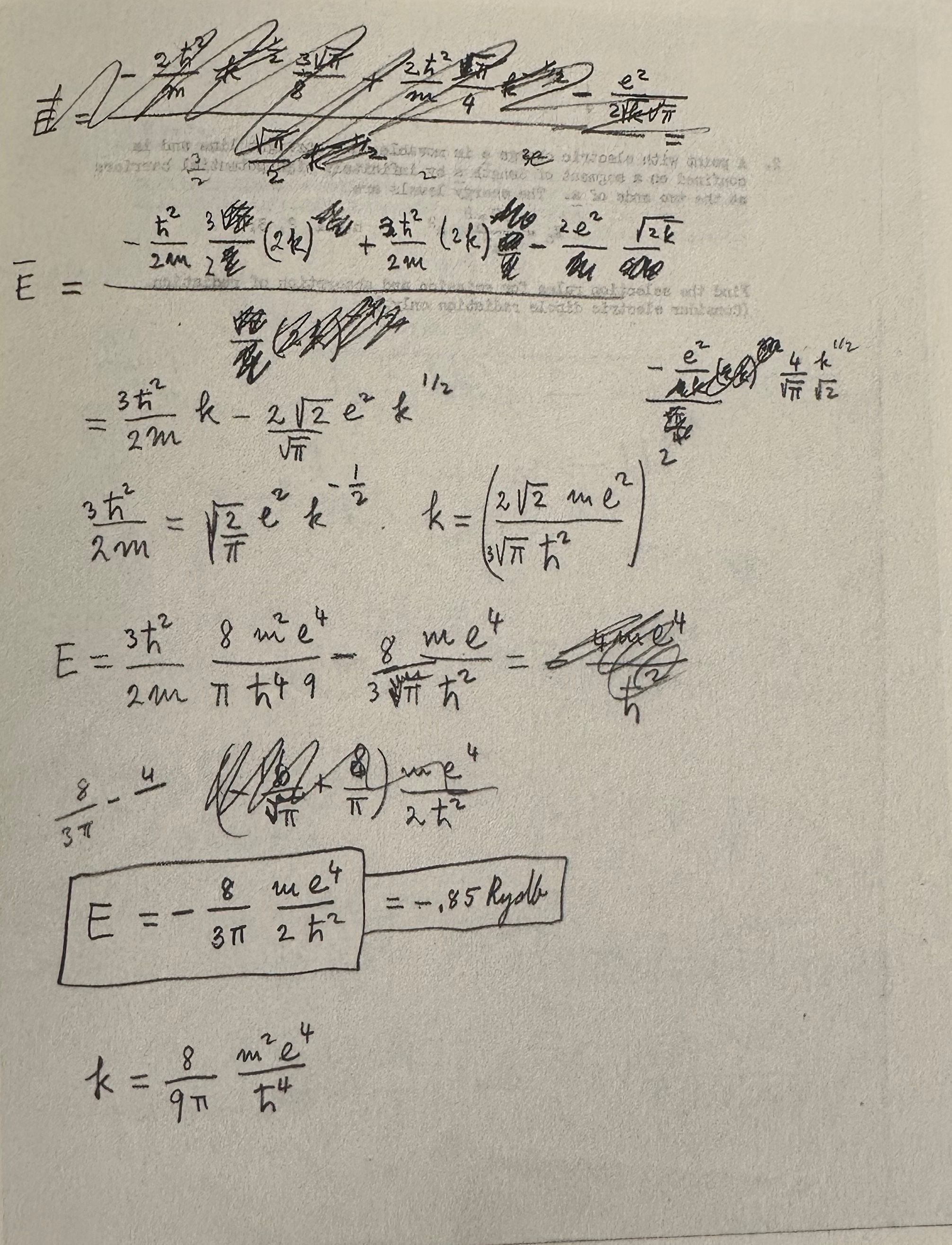
The last course Enrico Fermi taught before his death was introductory quantum mechanics, in the winter and spring quarters of 1954. Here is the last exam Fermi gave with his own solutions for each problem.


Amit Agarwal retweeted

Pauli being Pauli...


Amit Agarwal retweeted

It was an honor to be at the conference celebrating Ajay Sood’s 75th birthday. The breadth and the depth of his scientific contributions, spanning hard to soft to biological physics, are simply breathtaking. Best wishes for the years to come!

In honour of Prof. @AjaySoodIISc, Principal Scientific Adviser to the Government of India, and in recognition of his lifelong devotion to science and his remarkable 75th year, he was felicitated at the Conference on Complexity in Matter and Policy (CMP26) on 7 August 2026. The conference was hosted by the @iiscbangalore, @RRI_Bangalore, and @jncasr.
Dr Parvinder Maini, Scientific Secretary, Office of the PSA, joined other scientific leaders in sharing their wishes and remarks for Prof. Sood. She was also joined by Prof. @kvijayraghavan, NCBS; Prof. G. Rangarajan, Director, IISc; Prof. @waghmare16, Secretary, DST; Prof. Hulikal Krishnamurthy, Emeritus, IISc; Dr Rahul Pandit, National Science Chair, IISC; Prof. @Ashutos61, IIT Kanpur; Dr @Suman_iitkgp, Director, IIT Kharagpur; Prof. Jacques Prost, Institute Curie-France & NUS; Prof. @TarunSouradeep, Director, RRI; Prof. S M Yusuf, Director, UM-DAE, CEBS; Prof. @rajesh_gokhale, Secretary, DBT; Prof. Dipankar Das Sarma, National Science Chair, IISc; Prof. Arun Grover, Panjab Engineering College and others.
The team at the Office of the PSA, on behalf of the wider scientific community, extends its sincere appreciation and heartfelt tributes to Prof. Ajay Kumar Sood for his exceptional contributions to science and his visionary leadership in advancing India's research and innovation ecosystem.
Dr @Jain_Physics | Dr @NanoJagadish | Prof. @ChandrabhasN


Amit Agarwal retweeted

Science is like Black-Coffee !
Initially it is tough to appreciate them fully, but eventually you develop a taste.
Listen to Prof. Deepak Dhar on what he has to say about developing a liking for science at an early age.
Amit Agarwal retweeted
Prof. Dhar gets the Dirac Medal !
It is one of the highest honours in theoretical physics awarded by International Centre for Theoretical Physics, created in 1985.
It is never given to people who have already won a Nobel Prize, Fields Medal, or Wolf Prize. However, many past winners went on to win a Nobel Prize later indicating the prestige of this award.

He was a teaching assistant to Richard Feynman at Caltech. He came back to India anyway.
Deepak Dhar was born in 1951 in Pratapgarh, Uttar Pradesh. His mother wanted him to become an IAS officer. His father, who moved between cities for work, brought home science magazines instead.
"My father would bring home some science magazines for me to read. And there was one that I really liked, called Understanding Science. Initially, I faced some challenges with understanding the content of the magazine, as the book was in English and I was a Hindi-medium student. But eventually, these magazines not only got me more curious to study science, but they also helped me learn English."
He went from Allahabad University to IIT Kanpur for his MSc, then to Caltech, where he held a Richard Feynman fellowship and served as Feynman's teaching assistant. He finished his PhD in 1978.
He came back to India to join TIFR.
At TIFR, working without a formal mentor but anchored by a strong peer group, Dhar spent four decades in statistical physics, including what is now known as Dhar's burning algorithm for sandpile models.
In 2022, he became the first Indian to win the Boltzmann Medal, the highest honour in statistical physics. "While I am the first Indian to win the Boltzmann Medal," he said, "I am not the first Indian who has done good work in statistical physics."
He received the Padma Bhushan in 2023.
He learned English from a science magazine in a small town in UP. He could have stayed in America after Caltech but he didn't.
And the Boltzmann Medal is India's answer to what that decision produced.

Thank you, @IITKanpur, for your encouraging words. You have been my home and my Karma-bhoomi since 2012.
I am deeply grateful for the opportunity to serve on the Editorial Board of 2D Materials, published by @IOP .
Any recognition such as this is built on years of guidance from mentors, the dedication of students, the generosity of collaborators, and the support of colleagues and family.
I look forward to giving back to the 2D Materials research community by contributing to the journal and supporting high-quality research.

Heartiest congratulations to Prof. Amit Agarwal, Department of Physics, on being invited to serve on the Editorial Board of 2D Materials, published by IOP Publishing.
2D Materials is a leading international journal covering fundamental and applied research in graphene, van der Waals heterostructures, and two-dimensional quantum materials. This distinguished editorial appointment reflects Prof. Agarwal's significant contributions to the field and his growing international academic stature.
Warmest congratulations to Prof. Agarwal on this well-deserved recognition!
#IITKanpur #Physics #2DMaterials #IOPPublishing #EditorialBoard #ResearchExcellence #FacultyAchievements #AcademicExcellence
