

Currently demand gen @basetenco | Alum @MIT @Homejoy @Hireready @RemindHQ @ycombinator @clickup|
Online
Joined January 2009
- Tweets2K
- Following2.2K
- Followers707
- Likes13.4K





Arjun Naskar ☕️ retweeted

Not sure who at @baseten spearheads their YouTube, but it’s just plain awesome
1) increases aura
2) highlights the technical depth of different team members
3) unique yet fun formats like HORSE and whiteboarding
Arjun Naskar ☕️ retweeted

You're picking the person who will be with you on the worst day of your life. The day you have to bury a parent, the day the doctor calls you to give you bad news, the day you lose the job, the day your dog that you've had for 14 years doesn't come home. That's who you're choosing. And still most people date like they're casting a movie. Do they give me butterflies? Are they exciting? Is their chemistry cool?Butterflies aren't gonna matter when life punches you in the face and when that day comes, you will not care how charming they were on the first date. You'll care whether they stayed, you'll care whether they showed up, you'll care if they made the effort and they made the unbearable feel bearable. The older I get, the less I'm asking myself if I want to spend a saturday night with this person, and the more I find myself asking, do I want this person to stand next to me when my life falls apart


Arjun Naskar ☕️ retweeted

Today we're launching Base Labs, a research lab by Baseten. Our mandate is to make open-source as useful as possible, and our one rule is that we publish without exception, including what fails.
Up until pretty recently I thought the way to get the world onto open models was to train them for one company at a time. @mudithj, @maxkirkby and I cofounded @parsedlabs on that bet, @baseten acquired us, and we spent the last year running their training team doing it for customers one by one. Every one of those engagements taught us something new about how models learn, forget, specialise and get cheaper, and almost none of it got spoken about. Sadly, in general that's the field's default in that the people who know the most about training have the least freedom to say it.
To be clear I don't think the closed labs are the villains here. They get to new capabilities first, which buys the rest of us time to harden the world before that stuff is everywhere, and they're the ones paying to find out what's actually possible. But I'm fairly convinced the only real advantage they have is data and scale, and their incentives point squarely at the frontier. You can't do slow, public science on how these things learn when your job is the best model by end of quarter. Someone without that pressure has to, and there are very few of those someones around. Hence Base Labs.
We have the broad remit of making open-source as useful as possible and our one rule is that we publish without exception, including what fails. The first problem is continual learning, which I have come to think is several problems wearing one name. We are also working on the open RL environments and data that open models need and currently can't get, because we have to aggregate data with the same ferocity everyone's been talking about aggregating compute. Plus a bunch of other stuff I'm genuinely excited about, eg a safety stack people can run on top of open deployments, and performance research so these things are cheap for everyone to serve.
I still think open and closed coexist, and that's the good world. It's just that coexistence isn't free, someone has to actually do the work, and this is basically what keeps me up at night. We're hiring researchers, engineers and fellows. Come help distribute the mandate of heaven!

Today we're announcing Base Labs, a dedicated research organization focused on advancing open-source AI.
We believe in a healthy, open frontier model ecosystem. To enable this, we are working on:
- Blue-sky research on continual learning, the science of RL, and how models learn across their full lifecycle, with every experiment and recipe shared openly.
- The BaseHub Data Foundry: the highest-quality open RL environments, training data, and real-world benchmarks, built for anyone to train and benchmark on.
- Post-post training: taking open-source models and making them better, safer, and more aligned through continual post-training, built on our research, and deployed with our frontier safety stack so organizations can use open-source models with confidence.
- Making models cheaper and more performant through our model performance research.
This is a mission-driven research effort, not a commercial product. We believe the health of the open-source AI ecosystem matters and that the best way to advance it is to do science in the open.
We’re hiring engineers, researchers, and research fellows to advance this mission.
labs.baseten.co/


Arjun Naskar ☕️ retweeted

Find something that exists that inspires you and chip in. If nothing inspires you, start something that would. Find others like this. Repeat until career is done.



Arjun Naskar ☕️ retweeted

Go-to-market strategy is one of the strongest demonstrations of a founder’s depth.
Go-to-market is both a creative and insightful exercise of who your buyer could be and what they need. It’s grounded in evidence from the market and conversations with those buyers. It’s hard work and it requires rapid iteration.
Go-to-market is not traction. Traction without go to market is an incomplete story, but go to market without traction can work - it is category dependent.
Go-to-market is a tangible point of view, and a bottoms up exercise to be married with compared to your tops down TAM.
At a time when AI has accelerated revenue in ways we have never seen before, I think it is more important now than ever before to understand this distinction. It’s also the most important exercise early stage founders need to do regardless of domain.
This is particularly true in deep tech or infrastructure plays, when traction will always be a laggard.
Longer form thoughts coming soon. But curious to get other opinions from folks looking and building across domains today
Cc @nunzi46 @anaskar
Arjun Naskar ☕️ retweeted

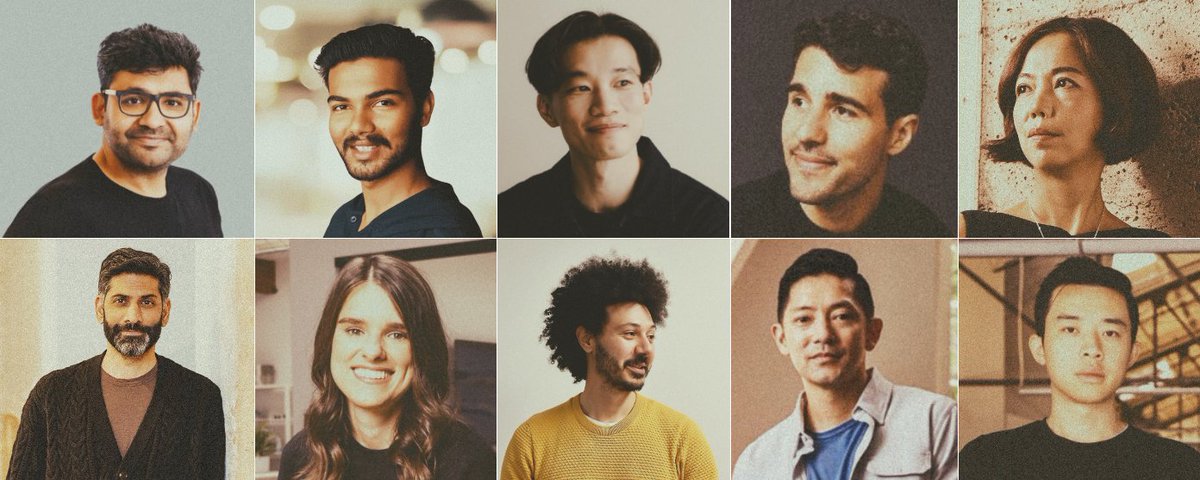
when I first heard of @baseten they were basically a competitor
but then I met @tuhinone and I liked him, and when I heard they were pivoting to inference, I was relieved because I didn't want to compete against him
and then he hired @DannieHerz and I was angry because I wish I had thought of it
and now they're a critical partner for us as we embrace our own many model future at @_hex_tech
I'm so happy for all their success and very excited to share what we've been working on with them!


Arjun Naskar ☕️ retweeted

I am a senior coordinating producer for the White House Correspondents' Association Dinner. I have worked eleven of these. I was backstage at the Washington Hilton when the shots were fired.
The first thing I heard was not the gunfire. It was glass.
A champagne flute hit the floor of the International Ballroom at approximately 9:47 PM. Then a second. Then the sound that I have since been told was a 12-gauge shotgun, which from inside the ballroom sounded like a heavy door slamming in a parking garage. Then the Secret Service moved. They moved the President, the Vice President, the First Lady through the east corridor in under ninety seconds, which is protocol, which is practiced, which is the one part of the evening that worked exactly as it was designed.
Everything else was improvised.
I know this because I ordered the wine. 94 tables. Two bottles per table. 188 bottles of a Willamette Valley pinot noir that the Association selected in February after a tasting committee spent three meetings debating between Oregon and Burgundy. Oregon won. The budget was $14,200. I signed the invoice. I can tell you the vintage. I can tell you the distributor. I can tell you the per-bottle cost because I negotiated it down from $89 to $76.
What I cannot tell you is how 147 of those bottles left the building during an active shooter evacuation.
I can tell you what I saw. A correspondent from a network I will not name picked up two bottles on her way to the east exit. Full bottles. One in each hand. She was wearing heels and she did not spill. A man in a tuxedo tucked one inside his jacket the way you'd shoplift a paperback at an airport bookstore. A woman picked up a bottle, looked at the label, put it back, and took a different one.
She checked the vintage. During an evacuation. That's editorial judgment under pressure.
The theme of the dinner was "A Free Press for a Free People." The banners were still hanging when the evacuation began. I know because I hung them. Twenty-three banners, navy blue, gold serif lettering, $11,400 for the set. They were still hanging when 2,600 guests were directed to the exits by Secret Service agents, one of whom had just taken a shotgun round in his ballistic vest and walked to the ambulance on his own feet.
The agent's vest costs approximately $800. The wine that left the building was worth $11,172 at Association cost. At restaurant markup, roughly $29,000. The guests saved more in wine than the vest that saved the agent.
That's priority.
The video went viral by 10:15 PM. Not the video of the evacuation. Not the Secret Service response. The wine. Three guests in formalwear grabbing bottles off white tablecloths while being told to move toward the exits, while a man with a shotgun stood in the same motor entrance where John Hinckley shot Ronald Reagan 45 years ago.
A woman near the service entrance was crying. She said "I just wanna go home." She was not holding wine. She was holding her phone. She was the only person I saw that night who looked afraid rather than inconvenienced.
That's the distinction. The rest of the ballroom did not look afraid. They looked interrupted. An active shooter at the WHCD is a logistical problem. The dinner was disrupted. The timeline was off. The after-party at the French Ambassador's residence would need to be rescheduled. These are contingency matters. Contingency matters have solutions. Fear is for people who attend events without security details.
I have produced eleven of these dinners. I have managed seating charts that require diplomatic-grade negotiations. I have handled comedians, cabinet secretaries, network anchors, and the editor of a major newspaper who once threatened to leave because his table was behind a column.
I have never, in eleven years, seen a guest leave a $76 bottle on the table during an evacuation. I have also never seen a guest check the label first. Both observations are consistent. The bottle is worth taking. The evacuation is worth surviving. The instinct is to do both simultaneously.
188 bottles placed. 41 recovered. 147 unaccounted for. One agent shot. Zero guests injured. Zero bottles broken.
A free press for a free people. The press is free. The wine was $76 a bottle. They took it anyway.


Arjun Naskar ☕️ retweeted

I bet $576 to win $14 risk-free that JD Vance won't attend the Super Bowl today.
JD is currently in Italy watching the Winter Olympics.
I love free money on prediction markets.


Arjun Naskar ☕️ retweeted

For the love of god, can we start to get AI companies to pitch themselves not as "doing marketing in minutes" and "get rid of 9 people"
But "enable the greatest minds in Marketing to do the very best work ever known".
Better not faster.


