

Mad-scientist investor main-questing Europe 🇪🇺 @prototype_cap 🦾 @euinc_petition 🇪🇺 🔧-prev: @producthunt @angellist @coinlist @beondeck ❤️ @susanneknoll
Berlin, Germany
Joined May 2008
- Tweets74.6K
- Following4.1K
- Followers71.3K
- Likes269K




Pinned Tweet
It only needs a few crazy ones to fix a continent… Let's be crazy… I got something to announce:
We're launching PROTOTYPE: a new fund, fully focused on Europe.
A small fund that punches way above it's size.
With it we back what Europe is world-class at: robotics, automation, manufacturing, and anything that requires hard engineering.
First check. First round. As early as it gets.
Europe invented industry. We're the birthplace of precision manufacturing. The second largest manufacturing hub on the planet. Leaders in automation and robotics.
And yet…
We sell out our best tech to China. We export our best founders & most of our investment money to the US. That's insanity.
What should we do instead?
Build the next trillion euro companies in robotics, manufacturing, automation right here: in Europe. Showcase to young founders what is possible and change the system around them where needed.
What we will do:
→ Publish all our fund updates and build in public: updates.prototypecap.com/
→ Showcase Europe’s Most Ambitious Startups on Youtube: youtube.com/@prototypecap
→ Launch & support more projects like @euinc_petition. Enough talking about Europe. Time to build it: Startups, makerspaces, student clubs, and much more.
→ And most importantly, invest into the best founders in Europe. Same model as our previous funds that are in their top 1-5% cohorts worldwide.
We won’t do a VC fund in the classic sense.
This will be a community of hyper-ambitious people who want to actively change Europe for the better.
It only needs a few crazy ones to fix a continent… Let's be crazy.
Check out prototypecap.com!



Finally his mask is off and he can be openly pro Putin.
At least this is honest.
xitter.cf/splendid_pete/status/2…

I can’t wait for this old fart to become nothing more than a faint stain on the fabric of history.
This idiot has the nerve to say it’s time for Ukraine to get a new president. Apparently, it’s not the aggressor who needs replacing, the one who has rigged every election, invades any country whose territory he fancies, and has never met a treaty, ceasefire, or international agreement he couldn’t violate.
Then again, a country that elected an idiot like this twice isn’t exactly firing on all cylinders either.
Genuinely appreciate the mask off version of Trump way more. 🙏🙏
This half-ass play pretend to be an ally of the west was just cringe.
He is pro trump, pro America, pro Russia. In that order. And deals between one and three squeeze good old two.
The Trump/kushner clan wants to make business in Russia. So America, europe, Ukraine get out of the way please.

BREAKING: President Trump puts new Russia sanctions passed by Congress on hold, saying a waiver is in the U.S. national interest. apnews.com/article/russia-sa…

"humanitarian"
wow
xitter.cf/Mike_Eckel/status/2112…

full Kremlin video of Putin and Witkoff meeting. "The president sends his thanks, the whole nation sends their thanks, because of Stephen Hubbard. Because of you, he's going home.... You are a humanitarian also, sir. I salute that. I commend you." t.me/news_kremlin/8194
“Only when the last opportunity has been fully regulated, the last talent fully lost, and the last technology innovation missed, will we realize we cannot eat legal papers.”
More regulation to enable please. Less to limit.

BREAKING NIUS: Für mich ist es einer der unglaublichste Auftritte von Bundeskanzler Friedrich Merz in dessen Amtszeit. Seit 17 Monaten erzählt Merz, er wolle Deutschland deregulieren, unnötige und schädliche Bürokratie beseitigen. Dann hat dieser Bundeskanzler die Möglichkeit, auf der Weltbühne, vor milliardenschweren Investoren dem Nvidia-Chef Jensen Huang eine Frage zu stellen. Und was fragt der Bundeskanzler? Er will wissen, wie man Künstliche Intelligenz am besten REGULIEREN kann. Als Huang antwortet, nunja, erstmal müsse die KI-Industrie in Deutschland aufblühen, bevor man sie regulieren könne, legt Merz nach. Er erklärt Huang, aus seiner Sicht sei entweder eine europäische oder gar eine globale Regulierung notwendig, um die "Schädlichkeit" von KI zu begrenzen.
Doing “evil things because they are actually good” vs “doing good things that turn out to be evil” will be the next culture war BS won’t it?
Satellites “accidentally” going into others orbits and “accidental” jamming is now more and more common.
People don’t realize yet how much space will be a defining factor in the future of warfare.

Russia’s military satellite Kosmos-2612 has maneuvered to within 26 meters of ICEYE-X36, a Finnish-American radar satellite whose imagery is supplied to Ukraine. Space analyst Georgy Trishkin said the near-zero relative speed could indicate an attempt to force ICEYE-X36 to make orbital corrections, potentially disrupting operations and using up its fuel. RAND researcher Michael Bohnert called the approach a show of force.
Andreas Klinger 🦾 retweeted

A mashup of my conversation with Robin

This is my first conversation with Robin Renz, co-founder and CEO of Hyperdrives
Hyperdrives is manufacturing super-efficient, highly power-dense, low-cost electric motors by solving their cooling problem. Their new engineering facility enables the company to iterate on the production line for the first time, in pursuit of manufacturing millions of motors.
Timestamps:
00:00:00 Hyperdrives
00:03:35 Ambition exceeding comfort
00:06:02 Growing up in a car workshop
00:07:37 Making electric motors smaller and cheaper
00:10:41 Innovation in electric motors
00:12:05 The heat constraint
00:17:54 Building for the masses
00:21:30 Electric vs combustion
00:24:05 Products vs licensing
00:27:03 Working with automotive OEMs
00:34:18 Electrifying mines, ships and aircraft
00:40:05 Chinese urgency
00:49:40 Faster iteration Wins
00:51:55 Feedback as a founder
00:54:22 Choosing the right partner
00:57:54 Scaling production and the team
01:00:55 Hire for attitude. Train for skill.
01:03:30 Radical Ownership
01:08:55 Reindustrialising Europe
01:11:23 Robin's hardest decision
Andreas Klinger 🦾 retweeted

I don’t think Europeans fully appreciate what is happening to the European Union right now.
The EU is under an extraordinary, multi-front assault, both from outside and from within. And I struggle to think of another period in its history when so many powerful actors had an interest in weakening it simultaneously.
Russia has spent years waging hybrid warfare against Europe. Weaponised migration, sabotage, cyberattacks, coordinated disinformation campaigns, bot networks and political interference. The objective is clear: undermine trust in democratic institutions, deepen social divisions and weaken European unity.
China has different motivations, primarily economic and geopolitical. A fragmented Europe is easier to pressure, easier to negotiate with individually and less capable of defending its economic interests.
And then there is the United States. Perhaps the most disturbing development of all.
Under Trump and MAGA, a country that helped rebuild the old continent and then spent decades supporting European integration now has an administration openly hostile to much of what the EU represents. Its own National Security Strategy even calls for cultivating resistance to Europe’s current political direction.
Think about that for a moment.
Meanwhile, within Europe, parts of the far right and far left amplify these divisions, whether through ideological alignment, political opportunism or outright sympathy for authoritarian regimes.
This doesn’t mean Russia, China and MAGA are all following some jointly coordinated master plan. They don’t have to. Their interests increasingly overlap, and Europe’s internal divisions make their work considerably easier.
What makes this particularly alarming is what is actually at stake.
For all its flaws, the EU remains one of the world’s most consequential projects built around liberal democracy, the rule of law, individual freedoms and cooperation between nations.
At a time when authoritarianism is gaining ground and even longstanding democracies are showing disturbing tendencies, that matters enormously.
Europe is far from perfect. Its bureaucracy, indecision and inability to act decisively are real problems. But the answer cannot be to retreat into 27 competing nation-states, each too small to meaningfully influence a world increasingly dominated by continental powers.
Quite the opposite.
Europe needs deeper integration, stronger common institutions, genuine strategic autonomy and the political courage to defend its interests and values.
Because fragmentation is precisely what so many external actors want.
And perhaps that’s the central irony of our time: people are being deliberately manipulated into believing that the reverse is true — that national identity and sovereignty can only be protected by weakening European cooperation. In reality, a divided Europe is less sovereign, less secure and far easier for outside powers to pressure. Therefore the very thing that will make Europe stronger is the thing its adversaries are working hardest to prevent.
A united Europe is a geopolitical power. A divided Europe is a collection of countries waiting to be played against one another.
Andreas Klinger 🦾 retweeted

Nvidia CEO Jensen Huang to Chancellor Merz:
I've also heard you say that you want to find that balance between innovation and regulation.
There's nothing to regulate if the industry doesn't thrive.
Andreas Klinger 🦾 retweeted
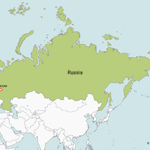
This has been Putin's dream for years: That his country, with GDP per capita lower than Poland, unable to conquer Donbas since 2014, will be treated as an equal to the US and China.
wsj.com/world/russia/putin-f…

Andreas Klinger 🦾 retweeted

The most built-upon model on the Hugging Face Hub isn’t Llama or Qwen.
It’s FLUX.1-dev from Black Forest Labs, a German lab: 43k derivative models.
Europe trained ~8% of the open-model compute on the Hub, but ~18% of what people build on top of it is European.
Build or surrender? Build, and build open. See you at GTC Berlin this week

Andreas Klinger 🦾 retweeted

Tell your story on the European obstacles to entrepreneurship and write to MEPs on the need for a real EU Inc here: euincomplete.eu/. To start Katalin Kariko, @TheRhineGroup member and Nobel winner for mRNA, and her daughter, shared their (nightmarish but typical) story of incorporating in Germany. Here it is in their words:
"The process of establishing a German GmbH has been considerably more complex and administratively burdensome than establishing a comparable entity in the United States, and we have faced logistical challenges throughout the process.
We first expressed interest in establishing a German entity in November of 2025 but were not able to complete the required corporate changes and obtain management and directorship until May 2026. Based on the advice of a German law firm specializing in biotechnology, we were advised that the fastest route would be to acquire an existing shelf company. A shelf company is a legally incorporated but inactive German company established specifically for subsequent acquisition and use by an operating business.
Even using this expedited route, the process took several months. The ownership, articles, company name, registered office, business purpose, and
management had to be changed from the shelf-company structure to Repeat Therapeutics GmbH.
Those changes then had to be properly notarized and reflected in the Commercial Register. German law also required an updated shareholder list when the ownership changed.
A German notary was responsible for authenticating the corporate actions and submitting the required filings to the competent Commercial Register. Because the
owners/directors were outside Germany, documents, powers of attorney, signatures, and corporate authority had to satisfy German form requirements. In the US we had to arrange to go to a German consulate member to notarize forms at multiple stages in the process.
Germany notary had to confirm to the commercial register that the share capital has been properly paid in.
Even when we paid the share capital, we had to provide different proof of funds to even put the minimum balance in the bank. We were required to provide several different forms of evidence regarding the source and ownership of funds before we were permitted to contribute the company's required share capital.
The company also had to complete or coordinate additional registrations and compliance requirements, including maintaining its shareholder information with the Commercial Register, identifying its beneficial owners through Germany's Transparency Register, establishing its German business address, completing tax and accounting registrations, and addressing local trade, payroll and employment requirements. Each of these required different documentation as well as scans of multiple forms of ID to provide proof of identity and residence.
Many of the steps were also interdependent. We could not move to the next until we received the green light from the German law firm that they were ready for the next step. As a result, what might appear to be the simple establishment of a German subsidiary in practice required coordination among German corporate counsel, a German notary, the Commercial Register, German banking institutions, U.S. and German authentication processes, tax and accounting advisers, and multiple German regulatory and administrative bodies over a period of approximately six months."
@patrickc @euinc_petition @andreasklinger

Andreas Klinger 🦾 retweeted

I love the idea, but I have to say I'm not fan of the wooden houses.
-> However, this would be great for temporary communities or new low-income communities where a lot of land is available and you don't need to build vertical.
However.
I don't understand why the Polish company which creates lego-like bricks which doesn't require any concrete between layers it not having faster adoption.

200 AUAR micro factories. That’s all the UK needs to clear its entire yearly housing backlog. 🏗️
I just visited AUAR in London. They are building fully autonomous micro factories for houses. A robotic arm, a robotic saw, a robotic assembly table. All of it fits in a shipping container.
The bet: Ship the factory to the construction site. Build walls there.
For 100 years people tried to industrialize housing. Every attempt failed.
Transport costs kill the economics. The factory is too expensive, the product too heavy.
AUAR inverts it. Ship the factory, not the product.
Two containers build a village. Ten build a small town. 200 build everything the UK needs in a year. And now they are starting to scale production.
Mollie and Gilles are architects who spent a decade researching construction robotics before it was cool, they even wrote the book on it.
We visited them as they are finishing their latest micro factory for a home builder on the US East Coast. One micro factory. 40 homes. Next they will help to build new UK cities for a million people.
Disclaimer: we’re small investors, big fans..
Disclaimer 2: Yes, the housing crisis can be fixed by robots. 🦾🇪🇺
Full video on Youtube: youtu.be/FhUQ4YVQL3g

Andreas Klinger 🦾 retweeted

So cool
200 AUAR micro factories. That’s all the UK needs to clear its entire yearly housing backlog. 🏗️
I just visited AUAR in London. They are building fully autonomous micro factories for houses. A robotic arm, a robotic saw, a robotic assembly table. All of it fits in a shipping container.
The bet: Ship the factory to the construction site. Build walls there.
For 100 years people tried to industrialize housing. Every attempt failed.
Transport costs kill the economics. The factory is too expensive, the product too heavy.
AUAR inverts it. Ship the factory, not the product.
Two containers build a village. Ten build a small town. 200 build everything the UK needs in a year. And now they are starting to scale production.
Mollie and Gilles are architects who spent a decade researching construction robotics before it was cool, they even wrote the book on it.
We visited them as they are finishing their latest micro factory for a home builder on the US East Coast. One micro factory. 40 homes. Next they will help to build new UK cities for a million people.
Disclaimer: we’re small investors, big fans..
Disclaimer 2: Yes, the housing crisis can be fixed by robots. 🦾🇪🇺
Full video on Youtube: youtu.be/FhUQ4YVQL3g

Andreas Klinger 🦾 retweeted

Got a wicked problem? Flip it.
AUAR ship the factory, not the product.
This team are on fire right now 🔥🔥
@_CommonMagic x @prototype_cap @andreasklinger
200 AUAR micro factories. That’s all the UK needs to clear its entire yearly housing backlog. 🏗️
I just visited AUAR in London. They are building fully autonomous micro factories for houses. A robotic arm, a robotic saw, a robotic assembly table. All of it fits in a shipping container.
The bet: Ship the factory to the construction site. Build walls there.
For 100 years people tried to industrialize housing. Every attempt failed.
Transport costs kill the economics. The factory is too expensive, the product too heavy.
AUAR inverts it. Ship the factory, not the product.
Two containers build a village. Ten build a small town. 200 build everything the UK needs in a year. And now they are starting to scale production.
Mollie and Gilles are architects who spent a decade researching construction robotics before it was cool, they even wrote the book on it.
We visited them as they are finishing their latest micro factory for a home builder on the US East Coast. One micro factory. 40 homes. Next they will help to build new UK cities for a million people.
Disclaimer: we’re small investors, big fans..
Disclaimer 2: Yes, the housing crisis can be fixed by robots. 🦾🇪🇺
Full video on Youtube: youtu.be/FhUQ4YVQL3g
Agree with this premise.
Ultimately it's the economy and the individual's perspective on a less opportunistic future.

A few thoughts about Paris, France and the state of the world in general:
1. What happened yesterday is bad, but not as bad as it looks. Yes, they burnt the town hall of another city; yes, they pillaged shops and ruined some people’s lives; but it’s in line with previous protests and still confined to specific (shitty) areas. Basically: “don’t go to the 10th arrondissement and you’ll be fine” is a piece of advice I’d give every day, protest or not.
2. Yes, it’s true, immigration doesn’t work, but it’s not the main problem. It’d be easy to call for mass deportation, but a much simpler, fairer and better solution would be to… enforce the law. Yes, it’s that simple. Put these people in jail for a long time. We should merely remember that jail’s purpose is primarily to remove toxic individuals from society and that it’s OK to throw someone in prison if it’s justified and socially optimal.
3. It’s bigger than that. What’s happening is a collapse of social-democratic regimes. Tocqueville wrote that democracy narrows any inequality down to either corruption or merit. And since it’s pretty hard to admit you’re dumb, people tend to flock to revolts against the system. One way to fight that is strong growth, but there hasn’t been growth for the past 30 years. As a result, we have to deal with an increasingly angry crowd.
4. It’s not only France. France is always pretty loud about these issues, but the same is happening everywhere. You can think it’s exclusively due to immigration, but one simple rebuttal is that this anger is shared by people of various classes and ethnicities across most Western countries.
5. The truth is that our economies are collapsing and have been collapsing for the past 30 years. Up until now, we’ve made up for it with debt. But even that is coming to an end. Individually, this doesn’t mean there is no money to make, but as a group, we’re getting poorer and using as many credit cards as we can to pretend we’re not.