

Solana protocol updates Validator research LP
Joined April 2023
- Tweets106
- Following96
- Followers44
- Likes89
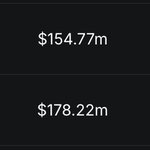
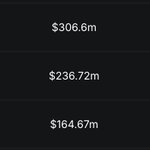
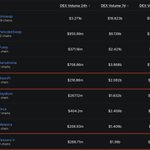


1/3
Providing liquidity on-chain is no longer a passive way to earn yield.
The old model was simple: deposit two assets, earn fees, hope those fees cover losses to arbitrageurs.
That worked only while the pool got enough uninformed flow.
1
22
2/3
Volume is no longer the full story.
An LP can see high volume, collect a fee on every trade, and still lose money. Informed traders are systematically hitting stale prices.
The edge has moved to where liquidity sits, how tight it is, how fast the price updates, and whether fees rise with volatility.
2
1
17
3/3
LP returns are shifting from passive capital to active liquidity management.
Classic AMMs, Orca Whirlpools and Meteora DLMM do not remove adverse selection. They change how much of it the LP absorbs.
The question is no longer “how much volume?” It is “who is trading against me — and why?”
Full breakdown: teapaw.org/andrewrust_sol/status/…
@MeteoraAG @RaydiumProtocol @orca_so @solana

1/4
How do LPs make money and where do they lose it?
An LP in an AMM does not set prices. It posts assets and lets others trade against them.
Those trades come from two very different counterparties.
1
11
1/4
How do LPs make money and where do they lose it?
An LP in an AMM does not set prices. It posts assets and lets others trade against them.
Those trades come from two very different counterparties.
1
53
3/4
The second is an arbitrageur.
SOL has already fallen 0.3% on Binance but the pool is still quoting the old price.
A bot trades against the stale price and captures the difference. The LP keeps the fee but may lose more than it earns.
1
29
4/4
This is adverse selection: the LP trades with someone who knows the current price before the pool does.
In academic literature, this cost is called LVR loss-versus-rebalancing.
The basic LP equation:
Fees from uninformed flow must exceed losses to arbitrageurs.
On Solana the gap shows up fast. Classic AMMs like Raydium often leak more LVR on volatile pairs. Meteora DLMM tries to narrow it with tight bins and dynamic fees, so uninformed flow more often covers the arb. Orca Whirlpools is the other design: ticks and a static fee tier.
Paper: arxiv.org/abs/2208.06046
@jason_of_cs @Tim_Roughgarden @alz_zyd_ @MeteoraAG @RaydiumProtocol @orca_so

24
Tessera V prop AMM has already passed most venues on 7-day volume and is close on the 30-day window. @MeteoraAG DLMM still shows higher net earnings for LPs per dollar of memecoin volume even with lower turnover. Thread: teapaw.org/andrewrust_sol/status/…

1/8 BisonFi just out-traded Raydium: $9.6B in 30 days, #5 DEX in the world (DefiLlama).
You can't LP into it. One market maker ~$22M of its own inventory.
2 of the global top 10 DEXs are now prop AMMs. That's why a Jupiter swap prices like a CEX 🧵

62
Ever wonder why SOL/USDC on Solana often fills tighter than a normal pool?
A regular AMM is a formula. Anyone can deposit, and the price only moves when someone trades. If SOL drops on Binance, the pool stays stale until an arb bot trades against the old quote.
A prop AMM is one market maker’s pool. Only their inventory. They set the price themselves, in separate txs, from their own model: CEX, inventory, volatility. The formula lives in a closed program.
Basically a CEX market maker quoting straight onchain. You usually reach it through Jupiter not a frontend.
@solana @Raydium @MeteoraAG #DeFi #propAMM
43
BisonFi did $9.5B in 30 days and edged @Raydium on @DefiLlama ($9.50B). @Pumpfun is next in line at $12.7B over the same window. Prop AMMs overall took ~37% of @Solana DEX volume, while classic pools still capture more direct flow (~20% via aggregators vs 85–99% for props). Breakdown: teapaw.org/andrewrust_sol/status/…

1/8 BisonFi just out-traded Raydium: $9.6B in 30 days, #5 DEX in the world (DefiLlama).
You can't LP into it. One market maker ~$22M of its own inventory.
2 of the global top 10 DEXs are now prop AMMs. That's why a Jupiter swap prices like a CEX 🧵
2
55
1/8 BisonFi just out-traded Raydium: $9.6B in 30 days, #5 DEX in the world (DefiLlama).
You can't LP into it. One market maker ~$22M of its own inventory.
2 of the global top 10 DEXs are now prop AMMs. That's why a Jupiter swap prices like a CEX 🧵
7/8 Your swap reaches them almost only via aggregators. 85–99% of prop AMM volume comes through Jupiter, OKX, DFlow, Titan. For Raydium, Orca and Meteora it's ~20%.
Jupiter Ultra marks its flow onchain. One prop AMM quotes that flow ~3 bps tighter. Retail is the flow these MMs want.
1
27
Solana Transaction V1 is live on Testnet and Devnet. It raises the transaction size limit to 4,096 bytes but drops Address Lookup Tables.
Here’s why and when to use V1 vs V0 + ALTs.
cc @solana_devs

If you want it done right, build it yourself.
5M downloads later @zbr0wn and @anza_xyz keep @solana and the broader Rust ecosystem winning. 💪

wincode has surpassed 5M downloads 📦📈
Our Rust crate started as a fix for serialization performance in the Agave validator client.
RustSec now lists it as a recommended bincode replacement. Built to make Solana faster, now adopted across the Rust community.
Credit to Anza IBRL engineering culture who keep pushing the envelope on speed.
How it works by wincode creator @zbr0wn: anza.xyz/blog/wincode-bincod…

1
71