

Comunidad en memoria del espíritu inmortal de #FreddieMercury. Sitio web desde el año 2000 con noticias e información de #Queen.
España 🇪🇦
Joined March 2010
- Tweets36.5K
- Following150
- Followers51.9K
- Likes17.6K




3 September 2012 – Roger Taylor raising a toast to Freddie on what would have been his 66th birthday:
“Every anniversary, I’m always struck by how impossible it feels that so much time has passed, and yet I still miss him. He was my best friend, my best man. We shared so much, and I owe so much to him.
It’s hard to believe that dear Freddie has been gone all these years. The initial pain has softened, of course, but I can honestly say not a single day goes by that I don’t think of him and feel the absence of his presence. He filled a huge part of my life—the lives of the rest of the band—but even more so, the lives of the millions of people he never met.
Looking back, I think one thing that often goes unsaid—beyond his fun, outrageousness, generosity, and incredible vocal talent—is the sheer brilliance of his musicianship. He was leagues ahead, baby. Freddie, we love you, we miss you, old friend!”.
– Roger Taylor
#rogertaylor #freddiemercury

Her name was Barbara Valentin. Born Ursula Ledersteger in 1940, she built a celebrated career in German cinema, working with legendary director Rainer Werner Fassbinder, and was often nicknamed the German Jayne Mansfield. But to Freddie Mercury, who had retreated into the Munich nightlife in the early 1980s for privacy and freedom, she was simply a safe haven.
Their first meeting was one of the most extraordinary and deeply human moments in rock biography. Seeking an escape from a deafeningly loud Munich club, the two overwhelmed superstars retreated to the quietest place they could find: the ladies' restroom. It wasn't a scandal; it was a sanctuary. Freddie sat on the floor with their drinks, Barbara sat on the seat, and they talked endlessly. They stayed in that cubicle talking until the cleaning crew arrived the next morning. That single, all-night conversation sparked one of the deepest and healthiest friendships of Freddie Mercury's life.
During the early to mid-1980s, Valentin became one of his closest companions. He lived with her and her daughter, Minki, in her Munich apartment for a period, finding a rare sense of family and normalcy. She famously appeared in the music video for Queen's "It's a Hard Life," a testament to her constant presence in his world. They were so close that they eventually co-purchased a Munich apartment together on Hans-Sachs-Straße, though Freddie returned to London due to his declining health before they could fully settle into it.
Biographers have argued for decades about how to label them, but those who knew them understood it perfectly. Freddie's personal assistant, Peter Freestone, noted that Freddie loved Barbara's straightforwardness and their mutual sense of fun. Her daughter described their bond as incredibly close, noting they found pure comfort and safety in simply sharing a life together without it being a sexual relationship. They were platonic soulmates, not lovers or strangers, but something much deeper and harder to name.
Tragically, when Freddie passed away in November 1991, Barbara was not included in his will, nor was she invited to his strictly private funeral. She spoke about him publicly for years afterward, fiercely defending his legacy and cherishing his memory, though she never quite recovered from the heartbreak of losing him and feeling shut out of his final chapter.
Barbara Valentin passed away from a stroke in Munich on February 22nd, 2002, at the age of 61. The woman who sat in a Munich restroom and shared drinks and stories with Freddie Mercury until dawn passed away without ever being properly written into his official story. She was his confidante, his chosen family, and the anchor of his Munich years, and she deserves to be remembered for the profound peace she brought to his life.
#freddiemercury #barbaravalentin

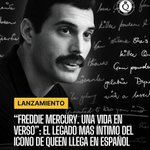
🎤✨ Freddie Mercury, más allá de la leyenda.
Su voz conquistó el mundo, pero sus versos nos acercan a una faceta mucho más íntima y personal del inolvidable icono de Queen.
📖 «Freddie Mercury. Una vida en verso» llega en español para descubrir la sensibilidad, las emociones y el universo interior de un artista irrepetible.
🖤💛 En A Queen Of Magic te contamos todos los detalles de este lanzamiento que invita a conocer a Freddie desde otra perspectiva.
👉 Lee el artículo completo en nuestra web:
🔗 aqueenofmagic.com/2026/10/27…
Porque detrás de la voz que hizo historia, también había un poeta.
👑 The Show Must Go On.
#FreddieMercury #Queen #UnaVidaEnVerso #FreddieMercuryEnEspañol

«Freddie Mercury. Una vida en verso»: el legado más íntimo del icono de Queen llega en español aqueenofmagic.com/2026/10/27…

David Bowie had a hit record and still couldn't afford a pair of boots. Freddie Mercury was working in a market stall — and gave them to him for free. Twelve years later they made "Under Pressure" together. Freddie Mercury never mentioned the boots. Not once.
April 1969. Ealing Art College canteen.
An unknown singer-songwriter named David Bowie arrived to play a lunchtime gig. A fascinated Freddie Mercury followed him around — offering to carry his gear. Bowie put him to work pushing canteen tables together as a makeshift stage.
Two future legends. One building a stage for the other.
Neither had a hit record yet.
Months later — "Space Oddity" was released. Bowie had his first success.
But success and money — as Freddie Mercury was about to discover — were not the same thing.
By 1970 — Freddie Mercury was working as a shop manager at Alan Mair's boot stall in Kensington Market. Mair's handmade leather boots were becoming famous — worn by Santana, The Rolling Stones, Keith Moon and Deep Purple.
One afternoon — David Bowie walked in.
"'Space Oddity' had been a hit, but he said he had no money," Mair recalled in *Is This The Real Life*. "Typical music biz! I said, 'Look, have them for free.' Freddie fitted Bowie for the pair of boots. So there was Freddie Mercury — a shop assistant — giving pop star David Bowie a pair of boots he couldn't afford to buy."
Mair described Freddie as a model employee — always efficient, always polite. No attitude problems. No complaints. He got there a little late sometimes — but that didn't matter.
Then came 1981.
Queen were at Mountain Studios in Montreux. David Bowie arrived to record another track.
They wrote "Under Pressure" together in a single session.
Freddie Mercury never mentioned their first encounters. Not the amp. Not the stage. Not the boots.
He simply walked in — and made one of the greatest songs in rock history.
From carrying his amp — to co-writing his greatest collaboration.
Twelve years. Not a word about any of it.
That is exactly who Freddie Mercury was.
#freddiemercury #davidbowie

Descubre cómo Freddie Mercury creó ‘We Are the Champions’, el himno de Queen que conquistó el fútbol y se convirtió en un símbolo de victoria aqueenofmagic.com/2026/10/27…

In 1977, Freddie Mercury wrote a song that didn’t fit Queen, unaware it would become a worldwide anthem
There are two very different sides to the famous Queen sound.
On the one side, there is the elaborate experimentation of their rock opera. Best seen in their cultural behemoth of a hit, ‘Bohemian Rhapsody’, the sound was usually built on a spiralling Brian May riff that changed pace and direction with every new verse, in a desperate attempt to keep up with Freddie Mercury’s wild storytelling imagination and soaring vocal range.
It’s hard to accept that the very same band responsible for ‘Bohemian Rhapsody’ could also write ‘We Will Rock You’, thus displaying their rather concerning second side. The clap-and-stomp anthem is the sort a primary school music class would have proudly devised and subsequently sung in the playground for eternity. Ultimately, it’s not the sort of song you’d associate with a band so synonymous with breaking new ground.
So, they’re a somewhat paradoxical band, with one brow sunken below the floor and the other raised into the cosmic space of musical creation. Ultimately, it’s an approach that makes crafting an album all the more difficult, for there is no real way for them to bridge the gap between the simple and the complex in one record.
That’s especially true when the album is as brilliant as their 1975 effort, A Night At The Opera, the one that plays host to their hit ‘Bohemian Rhapsody’ and also showcases some of their best songwriting of all time in songs like ‘You’re My Best Friend’ and ‘Lazing On A Sunday Afternoon’. In that world, there was no room for something quite as simple, and once again, chant-based as ‘We Are The Champions’, a song that rivals ‘We Will Rock You’ for its simplicity.
“I was thinking about football when I wrote it. I wanted a participation song, something that the fans could latch on to,” Mercury admitted, confirming the terraces were on his mind all along.
So, when Queen got back in the studio after ‘A Night At The Opera’, and the album opened with ‘We Will Rock You’, the band decided that ‘We Are The Champions’, which was written two years prior in 1975, finally had a recorded home, somewhere it could rightfully exist alongside other songs and not wreck the wider sentiment of the album.
After it was finally released on 1977’s News Of The World, it followed the trajectory its writer set out for it, quickly becoming a football fan anthem and the definitive victory song in sport.
Mercury admitted, “It’s lovely to hear that ‘We Are The Champions’ is a song that’s been taken up by, you know, football fans ’cause that’s a winners’ song which keeps coming back; I can’t believe that somebody else hasn’t written a new song to take it over.”
Ultimately, it shows the vast appeal of Queen and how their music can sit in various pockets of subculture. What I’ve called rudimentary songwriting might in fact be an exercise in restrained brilliance, proving that music in its most primal form has an ability to connect with the masses and really, nobody did that better than Queen.
#Queen #FreddieMercury #WeAreTheChampions
La historia de Freddie Mercury que cambió el rock aqueenofmagic.com/2026/10/27…

A Queen Of Magic 👑 retweeted
He turned Freddie Mercury down the first time they met. He didn't even know who he was. Seven years later — Freddie was cremated still wearing the gold ring Jim had given him.
In March 1985 — Freddie Mercury walked up to a man in a London g*ay club called Heaven.
He offered to buy him a drink.
The man was Jim Hutton — a hairdresser from County Carlow, Ireland, working at London's Savoy Hotel. He didn't recognise Freddie Mercury. He was already seeing someone. So he said no.
Freddie walked away.
About eighteen months later — they crossed paths again. This time the sparks flew.
Hutton moved into Mercury's Garden Lodge mansion shortly after they began dating. To protect their privacy — he was introduced to everyone, including Freddie's own parents, as the gardener.
But behind closed doors — Freddie called him his husband.
Ga*y marriage was not le*gal in the U*K. They wore gold wedding rings anyway — as symbols of their commitment.
Then in 1987 — Freddie received his AID*S diagnosis.
He told Jim directly — "I'd understand if you wanted to leave." Jim's response was immediate — "I love you, Freddie. I'm not going anywhere."
He stayed. Every single day. Through every painful stage.
In Freddie's final days — Jim described carrying a chair to the doorway so Freddie could sit and look at his paintings one last time. Freddie was too weak to stand. Jim kept close — in case he fell.
Freddie Mercury was cremated still wearing the gold ring Jim had given him in 1986.
Jim Hutton d*ied on New Year's Day 2010 from lung cancer — at the age of 60.
The man who didn't know Freddie Mercury's name — became the last great love of his life.
#FreddieMercury #JimHutton

The song too difficult for Queen to perform at Live Aid
The immediate image that likely comes to mind when thinking of classic rock icons Queen in their pomp is probably their scene-stealing show at Live Aid.
Frontman Freddie Mercury strutting across the stage with effortless command, donned in white jeans and vest, and orchestrating the improvised “Ay-Oh” exchange with the crowd, stands as a glowing chapter in Queen’s hagiography, serving as the conclusive climax to their 2018 Bohemian Rhapsody biography.
The six-song set, Mercury and guitarist Brian May would take the stage three hours later for a joint rendition of ‘Is This the World We Created…?’, either captures everything grippingly theatrical about the rock survivors or all that’s tediously West End, such is the division they trigger.
It wasn’t a booking event that organiser Bob Geldof was so sure of. Pushed by promoter Harvey Goldsmith, the Boomtown Rats singer hesitantly contacted the Queen team, unsure of their stature in the music world and mindful they’d just finished a punishing world tour. “I think their star had risen and fallen is the truth,” Geldof confessed on CBC’s Q with Tom Power. “I was asked to call them and get them to do it. Frankly, I didn’t care because if you want one word to explain why punk happened: Queen.”
Queen was still big. Dropping The Works the previous year, singles like ‘Radio Ga Ga’ and ‘I Want to Break Free’ all landed canonical hits for the band, but recent shows in South Africa’s Sun City during the album’s tour had caused severe backlash among much of the entertainment industry, pursuing a cultural boycott of the country’s racist Apartheid system. Punk too threatened their cultural primacy. While a few years back, by 1985, the original new wave cohort still saw Queen as something of an anachronistic dinosaur, despite sharing Wembley Stadium billing with the likes of Status Quo.
There were plenty of hits to choose from. 11 albums in by the time of Live Aid, Queen took to the stage around 6:40pm, opening with an excerpt of ‘Bohemian Rhapsody’ before segueing to a sped-up ‘Radio Ga Ga’. After Mercury’s famed crowd back and forth, the quartet briskly fired through ‘Hammer to Fall’, ‘Crazy Little Thing Called Love’, a tightened ‘We Will Rock You’, then rounding off with the chanting ‘We Are The Champions’.
Yet, fans in the audience or watching the BBC’s live coverage may have been surprised by the omission of ‘Another One Bites the Dust’. A massive number from 1980’s The Game, the disco funk groover would have seemed a likely choice for their setlist, reaching number one on the Billboard Hot 100 when dropped. Among a myriad of reasons, from consideration for the select time slot to the lack of interactivity with the crowd, a major factor for ‘Another One Bites the Dust’s shift may well have been the demand on Mercury’s vocals.
Queen’s brief set was arranged to flex the different shades of the Queen sound. This was no less true for Mercury’s frontman duties than May’s guitar attack. Opting for concise performances afforded Mercury the powerful and potent bursts of theatrical bluster and bellowing operetta pop wrung for maximum arrest that the bass-heavy ‘Another One Bites the Dust’ couldn’t promise, a sagging of the band’s tempo, and accelerating vocal fatigue with its rap-like delivery.
Whatever grumbles may have been had among fans were dashed, however. While David Bowie’s rousing ‘”Heroes”’ takes the day’s silver medal, Queen’s brief take of the Live Aid stage ushered in a new era of critical renewal for the band, with consensus often placing their Wembley slot as the greatest performance in rock history.
#Queen #RadioGaGa #LiveAid
The song Queen almost released instead of ‘Bohemian Rhapsody’
It’s easy to commend the severity of the fight that Queen had to put up just to get ‘Bohemian Rhapsody’ over the line.
But when you look at all the things that their labels, execs, and even radios looked for (and still do) with so-called listener-friendly tracks, it makes complete sense. After all, ‘Bohemian Rhapsody’ wasn’t initially the most accessible song the band could have come up with, but it did end up being one of the most culturally impactful in all of history.
Let’s break it down. Structurally, ‘Bohemian Rhapsody’ is a radio nightmare. It makes sense that when the band took it to the label and manager, they immediately tried to shut it down. Length-wise, it’s also a major red flag. Running at around six minutes long, the song didn’t exactly fit into the radio’s three-minute sweet spot. Lyrically and melodically, it had its charms. But again, it’s not exactly something that some disk jockey would have looked at and thought, ‘Yeah, that’ll draw people in straight away’.
And so it goes. Queen had to put up a fight, Freddie Mercury taking the reins in almost all conversations, defending every reason why the song was a worthy single. But it was also a blessing that people eventually backed down, not only embracing the creativity of the song itself but also the benefits it brought with it. For radios, it provided the perfect opportunity for an extended studio break. For Mercury, it satisfied his need for pushing the boundaries of mainstream creative expression. And for the label, it had a knock-on effect they couldn’t have predicted if they tried.
But opting to put ‘Bohemian Rhapsody’ out there for all to sink their teeth into wasn’t their first choice, no matter how much Mercury’s adamance made it seem so. In fact, there was another song they were toying with at the time that almost took its place. As the release for their latest reissue, A Night at the Opera, claims, they were toying with the idea of releasing ‘The Prophet’s Song’ at first, until it became clear ‘Bohemian Rhapsody’ was it.
In a way, however, every member sort of already knew this, deep down. As Roger Taylor explains, “I always believed in ‘Bohemian Rhapsody’ from the start. The first time Fred played us his idea for it, I remember thinking, ‘Oh, this is something special.’ And it was.”
The song went on to smash records that blindsided even the band. It sold over a million copies in Britain alone and sparked its own cultural moment that’s still heavily influencing most corners of the industry today. In true fashion, Mercury celebrated its achievements with humour, saying, “Imagine all those grandmothers grooving to it!” A real spark of joy for someone who once said the song came from “just a phase” he was going through.
But sometimes, those moments are the best for creative expression. Sometimes, it’s easy to praise musicians who already know they’re onto something timeless. But ‘Bohemian Rhapsody’ truly was an immense risk, one bound to its own fleeting concepts and far outside anything deemed mass-appropriate at the time. But in the end, it proved that there’s sometimes no rhyme or reason for the things that stick. Sometimes, it’s just pure inexplicable lightning in a bottle.
#FreddieMercury #Queen #BohemianRhapsody
Under Pressure: 45 años de una colaboración icónica entre Queen y David Bowie aqueenofmagic.com/2026/10/26…


🎸🔥 ¿Y si te dijeran que una de las canciones más icónicas de Queen nunca sonaría en la radio?
En 1977, Brian May tuvo que defender una idea que no convencía ni siquiera a todos sus compañeros de banda. Roger Taylor dudaba de que pudiera funcionar. El resultado fue ‘We Will Rock You’, un himno que acabaría conquistando estadios de todo el mundo. 🤘👑
🥁 Un ritmo inconfundible.
🙌 Millones de voces cantando al unísono.
🎤 Una canción que convirtió al público en parte del espectáculo.
¿Cómo nació esta obra maestra de Queen y por qué Brian May apostó por ella cuando otros no lo tenían tan claro?
👉 Descubre la historia completa: aqueenofmagic.com/2026/10/26…
💬 ¿Recuerdas la primera vez que escuchaste ‘We Will Rock You’? ¡Cuéntanoslo en los comentarios!
#Queen #BrianMay #WeWillRockYou #FreddieMercury #RogerTaylor

🎸🔥 UN DÍA COMO HOY, 26 DE OCTUBRE DE 1981…
👑 Queen y David Bowie hicieron historia con “Under Pressure” 🎶
Una colaboración legendaria que unió dos fuerzas irrepetibles de la música para crear una canción inmortal. Con su bajo inconfundible, sus armonías únicas y una letra que sigue emocionándonos, Under Pressure se convirtió en mucho más que una canción: un himno a la humanidad, la empatía y la necesidad de estar unidos. ❤️🎤
🎵 Más de cuatro décadas después, su mensaje sigue tan vigente como el primer día.
💬 ¿Qué sientes cada vez que escuchas “Under Pressure”? ¡Te leemos en los comentarios!
🤘 ¡Dale al play y que suene Queen!
#Queen #DavidBowie #UnderPressure 🎸👑
In 1977, Brian May was told his Queen song would never get radio play. 1,000,000,000 streams later, it became their biggest anthem.
Brian May didn’t ever want to apologise for wearing all of his influences on his sleeve.
Throughout Queen’s discography, he was always the one bringing something slightly more abrasive to the fold, and the combination of his heavy riffs, combined with Freddie Mercury’s campy demeanour, is what made them such an unstoppable force when they first got onstage. But when they started playing their songs live, they started to realise that their most treasured tunes belonged to the audience just as much as they belonged to them whenever they played along with them.
There was nothing stopping them from making the best rock tracks they could, but their audiences were really the fifth member of the band. They could turn in some of the most hypnotic rock and roll songs ever made and even manage to write a few kickass riffs here and there, but when you’re in front of a massive audience, most people are just going to pray that they don’t have things thrown at them whenever they launch into one of their songs in their earliest days.
As it turned out, though, the market for bringing some more theatricality to rock and roll was fairly high, and in an age when artists like David Bowie were taking over the world, Queen were never that far behind. But for all of the outlandish stage outfits that they wore from time to time, May figured that there was a way to connect with the audience on a much more visceral level than just being traditional rock stars.
He already had a problem with people constantly screaming for them instead of listening to the music, but that’s not really a choice he got to make. Their greatest inspirations, like Led Zeppelin, had people dissecting what they were doing every single time they played, but there was a lot more fun to be had when May started to lean into the participation side of their music every time they played.
The audience was the loudest thing whenever they performed, so why not make them part of the act when working on a tune like ‘We Will Rock You’? The whole band may have been a bit lenient when it came to having a song with no real instruments, but when everyone got to clapping, and Mercury sang the lyrics, it was the kind of feeling that made the hairs on your arms stand up when you heard it.
Even when the band was finishing up the record, though, May was told by Roger Taylor that the band were never going to have a hit with a song like that, saying, “Roger had severe misgivings about it. He said, ‘No radio station is ever going to play this! It doesn’t sound like a rock song.’ But I fought that corner. And generally, I didn’t win those arguments, but this time I won. So that was the beginning of the album.”
Given where Queen has gone ever since that song, though, there’s a good chance that May didn’t need to work a day in his life after writing this song alone. He lived for trying out new things, but having a tune that was all about giving the audience something to do was a work of mad genius, to the point where the song feels more like a part of Western culture than a traditional pop song these days.
Anyone who has ever gone to a sporting event in the past 25 years has undoubtedly stomped and clapped their way through this song at least once, and while Taylor may have had his doubts, there was no reason to think that no instruments would be a detriment to them. Queen had a habit of going over the top, but even if they had no instruments at their disposal, they could still make some of the greatest rock and roll anyone had ever heard.
#Queen #WeWillRockYou #BrianMay
El lanzamiento de Under Pressure que cambió a Queen aqueenofmagic.com/2026/10/26…

Kashmira Bulsara, known for many years as Kashmira Cooke after her marriage, is the younger sister of Freddie Mercury. She was born in 1952 in Zanzibar, Tanzania, to Bomi and Jer Bulsara, members of a Parsi family. In 1964, the family left Zanzibar and moved to England, escaping the political upheaval caused by the revolution there.
Although she was the only sister of the legendary Queen frontman, Kashmira has always chosen to live a quiet life, staying far from the spotlight that surrounded her brother’s extraordinary career.
In 1972, she married Roger Cooke, an English singer and producer. Together they had two children, a son named Samuel and a daughter named Natalie. The family settled in Nottingham, where Freddie would occasionally visit during the 1970s and 1980s, even as his fame continued to grow worldwide.
After Freddie Mercury’s death on November 24, 1991, from complications related to AIDS, their parents, Bomi and Jer Bulsara, moved to Nottingham to be closer to Kashmira. Bomi passed away in 2003, and Jer followed in 2016, making Kashmira the last surviving member of Freddie Mercury’s immediate family.
Today, Kashmira is believed to live in Mapperley, a residential area of Nottingham. While she values her privacy, she has taken part in a small number of projects honoring her brother, including the documentary Freddie Mercury: The Final Act (2021), where she shared heartfelt memories of his final days. She has also attended important Queen-related events, such as the 2018 premiere of Bohemian Rhapsody.
Following her divorce from Roger Cooke, she resumed the Bulsara surname and has quietly dedicated herself to preserving Freddie Mercury’s legacy. This includes supporting causes like the Mercury Phoenix Trust, the HIV/AIDS charity founded by Queen’s members. Her life today remains calm and private, centered on her family and on honoring the memory of her brother.
#FreddieMercury #KashmiraBulsara
