

Arabiqa is an account dedicated to Arab history and civilization. | Posting a lot on continuity between pre-Islamic and Islamic Arab history.
Joined July 2021
- Tweets1.2K
- Following68
- Followers3.3K
- Likes1.7K




ARABIQA 🇵🇸 retweeted
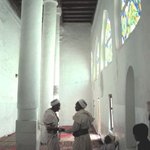
Great Mosque of Shibam Aqyan | Northern Yemen, near Kawkaban.
Built in the 9th century by the Yu'firid dynasty, it carries the legacy of Himyar: its materials, particularly the columns, are reused Himyarite columns.
The mosque itself was built on top of a pre-Islamic temple.


ARABIQA 🇵🇸 retweeted

طيب الرومي شو كان يعمل باليرموك؟ والفارسي شو كان يعمل بالقادسية؟
يعني روما توسعت حلال عليها لأن اخر فترة تبنت النصرانيه
وفارس توسعت حلال عليهم
بس العرب المسلمين لا حرام لايجوز
رغم انهم الأولى بتلك الاراضي من الفارسي والروسي
وهم الورثة للحضارات الساميه المنقرضة

الاحتجاج بأن السبي حصل للضرورة وان الحروب ينتج عنها اسرى مسلمين
فكيف يمكن أن نطلق سراح الاسرى من غير ان يكون لنا أسرى للاعداء
هذه الرأي يخالف ثلاثة مفاهيم :
- أن اغلب الغزوات الاسلامية كانت هجومية : القادسية بلاط الشهداء اليرموك اجنادين فتح القسطنيطية
اي أن المسلمين هم من يعتدي و هم من يرتب نتائج الاعتداء لصالحه
- كثير من الغزوات تسببت بهروب الناس للجبال او عبر البحر باتجاه اوربا ولم تكن هنالك جيوش تتصدى لعدوان المسلمين و كان المسلمون الغزاة يدخلون هذه المدن و يسترقون اهلها كما فعل معاوية مع اهل ارواد و كما فعل محمد بن مروان في أرمينية و المصدر في الاسفل
- بقاء المسلمين لاجيال طويلة داخل الخلافة الاسلامية و انجابهم ابناء عبيد مثلهم و كثيرا ما نقرأ أن فلان مولى لفلان و كثير منهم حصل على مكانة دينية ليعزض بها النقص لي لحق بأسرته نتيجة الوقوع في الأسر , كل هذا دليل على ان الغاية لم تكن استبدال الاسرى لدى المسلمين بأسرى لدى الرومان و غيرهم
انما كانت احتلال مكتمل الاركان يتبعه تطبيع ثقافي و تعريب شبه اجباري بالوسائل غير المباشرة


ARABIQA 🇵🇸 retweeted

The irony of a Persian nationalist claiming Persians gave Arabs their grammar, while ignoring how profoundly Arabic shaped Persian vocabulary, poetry, and literary traditions. Talk about reversing history!
Arabs had been speaking according to their own grammatical rules for centuries before Sibawayh. What he did was describe and document them. Sibawayh was an Arabized scholar of Persian origin. He was a student of the Arab grammatical school of Basra, and his teacher was the Arab scholar al-Khalil ibn Ahmad al-Farahidi, without whom you wouldn’t have Persian poetry which flourished after Islam, drew heavily on Arabic literary foundations, particularly the system of prosody codified by the Arab scholar al-Khalil ibn Ahmad al-Farahidi. Classical Persian poetry adopted and adapted Arabic meters, rhyme conventions, the bipartite verse (bayt), poetic genres, and rhetorical traditions rooted in pre-Islamic Arabic literature.
unavailable
ARABIQA 🇵🇸 retweeted
Persia has always relied heavily on the cultural heritage of its neighboring Mesopotamian and Semitic civilizations, including the Arabs. When Cyrus and his nomadic Persian tribes conquered the far more advanced Babylon, they appropriated its architectural and administrative traditions.
Pre-Islamic Persian writing relied on Semitic Aramaic-derived scripts before later adopting the Arabic script. The Academy of Gundeshapur in Arabistan was associated with Mesopotamian scholars who wrote in Syriac, not Persian.
Much of what became Islamic architecture developed as a continuation of the rich architectural traditions that had already flourished in Iraq and the Levant centuries before Islam. From the Nabataeans of Petra and the Arabs of Palmyra (Tadmor) to Hatra, al-Hira, and the Ghassanids of Syria, these societies developed sophisticated architectural and artistic traditions that contributed to the foundations of early Arab-Islamic architecture. Their achievements included monumental construction, sculpture, frescoes, ceramics, and decorative motifs. These traditions continued and evolved under the Umayyads, as reflected in the Dome of the Rock in Jerusalem, the Umayyad Mosque in Damascus, the Umayyad City of Anjar in Lebanon, the Umayyad Palace at the Amman Citadel in Jordan, Qusayr Amra, Khirbat al-Mafjar, and Qasr al-Hayr al-Gharbi. This architectural continuity extended to Islamic Spain, where Abd al-Rahman I established his Rusafa palace and gardens near Córdoba in memory of his family’s Syrian residence.
The architectural heritage of Mesopotamia and the Levant also influenced traditions associated with Persia, while later Persianate Islamic architecture developed through cultural exchanges with the Arab caliphates of Iraq and Greater Syria. Early Arab-Islamic architecture was thus not a sudden creation or simply an extension of Persian architecture, but a continuation and transformation of the flourishing pre-Islamic architectural heritage of Iraq and the Levant.
Even Persian poetry, which flourished after Islam, drew heavily on Arabic literary foundations, particularly the system of prosody codified by the Arab scholar al-Khalil ibn Ahmad al-Farahidi. Classical Persian poetry adopted and adapted Arabic meters, rhyme conventions, the bipartite verse (bayt), poetic genres, and rhetorical traditions rooted in pre-Islamic Arabic literature.
Unlike Sasanian Persia, where formal education was largely restricted to privileged male elites and literacy was limited among the broader population, parts of pre-Islamic Arabia had a remarkably widespread tradition of writing, extending even to nomadic communities. Tens of thousands of Safaitic, Hismaic, and other ancient Arabian inscriptions demonstrate the extensive use of writing among ordinary people. Historian M. C. A. Macdonald argues that literacy may have been nearly universal among certain North Arabian communities and that, by the Roman period, the region may have had a higher proportion of functionally literate people than almost anywhere else in the ancient world. These pre-Islamic traditions formed part of the cultural foundations for the educational and intellectual expansion under the Arab-Islamic Caliphate. The removal of the rigid Sasanian caste system following the Arab conquest of Persia, together with the establishment of new educational institutions, created opportunities for wider intellectual participation, allowing Persian scholars and poets to flourish within the broader Arab-Islamic civilization.


Muslims invaded Iran, took Persian architecture, and rebranded it as “Islamic architecture.”
Everything good labeled “Islamic” was taken from someone else’s culture and history.
This is Persian architecture, not “Islamic” architecture.
@grok, tell them.
ARABIQA 🇵🇸 retweeted

🤫
Such a ridiculous lie, and it has become extremely tiresome. These were among the most prominent figures, and they were Arabs living in an Arab empire and writing in Arabic. Even those who lived in what is now Iran were mostly Arabs, descendants of the conquerors who conquered Persia.
Where were your sciences and scholars before the Muslim Arabs, you damned liar? They didn’t exist.


ARABIQA 🇵🇸 retweeted
That’s not true
+the majority of those Iranic scientists were from modern Afghanistan and Central Asia

ARABIQA 🇵🇸 retweeted

• The Persians had no alphabetic writing system of their own at all and borrowed cuneiform from the civilizations of Mesopotamia.
• The Pahlavi script is derived from the Aramaic script.
•more 40% of the Persian terms in everyday use among Iranians are purely Arabic in origin.


unavailable


ARABIQA 🇵🇸 retweeted

Arabs far surpassed the ancient Greeks in mechanical engineering, as demonstrated by Al-Jazari’s remarkable inventions: water clocks, candle clocks, automated musical devices, and water-raising machines.


ARABIQA 🇵🇸 retweeted
Writing about Alexander’s march in 331 BCE, Roman historian Quintus Curtius described territory east of the Tigris as “Arabia.”
Jan Retsö suggests this may reflect an ancient Arab presence in Adiabene (modern Erbil), possibly dating to Achaemenid times.


ARABIQA 🇵🇸 retweeted
The cultural development of the Maghreb was characterized by its ability to continuously incorporate elements from Al-Andalus.
With the conquest of Al-Andalus by the Almoravids, the Andalusians gradually imposed their cultural hegemony on the Maghreb: both in arts and sciences.


ARABIQA 🇵🇸 retweeted
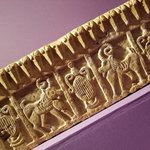
Incense burner depicting a Samya (Hatran religious banner). 2nd–3rd century CE.
These banners always featured three symbols: a round plate with the bust of a local deity, a crescent moon, and an eagle at the top.
Note: the eagle was the symbol of the Arab kings of Hatra.

ARABIQA 🇵🇸 retweeted

Cool thread


ARABIQA 🇵🇸 retweeted
101 years of the unknown Nakba : the Ahwazi Nakba.
On the 20th of April 1920, Reza Pahlavi's occupation forces invaded Al-Ahwaz (Arabistan) and annexed it to Iran.
Following this, many Ahwazis were forced to flee. The region was renamed Khuzestan to erase its Arabness.
⬇️⬇️⬇️


ARABIQA 🇵🇸 retweeted
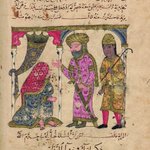
Arab Miniature Paintings from Yemen, c. 1640.
The manuscript is a copy of the book Aja’ib al-Makhluqat, by Al-Qazwini.
The miniatures depict several constellations, including the Eagle (blue fleur-de-lys), Cassiopeia (woman with the seat) and Perseus (man with spear).


