

IT professional turned full-time trader. Personal journal, not advice. Focused on SIP. Daily model book: setups, triggers & lessons. Do your own DD.
New Hope, PA
Joined May 2009
- Tweets1.6K
- Following738
- Followers649
- Likes663


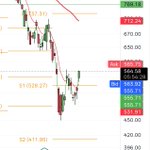


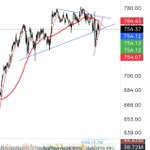


$DELL pre-earnings — what I’m watching:
1. Q3 expectations: Guidance calls for ~80% revenue growth and ~150% adjusted EPS growth. Consensus already exceeds management’s midpoint.
2. FY27 outlook: Existing targets imply ~70% revenue growth, ~200% AI server growth and ~150% adjusted EPS growth. Watch whether management raises the annual outlook.
3. AI shipments: Q3’s target requires ~16% sequential growth, following only ~2% in Q2. Delivery execution matters.
4. Q4 ramp: Meeting Q3’s AI target would still require another ~18% sequential increase in Q4 to achieve the annual plan.
5. Backlog quality: Watch delivery timing, customer funding, site/power readiness and repeat enterprise purchases alongside backlog growth.
6. Margins: Q2 infrastructure margin reached 15%, supported by storage, pricing and scale. Management expects some favourable benefits to moderate.
7. Cash conversion: Q2 operating cash flow fell 13% and free cash flow declined 47%, while adjusted FCF rose 224%. Examine financing-related adjustments.
8. Financing exposure: Receivables rose ~43% from fiscal year-end; charge-offs increased to 0.5% from 0.1%. Dell describes credit quality as strong; watch collections and funding.
9. Memory costs/XTX: XTX alleges an ~11–13% price increase despite price protection. Dell disputes the claims; the case remains ongoing. Watch component-cost exposure on existing contracts.
10. Beyond AI: Q2 traditional server/networking revenue grew 122%; storage grew 26%. Watch underlying demand and profitability alongside higher prices.
11. PC resilience: Q3 guidance assumes ~15% revenue growth and ~6% operating margin. Can commercial demand withstand rising component costs?
My focus: shipment execution, sustainable margins, stronger cash conversion and credible FY27 guidance.
1
1
301
$LITE massive upward premarket moves in most of AI tickers. Waited for some selling, entered at VWAP and out

176
Waited for reversal on stocks with max comfort. $LITE gave a great entry. Important to sell into strength with such tape

1
240
When the world has just one trade and it's unraveling.....#musings to find a historical corrolarry:
The Space Race is the closest corollary to today's AI race — two races between nations, run on opposite engines
The Space Race is the closest corollary to today's AI race — two races between nations, run on opposite engines
**The race between nations**
• Then: US vs USSR. Sputnik in 1957 was the shock — the fear wasn't a satellite, it was falling behind a rival system
• Kennedy answered in 1961 with a deadline and a destination: a man on the Moon by decade's end
• Now: US vs China. DeepSeek's release in 2025 was widely called this generation's Sputnik moment
• The weapons are different — export controls on advanced chips instead of missile gaps — but the logic is identical: whoever leads sets the standards, and the other side plays catch-up on your terms
**Government-sponsored vs private**
• Apollo was the state, start to finish: one government programme, one buyer, one finish line. At its peak NASA consumed over 4% of the entire US federal budget
• The contractors worked cost-plus — the government took the risk, capped the profit, and owned the outcome
• The AI race is inverted: private capital leads. The hyperscalers and chip companies fund the buildout from their own balance sheets, chasing revenue, not prestige
• Government's role now is supporting, not sponsoring — export controls, subsidies, energy policy — while companies decide where the money actually goes
**Market reaction**
• The 1960s ran a bull market on the back of the race — the S&P roughly doubled across the decade
• A speculative fringe boomed alongside: the 1967–68 "tronics" mania, where small space-age and electronics names spiked on theme alone — then collapsed
• The market peaked in late 1968, *before* the Moon landing, and fell ~36% into May 1970
**Beneficiaries**
• The headline names didn't make the real money — Apollo's contractors earned capped margins, so the Moon landing produced no trillion-dollar winner
• The durable winners were the picks and shovels: semiconductors — Fairchild, Texas Instruments, and Intel, founded in 1968
• Today that layer is $NVDA and the chip stack — except this time the suppliers capture the profit pool directly, which is why market concentration is at historic highs
**How the race ended last time**
• The US won in July 1969 — and NASA's budget collapsed within years. The race ended politically, the moment the flag was planted
• Winning didn't protect the market: the 1969–70 bear was driven by inflation, rising rates and Vietnam, not by Apollo winding down
• The lesson: the race set the theme, but macro decided the outcome
**The difference now**
• No finish line — there is no flag-planting moment for AI
• A government race stops when the goal is met. A private race stops when the returns stop — so this one ends on ROI, not on a victory speech
• Then: US vs USSR. Sputnik in 1957 was the shock — the fear wasn't a satellite, it was falling behind a rival system
• Kennedy answered in 1961 with a deadline and a destination: a man on the Moon by decade's end
• Now: US vs China. DeepSeek's release in 2025 was widely called this generation's Sputnik moment
• The weapons are different — export controls on advanced chips instead of missile gaps — but the logic is identical: whoever leads sets the standards, and the other side plays catch-up on your terms
**Government-sponsored vs private**
• Apollo was the state, start to finish: one government programme, one buyer, one finish line. At its peak NASA consumed over 4% of the entire US federal budget
• The contractors worked cost-plus — the government took the risk, capped the profit, and owned the outcome
• The AI race is inverted: private capital leads. The hyperscalers and chip companies fund the buildout from their own balance sheets, chasing revenue, not prestige
• Government's role now is supporting, not sponsoring
2
266
**Market reaction**
• The 1960s ran a bull market on the back of the race — the S&P roughly doubled across the decade
• A speculative fringe boomed alongside: the 1967–68 "tronics" mania, where small space-age and electronics names spiked on theme alone — then collapsed
• The market peaked in late 1968, *before* the Moon landing, and fell ~36% into May 1970
**Beneficiaries**
• The headline names didn't make the real money — Apollo's contractors earned capped margins, so the Moon landing produced no trillion-dollar winner
• The durable winners were the picks and shovels: semiconductors — Fairchild, Texas Instruments, and Intel, founded in 1968
• Today that layer is $NVDA and the chip stack — except this time the suppliers capture the profit pool directly, which is why market concentration is at historic highs
**How the race ended last time**
• The US won in July 1969 — and NASA's budget collapsed within years. The race ended politically, the moment the flag was planted
• Winning didn't protect the market: the 1969–70 bear was driven by inflation, rising rates and Vietnam, not by Apollo winding down
• The lesson: the race set the theme, but macro decided the outcome
**The difference now**
• No finish line — there is no flag-planting moment for AI
• A government race stops when the goal is met. A private race stops when the returns stop — so this one ends on ROI, not on a victory speech
68


$LITE just waited for an entry, mostly reversal that comes everyday. Had marked a bearish line today looking at a bear flag, the price bounced off that. Good entry and reasonable next few dollars


1
296
$NVDA earnings: my read-through across the AI ecosystem 👇
• Memory — $MU: Rubin shipments and larger memory commitments strengthen demand visibility.
• Optics — $LITE $COHR $GLW: Larger AI clusters support demand for lasers, optical connectivity and fiber.
• Optical manufacturing — $FN: Positive for production volumes; program wins and margins determine the benefit.
• Connectivity — $ALAB $CRDO $MRVL: More racks require faster interconnects. Architecture and content per system matter.
• AI servers — $DELL $SMCI $HPE: Positive shipment opportunity. Watch gross profit and cash conversion alongside revenue.
• Rack/network manufacturing — $CLS $SANM: Supportive demand backdrop; customer awards and production ramps drive earnings.
• Power/cooling — $VRT $ETN: Rubin deployment supports power distribution and liquid-cooling infrastructure.
• Power generation — $GEV $CAT $BE: Supportive of electricity demand; project wins, permitting and delivery remain critical.
• Construction — $STRL: Positive for data-center site development and electrical work as projects enter construction.
• Storage — $SNDK $WDC $STX: Supportive demand signal, with pricing and supply discipline still key.
• GPU clouds — $NBIS $CRWV: Rubin deployment validates execution progress. Financing, utilization and returns remain the tests.
• Foundry/packaging — $TSM $AMKR: Expanded manufacturing commitments support demand visibility.
• Competing GPUs — $AMD: Stronger AI demand expands the opportunity; Rubin execution raises the competitive hurdle.
• Networking — $AVGO $ANET: Larger networks support demand, while NVIDIA’s networking expansion adds competition.
• Hyperscalers — $MSFT $AMZN $GOOGL $ORCL $META: More compute supports AI services; capex, depreciation and monetization determine returns.
• Software — $PLTR $NOW $CRM: Weaker direct read-through. Their own AI adoption and monetization matter more.
1
2
389


