

artxmn.eth | acceptoffer.tez | pfp DICKRCLONEXBUTTZ17707 by @Darkfarms1 banner by @uczine
France
Joined August 2015
- Tweets12.4K
- Following3.5K
- Followers2.5K
- Likes24.8K






artxmn retweeted

With NVIDIA being run by a Jewess, now EVERY American Frontier AI company is run by Jews:
>Anthropic: Dario Amodei
>OpenAI: Sam Altman
>NVIDIA: Colette Kress
>Alphabet: Sergey Brin / Larry Page (Founders) / Anat Ashkenazi CFO
The likelihood: 0.00138%
Over representation: 3125%


artxmn retweeted

The Ukrainians are being completely replaced as we speak.
Mass arrivals. Right now.
This is beyond alarming.
artxmn retweeted

i'm 22.
made $2.1m this year.
turned $15k into seven figures on base & robinhood.
> bought my mom a house.
> bought myself a penthouse.
> travelled 20 countries.
> stopped checking restaurant prices.
> stopped thinking about rent.
> stopped worrying about money.
all from crypto.
none of this is true.
you stopped because you saw the numbers.
what actually happened is i lost six figures on ftx.


Round 2 going out right now — wrote up what actually happens once you're holding a Charter: expansion, exits, the parts most people skip.
teapaw.org/artxmn_/status/2097337…


Part 2 of the mechanics breakdown — picking up where the actual banking starts.
Once you actually hold a Charter, the real mechanics kick in.
A Charter lives as long as at least one branch stays open — close the last one and the NFT itself burns, with no way back except a fresh auction. Opening a branch beyond the first (10 max) means winning a separate Dutch auction for an "expansion license," paid in STANDARD and burned 100%. Both auction types work the same way: 24-hour falling-price Dutch auctions, first-come-first-served, no bids or refunds. The license auction opens at 2× yesterday's closing price (or 2× the floor if nothing sold); the Charter auction opens at 3×. Scarce seats reprice into demand faster than a daily commodity.
To realize gains, a banker closes a branch — their share of the balance mints to their wallet minus a "resolution fee." That fee scales quadratically with exit pressure: how much the system is trying to withdraw over the trailing 7 days. Half burns, half goes to whoever stayed — which flips the usual bank-run logic. Running first isn't the rational move here.
There's also a mechanism against "dead" accounts: a wallet inactive for 30+ days can be reported by anyone for a bounty (2% of its balance, capped at 100,000 tokens). The dormant banker pays a 70% penalty on forced closure — noticeably worse than the worst-case exit fee for voluntarily leaving.
Protocol ETH gets split three ways: 70% into an "active" vault (hard reserves during expansion, buyback-and-burn during contraction), 15% into protocol-owned liquidity that grows and never gets withdrawn, and 15% to the team. Buybacks execute in small hourly steps — capped at 10% of vault balance or 0.2% of pool liquidity, whichever is smaller — so the defense can't be drained in one shot.
Hypothetical math only, since the whitepaper leaves the real numbers TBD: say issuance launches at 900k STANDARD/day, multiplier 1.0×, and the network starts with ~1,200 branches total. A Charter holding 3 open branches earns 3/1,200 × 900k ≈ 2,250 STANDARD/day. Push to the full 10 and that's 7,500/day — but only until other bankers expand too and dilute the same denominator. That's the entire expansion flywheel in one formula: growing your own share also grows what that share gets divided by.
Important context: the protocol hasn't launched yet. Exact numbers (base issuance rate, multiplier range, exit-fee thresholds) are explicitly marked in the whitepaper as "to be announced closer to launch." And the document itself is upfront about what it is: an experimental protocol, not a bank, holding no customer funds, not regulated — none of this is investment advice.

5
10
215
Part 1, if you want the mechanics from the beginning: teapaw.org/artxmn_/status/2094866…

1/Every OHM-fork since 2021 broke the same way: emissions ran on a fixed schedule, not on demand — capital floods in and issuance can't scale up to catch it; capital flees and issuance keeps minting straight into the sell pressure. The Standard Reserve is an attempt to fix exactly that: one currency (STANDARD), onemarket(ETH↔STANDARD on Uniswap v4), and issuance that moves directly with net ETH flow through that market. The issuer isn't a board — it's ~4,000 lines of immutable code. 🧵

4
85
artxmn retweeted

upcoming project on GREEN chain 🟩
✦ 10 wl up for grabs
⟡ follow me & @sheethood
⟡ like + repost + drop your wallet
⏰ 3 hours / always DYOR

🔥 Buyback and burn in crypto: one phrase, two very different mechanics
Would you assume a protocol that "burned $1 billion" actually cut its supply by that much? Most people would. A recent study of 11 major buyback programs found only 2 of them do.
Here's the trick hiding in the phrase: a BUYBACK is not a BURN.
Buy tokens on the open market and hand them to stakers as rewards, and supply doesn't move — those tokens walk right back into circulation. Buy tokens and destroy them, and the float shrinks for good. Same amount of cash spent. Opposite effect on the thing that actually matters.
Aster's "198%" program shows exactly how this gets blurred. It's really two separate 99% legs stapled together: Leg 1 buys ASTER with trading fees and hands it to veASTER stakers as rewards — zero net supply reduction, pure redistribution dressed up as a burn. Leg 2 is a genuinely separate, reserve-funded burn aiming to cut total supply from 8B down to 3B. Same headline number. Two completely different effects on the float.
Then there's Hyperliquid, which is the clean version of the real thing: ~99% of its $800M+ annual revenue goes straight into buying and burning HYPE, no detour through anyone's wallet. $1.3B gone since the token launched in late 2024. Sky (formerly MakerDAO) runs it even more mechanically — around $1M of SKY burned every single day since February 2025, funded straight from protocol surplus. No vote required. Just a standing rule that fires on its own.
Aave is mid-transition from discretionary to automatic: 200k+ AAVE already bought back (~1.28% of supply), with the founder saying 100% of protocol and GHO revenue now routes to the token, soon on autopilot via Aavenomics 3.0. Uniswap only flipped its fee switch on in December 2025 — after years of the idea being blocked over legal risk — and is now funding ongoing burns from live revenue instead of one-off treasury moves.
One honest catch before you go looking for the next "burn" headline to ape into: shrinking supply hasn't reliably moved price. Plenty of tokens running real, verified buyback programs still underperformed the market and never held a floor. Burning tokens fixes a supply problem. It doesn't fix a demand problem.
So next time a project posts "we burned $X," the only question worth asking is: burned, or bought and handed right back to someone?

4
10
274
artxmn retweeted

The Standard Reserve is coming.
We’re about to enter our second round of audits as we move closer to launch.
Thank you to @UniswapFND for helping fund our audits and supporting the work required to ship this securely.

I have just collected "crozier - egroj x neurocolor" by @neurocolor on @objktcom objkt.com/tokens/KT1SZRkYTwd…
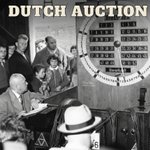
👩⚖️ Dutch auctions as a token design pattern
Fixed-price mints have a structural problem: price it too low and bots snipe the whole supply in one block; price it too high and it doesn't sell. Dutch auctions dodge this entirely — price starts high and falls until someone actually buys, so the market sets the price instead of the protocol guessing it.
This isn't a crypto invention. The name comes from 17th-century Dutch estate and flower auctions — the Aalsmeer flower market near Amsterdam still uses a giant clock-like device where the hand sweeps from a high price downward. Herodotus even described a similar descending-price auction in ancient Babylon. Mechanically: price opens high, decays on a schedule, and whoever accepts first wins at the current price — the opposite of an English auction, where bidders compete the price upward.
Why it matters onchain specifically: fixed-price sales create first-come-first-served gas wars and MEV extraction, with bots paying huge fees just to front-run humans into a mint. A falling price removes the reason to rush the very first block, since waiting doesn't cost you the chance, only a worse price if you wait too long.
Paradigm formalized this further in 2022 with Gradual Dutch Auctions (GDAs): instead of one big auction, break the sale into a sequence of smaller Dutch auctions running continuously. Discrete GDAs suit NFTs, sold as whole units; continuous GDAs suit fungible tokens, letting an asset sell smoothly over time without needing deep liquidity pools upfront. The next iteration, VRGDAs (Variable Rate GDAs), adds a target issuance schedule on top: if sales run ahead of pace, price rises to slow demand; if behind pace, price falls to attract buyers. It lets a protocol target a specific emission rate while still letting the market set the day-to-day price — Art Gobblers was the first project to use it.
It's not a free lunch, though. A 2024 academic study modeled the actual onchain tradeoffs and found Dutch auctions leak real value to arbitrageurs — how much depends on starting price, decay rate, and block time, with a genuine tension between execution speed and execution quality. Gnosis's early DutchX implementation ran into exactly this: gas-price sensitivity and awkward last-minute trading dynamics.
The pattern keeps reappearing across NFT mints, token launches, DeFi liquidations, and DEX swaps for one reason: it's one of the few mechanisms where the buyer's willingness to act reveals the true price, instead of a team guessing a number and hoping the market agrees.


1/Every OHM-fork since 2021 broke the same way: emissions ran on a fixed schedule, not on demand — capital floods in and issuance can't scale up to catch it; capital flees and issuance keeps minting straight into the sell pressure. The Standard Reserve is an attempt to fix exactly that: one currency (STANDARD), onemarket(ETH↔STANDARD on Uniswap v4), and issuance that moves directly with net ETH flow through that market. The issuer isn't a board — it's ~4,000 lines of immutable code. 🧵
This quoted post is unavailable.
8/Key nuance: the number of new Charters per day can start at zero and is policy-controlled — meaning new seats may simply not appear until conditions allow it. That's what makes getting into the Genesis wave specifically valuable.
1
12