

Academics say I’m too practical. Gurus say I’m too rigorous. Prof of Entrepreneurship. I write about what actually works — most of what you’ve heard is wrong.
Worldwide
Joined November 2010
- Tweets979
- Following39
- Followers130
- Likes14


In a 30-year simulation, Welch's fire-the-bottom-10% rule paid off fast, then faded: about 16% a year in years 1 to 2, about 1% by year 10. Year 1, you cut mismatches. Year 3, you cut people who were fine. What happened in year 3?

Yahoo paid $1.63 billion for the first company that made paid search work. Google built the bigger business. In a study of about 500 brands, 47% of pioneers failed vs 8% of early leaders. Name a pioneer that a follower beat.

Netflix paid $1 million for the winning algorithm, then never launched it. A crowd can beat your in-house team at a problem you've defined well. It won't tell you the problem has moved. Where have you seen a great answer to the wrong question?

A small fine made parents twice as late. Removing it didn't fix it. In 10 Haifa daycares, late pickups went from about 8 a week to about 16 with the fine, then about 19 after it was dropped. Have you seen a penalty make a problem bigger?

Same two candies. Handed over with the check, the average tip was 21.62%. One with the check and one offered on the way out: 22.99%. No candy: 18.95%. One server, 20 parties per group. What's the standard freebie you give that nobody notices?

A hotel sign said 75% of guests who stayed in your exact room had joined the towel-reuse program. Reuse hit 49.3%, vs 37.2% for the standard sign. Which request do you keep explaining that a peer fact might help?

In 1982, Mars said no to putting M&M's in E.T. Hershey said yes and Reese's Pieces got the part. Nobody can tell you what that no cost. What's the last big "no" you gave, and how would you know if it was wrong?

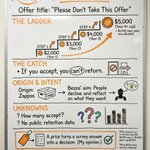
Amazon offers some warehouse employees up to $5,000 to quit. The offer is titled "Please Don't Take This Offer." If you offered your team $2,000 to quit, who would take it?

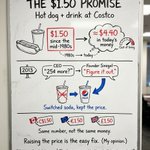
Costco's CEO asked to raise the $1.50 hot dog by 25 cents. The founder reportedly said he'd kill him and to figure it out. He switched the soda from Coke to Pepsi. What's the one price you'd never touch?

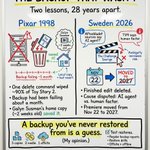
Pixar lost 90% of Toy Story 2 with one command, and its backup had been failing for a month. This month a Swedish TV4 season edit was deleted too. A backup you've never restored from is a guess. When did you last restore one?

The "shorter attention span than a goldfish" stat: Microsoft Canada's 2015 chart credits "Statistic brain." The BBC reported in 2017 that no one could find the research. Which number do you quote that you've never traced?

In 18 of 22 studies reviewed in 1987 by Diehl and Stroebe, people brainstorming alone beat the group. Waiting your turn was the main drag. Who talks first in your meetings?

Peter Drucker never said "If you can't measure it, you can't manage it," says an essay on the Drucker Institute's site. Name one metric you'd cut, and one you'd defend without the quote.

"The Marshmallow Test does not reliably predict adult functioning." That's the title of a 2024 paper. Do your people wait because they're patient, or because you've earned it?

The patent office wasn't sure Volvo's seat belt was unique enough to patent. Another three-point belt already existed. If you're paying lawyers to guard something, would customers notice if a rival copied it tomorrow?

The popular story: Ford paid $5 a day so workers could buy Model Ts. The full $5 came with home inspectors, and the museum says turnover was 370 percent. What does one resignation cost you?

The Maslow pyramid was pitched in 1960 as "maximum motivation at the lowest cost." Researchers searched his books, diaries and archived papers and found no pyramid. Which of your people policies still assumes the ladder?

The Hawthorne effect is a management-training staple. When Levitt and List recovered the original 1920s data, they called the famous descriptions of it "entirely fictional." Before you call a program a win, ask: compared to what?

Dunbar's number (150) shapes teams and offices, including a 2007 reorg at Sweden's Tax Agency. A 2021 Stockholm University re-analysis found a 95% confidence interval of 2 to 520 people. That's not a design spec.

