Aswin M. Sahadevan retweeted
lots of security issues, cyberattacks, and hacks this week 🫠
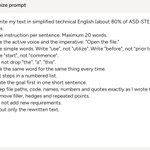
copy this prompt to figure out whats at risk:
- go through my email and find all the services i’ve signed up for (including the ones i forgot about)
- use @-Browser or @-Computer to look through my connected apps and projects for old keys, unused integrations, and anything that could expose my data
- check my AI data. old connectors i don’t need anymore
- check my repos for vulnerable dependencies
- put it all in a google sheet i can comment on, with what’s at risk, how urgent it is, and what i should do
Finally, got all my smart devices to work within a single mac app.
Wrote about it in a bit more detail here msaswin.substack.com/p/same-…
Thank you @TheObiLeonard x @home_assistant 🙏
Aswin M. Sahadevan retweeted
Cloudflare open-sourced the security audit skill that seeded its own vulnerability hunting harness. Your coding agent can now run it on your code.
How it works, in 6 phases:
→ maps your codebase
→ hunts for bugs area by area so nothing gets skipped
→ sends every finding to a fresh agent that didn't find it, to confirm it's real
→ writes structured results
→ verifies each record again, independently
→ writes the final report
You get a findings file split into confirmed, needs validation and rejected, so you fix the real problems first.
Install:
npx skills add github.com/cloudflare/securi… --skill security-audit
Then open your agent in your project and type: "security audit this codebase"
MIT licensed, 31.3K stars.
I built a 'TV dashboard' 📺
This TV from 2011 was collecting dust. Once my second monitor, it's now a glance-only dashboard behind my desk.
Inspired by @wesbos, designs from @software_chef and @sachasayan.
Aswin M. Sahadevan retweeted
Head of Design at Stripe on how to stop creating zombie UIs
If we only use AI to make the things that we already make, just faster, then we're definitely missing out on the most interesting part.
From my talk at @lennysan’s Summit, here are four ideas for raising the ceiling, not just the floor:
- Have a point of view [5:38]
- Encode your standards into the machine [9:07]
- Don't confuse done with good [12:21]
- Unleash creativity and artistry [16:19]
Full talk here: youtu.be/GLvFTMtw4Jk?si=-5Ts…
I use her diagram designs for all my explainers. They're unique and clear - work seamlessly with Claude code.
E.g github.com/ams-builds/respon…
"It starts with model CoT transparency as a non-negotiable."
Several points in Satya’s post directly mirror core principles of the EU AI Act! 🫡

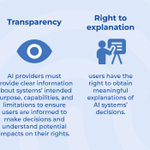
ALT An infographic breaking down four key pillars of the EU AI Act: 1. High risk: Requires explicit consent for high-risk AI in sectors like critical infrastructure, employment, healthcare, and law enforcement. 2. Transparency: AI providers must disclose clear information on system purpose, capabilities, and limitations. 3. Right to explanation: Grants users the right to receive meaningful explanations behind AI-driven decisions. 4. Data protection and privacy: Emphasizes data minimization, purpose limitation, and safeguards aligning with GDPR regulations. https://usercentrics.com/knowledge-hub/eu-ai-regulation-ai-act/
New day, new AI cybersecurity story. Going to start threading these together and post the last few stories I came across as replies.
SCOOP: OpenAI, Anthropic and security researchers are investigating tens of thousands of incidents - not dozens - in which their frontier models took steps that outside evaluators would consider problematic, sources told Axios.
The sheer volume of incidents found in our reporting indicate that the problem is orders of magnitude more complex than what is currently publicly known and disclosed.
The findings also raise questions about what level of control anyone working on AI development can expect to have over their own technology, and whether these kinds of incidents are becoming synonymous with frontier deployment.
Read my latest for Axios here: axios.com/2026/09/26/openai-…
Adds to file... xitter.cf/balesni/status/2108262…
I genuinely worry about people deploying AI agents without fully understanding the unintended consequences. Connecting bank accounts and health data directly to active agents - esp. without proper evals - gives me literal shivers!
Identity (guide + skill): is it who it says it is?github.com/ams-builds/agent-…
Harm (guide + skill): could it hurt real people? github.com/ams-builds/rahp-t…
Risk (guide + skill): how closely should a human watch it? github.com/ams-builds/dpi-ai…
Builds on open work by Sankarshan Mukhopadhyay: github.com/sankarshanmukhopa…
Hoping to post more through October. Spot a mistake? Tell me and I'll fix it.
Aswin M. Sahadevan retweeted
Maybe have a look at the 🇮🇹 tyres spinning under this Cybertruck of yours. And while you’re at it…
Look around. Every morning, millions wake up on 🇸🇪 mattresses. Coffee comes out of 🇮🇹 machines. A 🇩🇪 aspirin after a long night, some 🇫🇷 moisturiser to look human again.
They lace up 🇩🇪 trainers, check the time on a 🇨🇭 watch and grab phones powered by 🇬🇧 chip architecture and built with 🇳🇱 machines.
On the way to work, playlists stream through the speakers courtesy of a 🇸🇪 service.
At the office, 🇫🇷 lenses get a quick wipe. Wireless headphones connect through a 🇸🇪 invention. At lunch, the chip in a bank card may well be 🇳🇱.
By 3pm, some are already dreaming of a holiday. A 🇫🇷🇩🇪🇪🇸🇬🇧 plane might fly them off for a well-earned change of scenery.
Europe. Apparently nowhere to be seen.