

District 9212 Rotarian lYALI Africa Leadership Fellow ILeading African Voices Initiative|Transforming lives through climate justice| AGNES Climate Fellow.
Nairobi
Joined August 2011
- Tweets2.3K
- Following5.2K
- Followers1.6K
- Likes5.1K




Pinned Tweet
Small-scale farmers play a critical role in providing food for the continent, but they face numerous challenges. Leaders must tackle these issues and empower our farmers in combating #ClimateChange .
Alvin Tofler Munyasia retweeted

🌍 🌍At the opening session of the Second Roundtable Workshop on Enhancing Implementation of Decisions of the African Human Rights Mechanisms, Mr. Chris Kimathi Muthuri, Deputy Regional Director for Africa of @RWallenbergInst, participated in the proceedings, facilitated by Ms. Seraphine Kando, Human Rights Specialist, Department of Political Affairs, Peace and Security, African Union Commission (#AUC).
🗣📌 Key messages:
"As we gather for this second convening, building directly upon the groundwork laid during our inaugural technical workshop held on 20-21 November 2025 at this same venue, we do so with a clear and urgent mandate - 'moving from dialogue to strategic institutionalized action'."
"At our November 2025 meeting, we confronted a sobering empirical reality check. The endemic compliance crisis across our continental architecture concerns all actors..."
"To the state representatives present here today... implementing regional human rights decisions is not a concession to outside pressure, but the ultimate expression of state sovereignty, constitutionalism and domestic rule of law."
#AfricanUnion #HumanRights #RWI #RuleOfLaw

Alvin Tofler Munyasia retweeted

𝐀𝐟𝐫𝐢𝐜𝐚𝐧 𝐂𝐢𝐯𝐢𝐥 𝐒𝐨𝐜𝐢𝐞𝐭𝐲 𝐈𝐬𝐬𝐮𝐞𝐬 𝐭𝐡𝐞 𝐀𝐝𝐝𝐢𝐬 𝐀𝐛𝐚𝐛𝐚 𝐃𝐞𝐜𝐥𝐚𝐫𝐚𝐭𝐢𝐨𝐧 𝐨𝐧 𝐂𝐥𝐢𝐦𝐚𝐭𝐞 𝐀𝐜𝐭𝐢𝐨𝐧 𝐢𝐧 𝐅𝐨𝐨𝐝 𝐒𝐲𝐬𝐭𝐞𝐦𝐬 𝐚𝐧𝐝 𝐀𝐠𝐫𝐢𝐜𝐮𝐥𝐭𝐮𝐫𝐞
𝐴 𝑐𝑜𝑚𝑚𝑜𝑛 𝑐𝑜𝑛𝑡𝑖𝑛𝑒𝑛𝑡𝑎𝑙 𝑣𝑜𝑖𝑐𝑒 𝑓𝑟𝑜𝑚 𝑓𝑎𝑟𝑚𝑒𝑟𝑠, 𝑝𝑎𝑠𝑡𝑜𝑟𝑎𝑙𝑖𝑠𝑡𝑠 𝑎𝑛𝑑 𝑐𝑜𝑚𝑚𝑢𝑛𝑖𝑡𝑖𝑒𝑠 𝑖𝑛 𝑚𝑜𝑟𝑒 𝑡ℎ𝑎𝑛 30 𝑐𝑜𝑢𝑛𝑡𝑟𝑖𝑒𝑠, 𝑐ℎ𝑎𝑟𝑡𝑖𝑛𝑔 𝑡ℎ𝑒 𝑟𝑜𝑎𝑑 𝑡𝑜 𝐶𝑂𝑃31 𝑎𝑛𝑑 𝐶𝑂𝑃32
After three days of the Continental Convening on Climate Action in Food Systems and Agriculture, organisations and movements from more than 30 countries, farmers, pastoralists, women, youth, Indigenous Peoples, fisherfolk and faith leaders, came together in Addis Ababa and issued a shared civil society position on the road to COP31 and COP32.
The Declaration sets out six key demands: putting adaptation, agriculture and food security at the centre of implementation, making climate finance accessible and locally accountable, funding African led agroecology and seed sovereignty, supporting a people centred just transition, making nutrition, health, gender and pastoralism visible in climate action, and building an African accountability architecture from Addis to communities.
"Africa must not wait for its food and climate future to be designed elsewhere. Our evidence must influence decisions, our solutions must be recognised, and climate finance must reach the people and places where adaptation is already happening."
The real test for #COP31 and #COP32 will not be the number of declarations adopted, but whether a farmer can withstand the next failed rainy season, a pastoralist can access water and grazing, and a child can grow up nourished rather than stunted by drought.
Download the full Addis Ababa Declaration here:
EN: afsafrica.org/blog/african-c…
FR: afsafrica.org/fr/blog/la-soc…
#Agroecology4Climate #FoodSovereignty #AddisClimateConvening

Alvin Tofler Munyasia retweeted

Drought. Floods. Conflict. Displacement.
The Greater Horn of Africa faces all of it, and too often, help arrives after the damage is done.
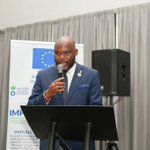
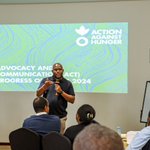
Today we, (along with @ACFusa) launched #IMPAACT, a project aimed at building Anticipatory Action systems in the Horn of Africa. Early action. At scale. Across Ethiopia, Somalia, & Djibouti. We acknowledge @eu_echo for their support.
Read more about the project here: shorturl.at/seHhD
#AnticipatoryAction


Alvin Tofler Munyasia retweeted

I loved history subject in school. Scored A's
But nothing prepared me for this solid evidence (kwa kalatas) of how Colonial extractive architecture still works to this day in modern-day Kenya
Courtesy of Nampa Entito Narok on FB.
#PeopleCentricConflictEarlyWarningEarlyResponse


1. From Dakar to Nairobi, African governments are embedding climate adaptation into public finance systems. See what’s scaling and why it works: bit.ly/3Ooyf6f
#ClimateInAfrica #ClimateAdaptation
@GHS @AfricanClimate @PACJA1 @WBG_Climate .
3. Africa gets <10% of adaptation finance — and less than 20% reaches local actors. But models like Kenya’s county climate funds are changing the game.
Follow the solutions → bit.ly/3Ooyf6f
#ClimateInAfrica #ClimateAdaptation
@KCCWG , @kiolijohn @mithika_mwenda .
2. Climate change deepens inequality — especially for women carrying care burdens and economic risks. This report connects gender, care economies, and climate finance solutions.
Read: bit.ly/3Ooyf6f.
Alvin Tofler Munyasia retweeted

Egypt, Ethiopia and the Dam: What If The Real Fight Is Over Soil, Not Water?
Nearly everyone says Egypt and Ethiopia are fighting over water from the Grand Ethiopian Renaissance Dam (GERD), which Addis Ababa officially inaugurated on September 9 to great fanfare. That’s the polite version.
The real story could be muddier — literally. The big picture people are insisting that what Egypt fears losing isn’t just water, but the soil that the Nile carried from the Ethiopian highlands for thousands of years, laying down a fresh carpet of rich earth across the Nile Valley and Delta. Pharaohs and peasants alike depended on that rhythm: the water came, the soil came, and the desert bloomed.
The Nile has two parents. The White Nile rises from Lake Victoria, flowing out of Jinja, Uganda, drifting lazily through South Sudan, spreading wide and slow, as if unsure of its purpose. Along the way, it loses most of its soil in vast swamps like the Sudd.
The Blue Nile, by contrast, is all energy and anger — tumbling down from Ethiopia’s steep highlands, gouging hillsides and scooping up an astonishing 120 million tonnes of fertile soil every year. Contrary to what most people think, the GERD built on this Blue Nile, almost 900Km away from the main trunk of the Nile at Khartoum that flows onward to Egypt (look carefully at the maps).
But here’s the rub. More than 90% cent of the Nile’s total sediment comes from these Ethiopian Highlands — mainly through the Blue Nile and the Atbara rivers. The Blue Nile alone contributes about 70 to 75% of it. The White Nile, despite its fame, contributes less than 3%, because most of its sediment is trapped in wetlands. When the Blue Nile meets the White Nile at Khartoum, the river turns deep brown — Africa’s longest artery now thick with Ethiopia’s soil, flowing north to Egypt.
That silt built Egypt. Before modern dams, the Nile carried roughly 120 to 160 million tonnes of sediment into Egypt each year. The annual floods dropped a new layer of rich earth across the Nile Valley and Delta. That was Egypt’s natural fertiliser, replenishing its land for free. The Nile didn’t just bring water; it brought life in liquid soil form.
Then came the dams. The Aswan High Dam gave Egypt control of the floods, but it was also disastrous – it stopped almost all that silt. The river still flowed, but its magic was gone. The Delta began to shrink, and the coastline erode. Saltwater crept inland. Egyptian farmers had to replace nature’s gift with chemical fertilisers.
Now Ethiopia’s GERD, the largest dam in Africa, stands on the Blue Nile ready to trap even more of that ancient cargo of soil. Studies suggest it could hold back over 90%!!! of the sediment that once flowed downstream. For Ethiopia, that’s good news — those same sediments have long been a curse, eroding farms and choking smaller dams. Now GERD promises to hold back both the floods and the mud, fuelling Ethiopian progress and protecting its highlands.
Egypt’s unease, then, isn’t really about who gets more water. It’s about the vanishing soil — the slow fading of the river’s gift (Ethiopian soil erosion) that built its civilisation. The Nile that once gave Egypt life is now keeping Ethiopia’s soil at home. And for the first time in history, Egypt must face the desert without the brown gold that once floated faithfully down from the upstream highlands. Its natural subsidy has vanished.

Alvin Tofler Munyasia retweeted

Phase I of the upgrade of the Maasai Lodge–Rimpa Road in Ongata Rongai to bitumen standards has been completed. The 4-kilometre stretch now seamlessly links Maasai Lodge to the SGR junction, unlocking smoother movement for thousands of residents.
Phase II will extend the road to Rimpa, ultimately connecting to the Bomas–Magadi Road.
This project is part of the broader programme launched by President @WilliamsRuto in April 2023 to tarmac 65 kilometres of critical connector roads across Rongai Town.
Ongata Rongai, a fast-growing peripheral town that directly serves Nairobi, is central to the capital's expansion.
By easing traffic, these upgraded roads will improve daily commutes and make the town more accessible and attractive for businesses and families.
With Rongai now shedding its "dust-is-constant" tag, and no, the lions don't actually walk you home, would you consider moving to Ronga?


We are celebrating @gatesfoundation transformative role in Africa’s health, agriculture, innovation, and digital identity sectors, whose approach is marked by humility, respect, and a long-term vision. His commitment reflects a belief in equality, dignity & real partnerships. – at Ethiopia


Alvin Tofler Munyasia retweeted

Africa contributes less than 4% to global emissions but bears the brunt of climate impacts. @DestaLakew & @atofler demand grants, innovative financing, and global accountability to meet the continent's adaptation needs. Read their call to action:
africa.com/climate-change-gr…

Alvin Tofler Munyasia retweeted

A hotter world means a #foodinsecure world. By investing in a #climatesmart future, we can prevent #hunger for generations to come.
We're committed to addressing the #climatecrisis and #hungercrisis at #COP29. And beyond.


Alvin Tofler Munyasia retweeted

African nations are at a crossroads, facing unsustainable #debt burdens, high climate adaptation and development needs. #ClimateChange grants cannot be the only step.
We must do more, say @DestaLakew @atofler
africa.com/climate-change-gr…
Africa’s farmers and healthcare systems face the brunt of climate impacts but receive less than 20% of global adaptation finance. #COP29, should deliver equitable, needs-based funding to build true resilience. It’s time to shift the balance—Africa deserves its fair share.

Africa needs $50 billion annually to adapt to climate change, yet it only receives $11 billion. As the continent grapples with unsustainable debt and rising climate impacts, we must rethink financing for climate adaptation.
Grant-based funding, concessional financing, debt relief, and strategic national plans are critical. At less than 4% of global emissions, Africa’s contribution to the climate crisis is small—but it’s where the world’s climate battle will be won or lost.
📣 It’s time for global leaders to take bold, decisive action, responding to the urgent calls for a sustainable, equitable, and healthier future for all.
Read the opinion by @DestaLakew and @atofler 👇
🔗newsroom.amref.org/news/2024… - originally published by @allafrica.
@AGNESAfrica1 @AGNChairUNFCCC @COP29_AZ
#ClimateAction #AmrefAtCOP29 #COP29 #COP29Azerbaijan
The adaptation finance gap is a direct threat to Africa’s resilience. We must scale up funding to at least $40 billion by 2025, prioritizing health and agriculture. It’s time for bold commitments at #COP29—Africa can’t afford to wait. #ClimateFinance #SDG2030 @cop29_AZ
The adaptation finance gap is a direct threat to Africa’s resilience. We must scale up funding to at least $40 billion by 2025, prioritizing health and agriculture. It’s time for bold commitments at #COP29—Africa can’t afford to wait. #ClimateFinance #SDG2030 @cop29_AZ


Alvin Tofler Munyasia retweeted

🌱 #Agroecology is helping small-scale farmers thrive in the face of #ClimateChange! 🌍
This evening at #COP29, we’re showcasing how sustainable farming practices & local foods improve resilience, nutrition, and livelihoods. #SustainableFarming @atofler @acfusa @CosquerRic