

Executive director/podcaster/data cruncher @WstrnPriorities, mostly on Bluesky and Threads now.
Denver
Joined April 2007
- Tweets239
- Following3.6K
- Followers3K
- Likes94.9K




@aweiss.bsky.social Aaron retweeted

We don't have to swallow this terrible permitting bill. Big Oil said it themselves, just listen for yourself.
Democrats can and will produce a better deal that lowers costs, builds transmission, and puts Americans' interests ahead of billionaires and the well-connected.
@aweiss.bsky.social Aaron retweeted

Biodiversity... you know, the thing that keeps us all alive, is an "edge case."

Hey, it's me, again. I want to zoom out on BAAJA for a second, because it’s easy to get lost in the weeds & debates about edge cases. I care *a lot* about this bill. Wanted to remind myself why.
The status quo is *terrible* for both climate and affordability. We built 888 miles of high-voltage transmission in 2024; we need 5,000 a year. More clean capacity is waiting in interconnection queues than the entire existing grid. Residential power prices are up about a third since 2019. Demand is surging, and bc clean power can’t connect, we're building a bunch of gas. If this current trend continues, gas could supply half of US power by 2040. The administration is using permitting as a weapon to stop wind and solar projects, including ones already approved. And local restrictions on wind and solar now cover twice as much of the country as in 2022.
I worked in the White House when we passed the IRA. As @BrianCDeese noted, if we had a bill like this in place first, it would have been game-changing. We invested hundreds of billions to put clean energy on sale, then watched projects get stuck in interconnection queues, permitting delays, and fights over who pays for transmission. The money was not the binding constraint; the ability to build was. Let’s not make the next Democratic administration learn that lesson twice!
It's easy to oppose stuff. But BAAJA is a *really, really big deal.* This is the first real federal framework to plan, pay for, and permit big power lines: mandatory planning between regions, clear rules on who pays (based on who benefits), and federal backstop siting that actually works across most of the country. It also ends incumbent utilities’ automatic right to build every new regional line. It will also help actually get projects online, by requiring grid planning and interconnection be done together, and stopping speculative projects clogging the queue. It should protect from political sabotage. Approved projects can’t be yanked for political reasons, and developers can sue if an administration targets a technology like wind for unfair treatment. It's the strongest data center accountability legislation in the country to ensure they pay *more* than the costs they cause and that households don’t foot the bill for AI’s grid upgrades.
This is the most important thing Congress can do for clean energy and affordability right now. We can fight about the emissions and affordability modeling about this narrow bill. But the truth is that this is the necessary but insufficient foundation *every future climate and affordability policy will be built on.*
@aweiss.bsky.social Aaron retweeted

Going to be tricky keep these voters once they realize that the *very first thing* Dems did with their 14-point Stop Trump & his Data Centers mandate was to corruptly accelerate Trump's data center agenda in the name of "bipartisan affordability." #BAAJA

@aweiss.bsky.social Aaron retweeted

I rise once again to oppose the BAAJA Senate Permitting deal—cut behind closed doors, without public hearings, without Tribal consultation. Opposed by environmental, civil rights and good government groups, Tribal nations, and state officials—even as amended, it undermines Tribal sovereignty, environmental laws, and locks in dangerous projects.
This is NOT the deal, NOT the time, and NOT what the American people asked for.
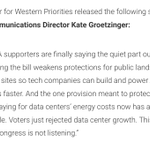
They're not saying the quiet part out loud, they're shouting it from the rooftops. #BAAJA is a data center bill.
westernpriorities.org/2026/1…


@aweiss.bsky.social Aaron retweeted

Shocking, a massive, massive carve-out/giveaway to Big Tech and AI data centers, which Dems are going to help pass after literally winning historic electoral victories promising they'd do the exact opposite. Absolutely disgusting.

"Why do you make me hit you? You did this to yourself," the GOP aide said

Yes it is

🔥 Senator Jeff Merkley (OR) getting HEATED about the permitting bill.
"It is a wishlist straight out of the fossil fuel world."
#debate #fossilfuels #publiclands #heated #environment


Huh I wonder why BAAJA supporters won't defend their bill except in a safe space

So...@LeverNews has been trying to set up a podcast discussion about BAAJA. We've been able to find lots of opponents willing to talk to us, but not one proponent is willing to participate.
If you are a BAAJA proponent, please get in touch.
@aweiss.bsky.social Aaron retweeted

Once again, @SenatorHeinrich & @SenWhitehouse are lying to Indian Country. Right now, the law ALREADY requires agencies to consult with Tribal Nations on all projects that affect Tribal lands, as well as ceded, ancestral, and aboriginal lands. (1/3)

If @senatorheinrich wants to make sure BAAJA doesn't lock in data centers on public lands, the solution is simple: Ban data centers on public lands.
BAAJA does not do that, full stop. At this point the Senate isn't going to even vote on an up-or-down amendment that would.
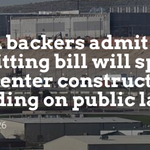
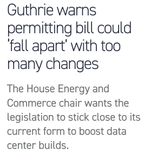
Don't take my word for it. Listen to the GOP chairman of the House Energy & Commerce Committee. BAAJA is a data center bill.
subscriber.politicopro.com/a…


Much enthusiasm

Trump’s nominee for Inspector General of the Interior.

ALT Sure, here's a suitable alt text: "Two separate scenes in a hearing room. In the first image, a person at a table listens attentively. In the second, a person with glasses sits at a microphone, identified by a nameplate as Mr. Dennis Kirk, with others in the background.
1
107
A good reminder that the authors of #BAAJA think that selling off public land and trashing the Boundary Waters are "edge cases."
That's the fundamental difference here. If all you care about is permitting, then every community that gets screwed along the way is an edge case.
Hey, it's me, again. I want to zoom out on BAAJA for a second, because it’s easy to get lost in the weeds & debates about edge cases. I care *a lot* about this bill. Wanted to remind myself why.
The status quo is *terrible* for both climate and affordability. We built 888 miles of high-voltage transmission in 2024; we need 5,000 a year. More clean capacity is waiting in interconnection queues than the entire existing grid. Residential power prices are up about a third since 2019. Demand is surging, and bc clean power can’t connect, we're building a bunch of gas. If this current trend continues, gas could supply half of US power by 2040. The administration is using permitting as a weapon to stop wind and solar projects, including ones already approved. And local restrictions on wind and solar now cover twice as much of the country as in 2022.
I worked in the White House when we passed the IRA. As @BrianCDeese noted, if we had a bill like this in place first, it would have been game-changing. We invested hundreds of billions to put clean energy on sale, then watched projects get stuck in interconnection queues, permitting delays, and fights over who pays for transmission. The money was not the binding constraint; the ability to build was. Let’s not make the next Democratic administration learn that lesson twice!
It's easy to oppose stuff. But BAAJA is a *really, really big deal.* This is the first real federal framework to plan, pay for, and permit big power lines: mandatory planning between regions, clear rules on who pays (based on who benefits), and federal backstop siting that actually works across most of the country. It also ends incumbent utilities’ automatic right to build every new regional line. It will also help actually get projects online, by requiring grid planning and interconnection be done together, and stopping speculative projects clogging the queue. It should protect from political sabotage. Approved projects can’t be yanked for political reasons, and developers can sue if an administration targets a technology like wind for unfair treatment. It's the strongest data center accountability legislation in the country to ensure they pay *more* than the costs they cause and that households don’t foot the bill for AI’s grid upgrades.
This is the most important thing Congress can do for clean energy and affordability right now. We can fight about the emissions and affordability modeling about this narrow bill. But the truth is that this is the necessary but insufficient foundation *every future climate and affordability policy will be built on.*