
Spiritual accompaniment, coaching; PhD early Christian social identity, cross-cultural systems: Africa, N. America, France. Married to https:/awakencoaching.com
Alsace, France
Joined March 2008
- Tweets2K
- Following2.5K
- Followers580
- Likes6.7K



My beloved of 33 years just published her first book!
amazon.com/Holy-Rebellion-Wa…

1
1
18
Ben Byerly retweeted
Jimmy Carter didn't learn to embrace all races, he didn't know "all races." He grew up around Black people.
You know who can explain it better?
Jimmy Carter
Ben Byerly retweeted
Infographics of this dataset have been kicking around on the internet for years. It is an insult to real scientists everywhere. For every 10 likes, I will post a new ridiculous fact about how fake and ridiculous this "data" is.
This quoted post is unavailable.
Ben Byerly retweeted

Almost half of the world’s wealth, 47.5% or $213 trillion, is held by just 1.5% of the global adult population. The world has at least 58 million US dollar millionaires /1
aje.io/ijkwz3


Ben Byerly retweeted

⚡️Incredible footage of a lightning bolt hitting and decimating a large tree in Augé, western France earlier today. Credit: Benjamin Estrade
Ben Byerly retweeted

This was hard to write. I wrote for Aeon on seeing mental illness as purposeful, not pathological, and about the experiences with my dad that led to this shift. I’m grateful to Christian Jarrett @psych_writer for careful editing. Comments open aeon.co/essays/evidence-grow…

Ben Byerly retweeted

Are there memoirs of African slaves who were born in Africa and were old enough when they were captured to remember their life in Africa, the Middle Passage and their life as slaves in the US?
Ben Byerly retweeted

Wow.
This video is truly eye-opening.
Take a couple minutes to watch this.
A mind-boggling visual representation of wealth inequality in America.
This sh*t ain’t workin’, folks. #TaxBillionaires #UnionsForAll
Ben Byerly retweeted

Jung once said that the strongest passion in humans is not hunger, sex, or power, although these are quite strong; the very strongest passion is laziness. The longer I study human beings, including myself, the more I am inclined to agree.
— Marie-Louise von Franz
Ben Byerly retweeted

All great spirituality is about what we do with our pain. If we do not transform our pain, we will transmit it to those around us.~Richard Rohr
Ben Byerly retweeted

It took me 3 months to put 10 years of research on curiosity into a 20min presentation...
...So when @GrahamDuncanNYC challenged me to compress it down to 5min for the @SohnConf yesterday, I obviously went insane.
Here it is.
Ben Byerly retweeted
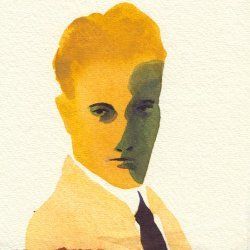
The simple things are also the most extraordinary things, and only the wise can see them.

Ben Byerly retweeted

Major study on neurodiversity in the tech sector out today
#ChangeTheFace
@Colt_Technology @Nokia @Samsung @VodafoneUK
Read about the study and implications for workplace culture
tavinstitute.org/news/neurod…
#neurodiversityatwork #allyship #workplaceculture
Ben Byerly retweeted

🌞Here's a short story abt how I went to Morocco to see one of the world's biggest solar plants.
It didn't go quite as I expected
This is the Noor complex near Ouarzazate.
It's massive. Bigger than the capital of Morocco.
Europe (& UK) plan to import solar power from Morocco.
🧵

Ben Byerly retweeted
The ultimate test of the family is not whether it provides safety and predictability, but whether or to what degree each person can leave it, freely, and return, freely, as a larger person.~James Hollis, Finding Meaning in the Second Half of Life
Ben Byerly retweeted

What the British did in Kenya, a thread 🧵, source: Britain's Gulag : The Brutal End of Empire in Kenya by Caroline Elkins..
"PRESERVING KENYA FOR CIVILIZED WHITE PEOPLE"
First, the colonial government established African reserves, which were defined rural areas, eventually with official boundaries, much like the homelands in South Africa or the Native American reserves in the United States, where each African ethnic group in the colony was expected to live separately. The Kikuyu had their own reserves in the Central Province district of Kiambu, Fort Hall, and Nyeri, the Maasai resided mostly in the colony’s Southern Province, the Luo lived in Nyanza Province, and so forth. This practice of divide and rule was also a cornerstone of the colonial government’s labor policy. With insufficient land in their reserves, many Africans had little choice but to migrate to the European farms in search of work, and survival.
But confining the African s was not enough to force them all into wage economy. As an additional tactic of control, the British colonial government taxed them. The second colonial regulation called for a hut tax and poll tax, together amounting to nearly twenty-five shillings, the equivalent of almost two months of African wages at the going local rate.
By 1920 all African men leaving their reserves were required by law to carry a pass, or kipande, that recorded a person’s name, fingerprint, ethnic group, past employment history, and current employer's signature. The Kikuyu put the pass in a small metal container, the size of a cigarette box, and wore it around their necks. They often called it a mbugi, or goat’s bell, because as one old man recalled to me, “I was no longer a shepherd, but one of the flock, going to work on the white man’s farm with my mbugi around my neck. The kipande became one of the most detested symbols of British colonial power, though the Africans had little recourse but to carry their identity cards at all times; failure to produce it on demand brought a hefty fine, imprisonment, or both. #SemaUkweli #RoyalVisitKenya

Ben Byerly retweeted

I have seen so many people curious about this photo🖼️ Here is the story behind it👇
"The Unexpected Encounter"
Trains have forever occupied a cherished corner of my heart, a connection harking back to my childhood days. In 2019, I embarked on a journey to explore Buxton Tunnel in Limuru, affectionately known locally as ‘kimungu kia mbugi,’ with the belief that it had long been abandoned.
As it would have it, even though the train traversed through the tunnel, its schedule danced to the whims of the wind, as unpredictable as the weather itself. The prospect of ever spotting it seemed like chasing a distant dream.
On one particular day, I found myself planning a family group tour of the tunnel with @lets_drift Our security guy, in a nonchalant manner, let slip that the train was en route. My heart danced with excitement, but what unfolded next was nothing short of a fantastical reverie.
In a twist of fate, I stood in the most perfect spot, poised to capture the train’s emergence from the tunnel—a moment that now lives only in memories. It felt as though the universe had conspired, gifting me an extraordinary treasure.
This photograph, frozen in time, serves as a poignant reminder that life’s most cherished encounters often arrive when we least anticipate them.
May it kindle within you the warmth of serendipity and inspire you to hold dear those remarkable moments that grace our lives when we least expect them.
Location: Kimungu Kia Mbugi (Buxton Tunnel), Limuru
Date: 20 June 2020 at 11:08
Camera: NIKON D5300
This photo is available for purchase in print.
alexkamau.com
