

I serve as a senior investment strategist at Global X ETFs. Not investment advice. Disclosure: https://teapaw.org/t.co/aXz1as5imE
New York, NY
Joined August 2017
- Tweets3.8K
- Following756
- Followers5K
- Likes5.8K




We published our October 2026 Factor Landscape covering the factor landscape through 9/30/2026. In this series we focus on themes that are Top Trending (based on Momentum) and Most Out of Favor (Long-Term Reversal). This month, we highlight the genomics/biotech theme and the U.S. natural gas producer themes. @GlobalXETFs
globalxetfs.com/articles/tho…

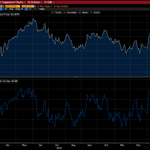
As we begin 4Q, corporate credit is showing some leaks but still below pre-COVID levels (2017-2019). Leverage Loans also off the recent peak but still comfortably above the key 95 price level. The risk is that leakage cascades into risk unwinding as increasing rate and spread vol start feeding into selling pressures. Data source: Bloomberg.


3
331
Our latest Through the Systematic Lens series from @GlobalXETFs. We reference Shakespeare's Hamlet's "Alas, poor Yorick" scene to argue that investors fixated on the AI-driven growth story could also pay attention to the "present," meaning free cash flow generation and shareholder distributions.
globalxetfs.com/articles/ala…

I had the pleasure of presenting a market update to a group of advisors at the SoHo House in Nashville. The supply sider in me also geeked out over a breakfast meeting with Art Laffer, Jr. #IncentivesMatter.


In the 2nd article of our Through the Systematic Lens series, we apply a systematic/factor-based lens to the thematic investment landscape, focusing on fund exposures to common risk factors such as growth, value, momentum, quality, and volatility.
Rather than judging a theme on narrative or recent performance alone, this systematic lens helps identify where investor sentiment may be building or recovering and the underlying risks expected to contribute to future volatility.
We first provide a broader factor backdrop across U.S. equities, then turn to this month’s Top Trending Themes, highlighting the semiconductors/quantum computing theme, and the Most Out-of-Favor themes, highlighting the hydrogen theme. @GlobalXETFs
globalxetfs.com/articles/thr…
Our latest Insights article discusses a new index partnership with @MorningstarInc and the new US Capital Allocation Leaders Index. Superior capital management tends to be rewarded with superior valuations.
globalxetfs.com/articles/a-b…

327
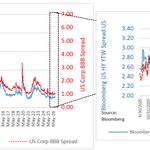
An addendum: Not all IG credit risk is priced equally. According to the Bloomberg Global AI Infrastructure Debt Monitor, 2026 YTD issuance has already reached $334.5 billion (less than half from hyperscaler issuance). With the rush to finance AI buildouts through the debt markets, High Grade Tech-Issuer Option-Adjusted Spreads (OAS) have blown out against the broader IG corporate universe.
On the surface, broad market credit spreads are at secularly rich levels, but, underneath, the pricing of credit worthiness among IG issuers is happening as can be seen in widening spreads across sectors, with 'technology' now representing the riskier sector this cycle.
We've not (yet) reached the yawning spread gap as was seen in the 2016-18 high yield market between energy issuers and the broad market, but 'technology' is expected to be the main driver of spread risk, whether AI-related spending in corporate bonds or SaaS enterprises in private credit.


Real 10-year rates above 2%, even with rising inflation. Fixed income isn't dying. It may be offering one of the best entry points in years.
I'm pleased to announce our inaugural launch of the Through the Systematic Lens article series from @GlobalXETFs. #FixedIncome #Bonds #ETFs
globalxetfs.com/articles/thr…

2
592
Real 10-year rates above 2%, even with rising inflation. Fixed income isn't dying. It may be offering one of the best entry points in years.
I'm pleased to announce our inaugural launch of the Through the Systematic Lens article series from @GlobalXETFs. #FixedIncome #Bonds #ETFs
globalxetfs.com/articles/thr…
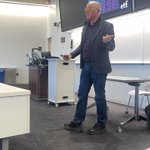
It was a pleasure having @DaveNadig, President of ETF.com, guest lecture my Advanced Investments Class at @IsenbergUMass, where I am serving as an adjunct instructor for the spring semester. Dave waxed poetically (he actually majored in poetry at UMass) on the history and structure of ETFs and shared his outlook on what lies ahead for the industry.

I am pleased to announce an exciting new chapter in my career. I have joined the investment strategy team at @GlobalXETFs as a senior investment strategist. I will continue to comment on general market trends as well as the ETF industry.
Benjamin M. Lavine retweeted

There is something bigger at risk from the Hormuz shock. A regime shift.
Includes a roadmap and timeline to navigate this shift, and what to watch out for.
As with Tuesday's note, most of it is free so have a read and pls like and RT if you found it useful. 🙏

Event-driven capital finding opportunities in PC. Shift the odds in your favor (and let those secondary discounts drive incremental total return) buying after the top rather than at the top of the credit cycle.
businesswire.com/news/home/2…

Truth be told I’m more worried about leveraged loans. LSTA dropped through L-Day lows before recovering. 94 is the new 95. More redemptions and curtailment of TBTF lending will add even more pressure even if non accruals on PC are stabilizing.
565
IG spreads breaking local highs on top of the sharp rise in Treasury rates is no bueno and suggests spillover risk from 1) PC travails, 2) Iran energy spike, and 3) extended borrowing to fund AI capex. Not quite L-Day, so not systematic (yet). Waller's 'subprime is contained' comment today on PC not inspiring a lot of confidence.

ALT Source: Bloomberg
3
545
Just released a new podcast episode.
Reassessing Portfolio Strategies in the Post-COVID/AI Buildout Environment - A Conversation with Som Priestly, T. Rowe Price
3dadvisor.libsyn.com/reasses…

1
1
294
In this episode, we have the pleasure of speaking with Som Priestly, Head of Multi-Asset Solutions at T. Rowe Price. Som discusses their approach to market positioning, emphasizing the importance of being both realistic and diversified, particularly when investing across artificial intelligence themes.
He highlights potential shifts in the firm's AI thesis, including the pace of innovation and broader corporate adoption of AI technologies. Som also shares insights on portfolio structuring, noting their strategic overweight in high-yield credit and their recent adjustments, including reducing precious metal exposure while increasing investments in small-cap stocks and emerging markets.
He expresses cautious optimism about inflation and discusses the team's ongoing efforts to align portfolio views and identify opportunities across various market scenarios.
1
244
Expect more of these headlines.
teapaw.org/business/status/202852…
Based solely on the vibes emanating from my LinkedIn feed, I think we've hit peak FUD on private credit for the time being. It would take another Liberation Day shock or a meaningful economic downturn to break current support levels IMHO.
What's ironic is that PC specialists rolling out new vehicles to take advantage of discount pricing in the secondary market are now facing their own bank run moment of having to unload into the secondary market.
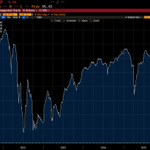
So far, LSTA holding the line at 95 but the loan market is bifurcated between loans trading near par (~65-75% of the market depending on who you ask) versus ones trading by appointment only. The aggregate indices, along with all the specialists claiming to be Lake Wobegon when it comes to credit selection, mask how deep this bifurcation has become thanks to AI disruption threats.
The real money in CLO equity and private credit will be made on those who can take advantage of this current dislocation and ride those secondary discounts back to par through seasoning. Those who can will have definitely earned their carry.

ALT Source: Bloomberg. The Morningstar LSTA Price Index
626
Based solely on the vibes emanating from my LinkedIn feed, I think we've hit peak FUD on private credit for the time being. It would take another Liberation Day shock or a meaningful economic downturn to break current support levels IMHO.
What's ironic is that PC specialists rolling out new vehicles to take advantage of discount pricing in the secondary market are now facing their own bank run moment of having to unload into the secondary market.
So far, LSTA holding the line at 95 but the loan market is bifurcated between loans trading near par (~65-75% of the market depending on who you ask) versus ones trading by appointment only. The aggregate indices, along with all the specialists claiming to be Lake Wobegon when it comes to credit selection, mask how deep this bifurcation has become thanks to AI disruption threats.
The real money in CLO equity and private credit will be made on those who can take advantage of this current dislocation and ride those secondary discounts back to par through seasoning. Those who can will have definitely earned their carry.
ALT Source: Bloomberg. The Morningstar LSTA Price Index
Our latest blog article, "The Market Turns Festivus," has been published by @etfcom and on our website (Freedom Advisors).
Market Festivus: AI Stumbles and Market Breadth Widens etf.com/sections/advisor-cen…
Report link on etf.com is temporally down, so here is the link to our resource center.
freedomadvisors.com/resource…
172