

Medical Oncologist, Pontificia Universidad Católica Chile. Breast cancer Clinical and research fellow Hospital Clinic Barcelona.
Joined April 2012
- Tweets2.5K
- Following702
- Followers593
- Likes3.8K






Benjamin Walbaum, MD retweeted

📌 Educational session #ESMO26 🇪🇸
🔸Optimising treatment for triple negative early breast cancer
✨@lab_kok
@OncoAlert #OncoAlertAF


Benjamin Walbaum, MD retweeted
📌 Key challenges in managing patients with metastatic breast cancer
Strategic sequencing of targeted therapies for hormonally-driven breast cancer
✨Yeon Hee Park
#ESMO26 🇪🇸 @OncoAlert #OncoAlertAF


Benjamin Walbaum, MD retweeted
#ESMO26
Starting Adjuvant CDK4/6i? Let’s Revisit the TRADE Study on Abemaciclib Dose Escalation.

Benjamin Walbaum, MD retweeted

TROPION-Breast02 brain mets analysis at #ESMO26 (Dent). 1L Dato-DXd vs chemo, mTNBC, n=61 with BMs:
CNS PFS 9.5 vs 2.6 mo, HR 0.27
icORR (measurable) 62.5% vs 37.5%
Untreated BMs: OS HR 0.35
Longest icDoR ~27 mo
Preferred Trop2 ADC for brain Mets! @RebeccaDSing
Exploratory, small n, real CNS signal. #bcsm


Benjamin Walbaum, MD retweeted
#ESMO26 | KEYNOTE-B49 – Phase III
In PD-L1 CPS ≥1 HR+/HER2− mBC, pembrolizumab + chemotherapy:
PFS: 6.7 vs 6.0 months (HR 0.74)
OS: 21.0 vs 22.2 months (HR 1.04)
CPS ≥10: PFS HR 0.59; OS HR 0.82.
Although the PFS curves converge early, a signal of durable benefit emerges in a small subset of patients.
However, no OS benefit was demonstrated, and toxicity increased (1.8% G5 TRAE).


#ESMO26 | KEYNOTE-B49
In patients with PD-L1 CPS ≥1, HR+/HER2− mBC previously treated with ET, pembro + chemo was compared with chemo
- PFS: 6.7 vs 6.0 mo (HR 0.74)
- OS: 21.0 vs 22.2 mo (HR 1.04)
- CPS ≥10: PFS HR 0.59
I’m curious to see the subgroup analyses presented at ESMO. However, in the ADC era, this modest PFS benefit without an OS advantage has little clinical relevance to me.
Evaluating immunotherapy in combination with ADCs or after ADC treatment may be more rational in today's treatment landscape.

Benjamin Walbaum, MD retweeted

#BSTRONGER 🤯 that 95.1% of pts w/ stage I-III TNBC had ctDNA at baseline!!!
Wow.
By C3, >80% pts had cleared ctDNA in response to chemo
Molecular response was associated with tumor burden:
100% stage I
85% stage II
44% stage III, cleared
#ESMO26 #ESMOAmbassadors @OncoAlert


Benjamin Walbaum, MD retweeted

Beautiful discussion by Maria Vicctoria Dieci
neoHIP: Benefit for pembro in ER+ HER2+ only in high TIL or PDL1+; different than IMpassion050 where benefit was in PDL1-/HR+
@OncoAlert #ESMO26


Benjamin Walbaum, MD retweeted
An increasingly crowded ADC landscape in HR+/HER2− mBC, with multiple positive trials but unanswered questions about optimal sequencing.
From Dr. Babrara Pastilli’s excellent discussion at #ESMO26

Benjamin Walbaum, MD retweeted
#ESMO26
Optimal duration of adjuvant endocrine therapy: 5, 7–8, or 10 years?
From Dr. Fumikata Hara’s excellent discussion👇

Benjamin Walbaum, MD retweeted

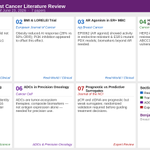
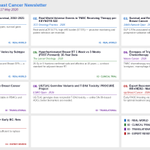
Here’s the most recent #BreastCancer Research Digest-a summary of last week’s publications from select high-impact journals (October 9th - October 16th, 2026). #ClinicalResearch #CancerTreatment #BCSM #BreastCancerResearch #BreastCancer


Benjamin Walbaum, MD retweeted

Our review in @JCI_insight/@theJCI: Next-generation CDK inhibitors in HR+/HER2− breast cancer, from CDK4-selective agents and CDK2-directed approaches to broader multi-CDK strategies. [link] #bcsm #BreastCancer jci.org/articles/view/207631

Benjamin Walbaum, MD retweeted
Here’s the #BreastCancer Research Digest-a summary of last week’s publications from select high-impact journals (October 2nd - October 9th, 2026). #ClinicalResearch #CancerTreatment #BCSM #BreastCancerResearch #BreastCancer


Benjamin Walbaum, MD retweeted

Is T-DM1 still useful after T-DXd in HER2+ MBC? Two datasets seem to disagree, but they're answering different questions. 🧵 #bcsm
@UTMDAnderson (Raghavendra, Valero et al, Breast Cancer Research): 21 patients got T-DM1 after T-DXd. ORR was 0%, median PFS 2.2 months, and median OS 11.3 months. Only 10% had stable disease for 24 weeks or more.
@myESMO 2025 (DB-02/03 exploratory analysis; Poster 322P Fasching et al.): 61 DB-03 patients got T-DM1 as their first HER2 therapy after T-DXd, with a median duration of treatment of 7.6 months. The conclusion was that HER2 therapies "remain effective."
Why the gap? The ESMO analysis measured duration of treatment, not PFS or response. It included patients who stopped T-DXd for any reason, including ILD, and they were trial patients treated earlier. The MDA cohort was real-world and more heavily pretreated, with short prior T-DXd exposure (median 5.5 months).
The JNCI real-world data fit this (@PTarantinoMD). rwPFS on T-DM1 after T-DXd was 4.6 months overall but about 15 months when started before progression.
Takeaway: after progression on T-DXd, T-DM1 has little activity, which suggests cross-resistance between ADCs with the same target. After stopping T-DXd for toxicity, it's a reasonable option.
doi.org/10.1186/s13058-026-0…

Benjamin Walbaum, MD retweeted

5/ Biomarkers are coming of age.
An MRI during treatment can already dynamically inform the duration and intensity of NACT.
PIK3CA status adds important prognostic info for MBC.
HER2DX, MRD, quantitative HER2, are all undergoing validation and may soon help tailoring further.

Benjamin Walbaum, MD retweeted
Advances in Systemic Treatment of Breast Cancer
nejm.org/doi/10.1056/NEJMra2…


Benjamin Walbaum, MD retweeted
Key considerations for window of opportunity trials and preoperative endocrine therapy in breast cancer
Great perspective on WoO trial👇
nature.com/articles/s41523-0…


Benjamin Walbaum, MD retweeted
NRG-BR002: In oligometastatic breast cancer with ≤4 metastases, controlled primary disease, and no progression during ≤12 months of first-line systemic therapy, metastasis-directed ablation did not improve PFS or OS after ~5 years of follow-up.
ascopubs.org/doi/10.1200/JCO…

Benjamin Walbaum, MD retweeted
Cancer Statistics 2026: What Every Medical Oncologist Should Know
"The 2026 cancer statistics therefore deliver a coherent and clinically actionable message. Progress against cancer is real, substantial, and measurable. Yet it is unevenly distributed, biologically heterogeneous, and structurally constrained by inequities in access and implementation rather than limitations of scientific discovery"
ascopost.com/news/september-…


Benjamin Walbaum, MD retweeted
Chemotherapy-induced peripheral neuropathy 🤦♂️
I believe we’ll figure out how to prevent it one day. Whoever does should get the Nobel Prize without having to wait 15–20 years...
Does cryotherapy really work for preventing taxane-induced peripheral neuropathy?
In the randomized CryoPac trial, cryotherapy with frozen gloves and socks reduced the incidence of CIPN from 84% to 74%, but the primary endpoint did not reach statistical significance (P=0.07). However, sensory symptoms such as numbness and tingling were less frequent, and objectively assessed tactile disturbance decreased from 15% to 4% (P=0.006).
The proportion of patients completing all planned chemotherapy cycles was numerically higher (82.9% vs 74.5%; P=0.128), while there was no difference in dose reductions. Full compliance with cryotherapy was only 67%.
Although the primary endpoint was negative, the signal for sensory neuropathy is noteworthy.
annalsofoncology.org/article…
