






Pinned Tweet
Microsoft said last week capex came in under plan bc some data center capacity showed up late. That's the AI capex risk I'd watch.
Ran the per-GPU math at today's prices. A GPU that's running pays for itself in 15-29 months. One sitting in a box waiting for power might never 🧵

$CRWV options are pricing about a 15% move after earnings tonight.
The last 6 reports, next day: -2.5%, -20.8%, -16.3%, -18.5%, -11.4%, +19.3%. Average size 14.8%. 4 of the 6 were bigger than 15%.
So 15% feels about fair, maybe a touch light. The part that stands out more is 5 of 6 went down.

82
15% implied move on $CRWV tonight. feels like backlog and capex guidance probably matter more than the quarter itself teapaw.org/Barchart/status/212021…

CoreWeave $CRWV will report earnings today after the close, w/ an expected move of 15% 🚨 Following last week's bounce off its lower trendline, could a countertrend rally be brewing? For magnified exposure, consider the Tradr 2X Long CRWV Daily ETF $CWVX from @TradrETFs

66

feels like AI price cuts probably work like back-office automation. make the unit cheaper and a pile of work nobody bothered to automate shows up. wonder how much of October was new workloads vs existing ones scaling teapaw.org/altcap/status/21201594…

“Our Run-Rate Revenue was approximately $81 billion as of October 31, 2026, up $10 billion from September 30, 2026.” $10 Billion. In a single month which included a 40% price cut. 💪💰🚀

There's a new version of this post
5
The step most AI rollouts skip is the parallel run.
Old process and new process. Same inputs. Compare the outputs and log every miss.
Switch only after the new one holds up on your own data with your own reviewers. In regulated work, that's how the people who sign off start trusting it.
It's slow and boring, and it's most of the actual work.
1
7
Fable 5.2 cut its token price 20%.
At max effort, its cost per task roughly doubled. $26.50 per task vs $12.99 for Fable 5.1 and $10.00 for Opus 5.5, per Artificial Analysis.
The bill is tokens times how hard the model works, and effort went up a lot more than price came down.
If you buy AI for a team, budget per task. Set effort per workflow and save max for the work that needs it.
1
42
The 160-week transformer lead time is the number I'd watch. A blocked permit can push a project to another state, but nobody gets to skip the line for transformers. teapaw.org/Gaurab/status/21199582…

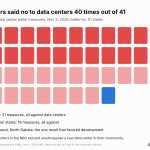
US voters backed limits on data center development in 40 of 41 local ballot measures on Nov. 3. Two days later, OpenAI pledged to pay the full cost of power at future campuses it owns and operates.
This won't stop the AI buildout, but it makes turbines and transformers even scarcer for everyone who needs power, from utilities to chemical plants.
More data centers now make their own electricity with gas turbines, transformers, and switchgear. GE Vernova is selling turbine slots for 2032 delivery. Anthropic agreed in September to pay $3.4B to take over a Texas equipment supplier's two-year-old order for 1.7 GW of Caterpillar gas generators. In August, Musk said SpaceX will cast its own turbine blades and vanes, because that is the limiting factor for gas turbine production. US generator step-up transformers had lead times above 160 weeks this year. Power transformer prices are up 77% since 2019.
Musk also said SpaceX and Tesla are each building factories that can make 100 GW of solar panels a year, and that natural gas will still be needed for several years.
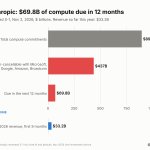
cnbc.com/2026/11/08/anthropi…

ALT Compressor and turbine rotors at GE’s gas turbine plant in Greenville, South Carolina.

ALT Caterpillar G3520K gas generator set.
7
That $1.70 is integration, data cleanup, security reviews and change management. Most mid-market companies can't buy that from a model lab. Feels like the channel's best AI opening is right there. teapaw.org/pequityresearch/status…

Menlo Ventures: Enterprise AI
"For every $1 the industry spends building AI models, enterprises spend about $1.70 putting them to work."
"We estimate that Anthropic and OpenAI alone account for 25%+ of AWS, Azure, and Google Cloud revenue, with much of that spend going to training. That investment only pays off if enterprises keep putting models to work, which agents are now driving."
$AMZN $GOOGL $MSFT $NVDA $AMD $META

1
27
Every one of those seven sells chips, memory or cloud into the stack Anthropic runs on. Supplier money in an IPO is a vote of confidence and a sales pipeline at the same time. $GOOGL $NVDA $AMD $AVGO $MU $MSFT $TSM

These 7 companies combined are investing $26 Billion into the Anthropic $ANT IPO
Google
Nvidia
AMD
Broadcom
Micron
Microsoft
Taiwan Semi
70
since ChatGPT launched (Nov 30 2022, dividend-adjusted):
$SNX +134%
$AVT +104%
$ARW +74%
$NSIT +58%
$CDW -10%
$QQQ +135%
$SNX matched the Nasdaq on flat 3-yr revenue. its Hyve unit builds racks for hyperscalers.
the distributors plugged into the data center won. $CDW, the purest VAR, is the one down

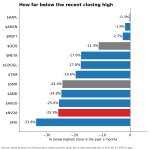
Distance from the 3-month closing high:
$MU -34%
$NVDA -26%
$AVGO -26%
$AMD -25%
$SMH -24%
$MSFT -3%
$AMZN -2%
$AAPL -0.3%
The selloff landed on the companies selling AI hardware. Two of the biggest buyers of that hardware are within 3% of their highs. The market is treating an AI capex slowdown as a supplier problem first.

1
99
$NVDA is down 5% in the first half hour. Everything else I track in AI and big tech is up.
$AMD +8.8%
$AVGO +7.0%
$AMZN +5.3%
$MU +5.2%
$META +5.0%
$TSM +4.0%
$QQQ +2.6%
Same AI demand, same customers. The difference today is the Jensen headline. The market is pricing CEO risk on one name and buying the rest of the chip stack.

58
$FIS surveyed 2,000 US adults: 50% want to approve every transaction an AI assistant makes.
Visa's own research: 23% trust gen AI to handle payments.
Uber's busiest week in October: 4 rides booked by AI agents.
Everyone is building agents that can pay. Customers want someone they trust holding the approve button.
That's the bank's opening in agentic commerce: consent, limits and disputes. Whoever owns the approve button owns the customer.
2
1
44
MaxxBench took 89 coding tasks and changed small requirements. One was as simple as asking for lowercase filenames.
I'd borrow that idea for an AI document workflow. Give it a few completed examples, then change a date format, rename a field, or send the same document as a scan.
Keep the expected answer alongside each version. When you change the model or prompt, rerun the set.
That gives the team something concrete to compare when deciding whether an update is ready to use.
maxxbench.unlap.ai/research/…

23
china's yuan is up about 5% against the dollar this year and about 9% against the euro. september exports rose 36.3%. pboc raised the fx reserve requirement from 4% to 6%, effective nov 15. that pulls dollars out of the banking system and slows the yuan.
a central bank leaning against its own currency during a record surplus is protecting exporters. europe probably eats more of this than the us.
22
a chinese open-weight model just put up 65.7% on terminal-bench 4.0. claude opus 5.5 is at 66.4%. $Kimi AI ran both, so wait for independent tests. kimi k3.1 pro: 2.8T params, 104B active, 1M context, $2 per million input tokens. weights are out on hugging face.
for a regulated bank the price matters less than where it runs. open weights can sit inside your own walls. first thing model risk asks: whose training data, and who signs the attestation.
60
Revolut moved about 2,000 engineers off Claude Code and Codex onto a self-hosted Chinese open-weight model.
56 Nvidia B200s. About 30 cents per million tokens. AI coding bill down about 90%.
Same week, Apple cut some engineers' AI allowance from $300 a day to $200.
Two ways to control the token bill: ration it, or own the stack. A regulated bank chose to own it, running only the weights on its own servers in the US.
My read: the 30 cents leaves out GPUs, staff and monitoring, so the real saving is smaller but still large.
