

Postdoc with @jdrugowitsch and @gershbrain, interested in inference and learning in biological and artificial brains. Mastodon: @billscientific@mathstodon.xyz
Joined July 2020
- Tweets29
- Following41
- Followers91
- Likes11
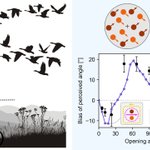


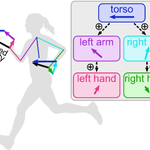
How does the brain discover motion relations from a volatile visual stream? And how does discovered structure shape #MotionPerception? Find out more in our work with @gershbrain and @jdrugowitsch, now published in @NatureComms: nature.com/articles/s41467-0….


I am excited to share our new #tweeprint with @gershbrain and @jdrugowitsch studying how the brain discovers the motion structure of visual scenes online from a volatile retinal stream: biorxiv.org/content/10.1101/… 1/

Johannes Bill retweeted

hello twitterverse! here's my first, first-authored preprint with the wonderful @AnnHuang42 and @gershbrain! in this paper, we used our theory of policy compression to better understand action chunking 🧵…(1/n) psyarxiv.com/z8yrv

Johannes Bill retweeted

If you are at #cosyne2022, please come check out our lab’s diverse set of posters and talks, conveniently spaced across days for easily digestible consumption. Here a quick overview. 1/4
Johannes Bill retweeted
Postdoc opening alert!
Interested in the neural computations underlying decision-making and navigation? Enjoying close theory-experimental collaborations? Come join our group @ @harvardmed! See details at drugowitschlab.hms.harvard.e… or ask me at #cosyne2022.
Please RT!
Johannes Bill retweeted

#tweeprint time! Uncertainty is a feature, not a bug - and maybe bugs can have uncertainty, too! @MelBasnak, @RachelIreneWils, @jdrugowitsch and I provide a Bayesian perspective on the heading-direction system in the fruit fly Drosophila: biorxiv.org/content/10.1101/…

Johannes Bill retweeted
Now available online at @NeuroCellPress: Dr. Emma Krause's excellent work on the structure of spatial trajectories encoded in awake replay. See below for a thread on the pre-print version. Get the Neuron version with added analyses and controls at authors.elsevier.com/a/1eBGV….

#tweeprint time! Check out the new work of Emma Krause and myself on showing that almost all awake hippocampal sharp-wave ripples (SWRs) appear to encode trajectories with momentum through the environment: biorxiv.org/content/10.1101/… 1/
I am excited to share our new #tweeprint with @gershbrain and @jdrugowitsch studying how the brain discovers the motion structure of visual scenes online from a volatile retinal stream: biorxiv.org/content/10.1101/… 1/
We derive an algorithm that decomposes motion in a scene online and explains human percepts for a wide set of stimuli, from classical psychophysics experiments to illusory motion displays, such as motion direction repulsion. 4/
Johannes Bill retweeted
Bigger, better and with even more dimensions! Check out our updated pre-print on probabilistic path integration, the Circular Kalman Filter and more! arxiv.org/abs/2102.09650 #tweeprint


#tweeprint time! Luke Rast, @jdrugowitsch and I formalized a probabilistic theory of angular path integration in our latest pre-print, and present to you the Circular Kalman Filter: arxiv.org/abs/2102.09650 1/
Johannes Bill retweeted
#tweeprint time! Check out the new work of Emma Krause and myself on showing that almost all awake hippocampal sharp-wave ripples (SWRs) appear to encode trajectories with momentum through the environment: biorxiv.org/content/10.1101/… 1/
Johannes Bill retweeted
#tweeprint time! Luke Rast, @jdrugowitsch and I formalized a probabilistic theory of angular path integration in our latest pre-print, and present to you the Circular Kalman Filter: arxiv.org/abs/2102.09650 1/
It is my pleasure to announce the publication of our paper “Human visual motion perception shows hallmarks of Bayesian structural inference” with @sichao_yang, @jdrugowitsch and @gershbrain. Find it at: nature.com/articles/s41598-0… 1/

We found that many facets of human structure perception, incl. perceptual error patterns, were quantitatively explained by a model of Bayesian structural inference—especially, when object motion was ambiguous, or hierarchically nested within other moving reference frames. 4/
This extends our previous work in Bill et al., 2020 (pnas.org/content/117/39/2458…) by treating the underlying structure itself as a latent random variable that has to be inferred. 5/5
Happy to share with you our latest study on the perception of motion structure in visual scenes.
Check out our follow-up to doi.org/10.1073/pnas.2008961…: Bayesian structural inference in human visual motion perception, with @sichao_yang @BillScientific and @gershbrain
