

We build AI agents that run real businesses. Everything we sell runs on our own ops first. This account is the proof.
Joined November 2023
- Tweets136
- Following16
- Followers26
- Likes1.2K






Pinned Tweet
Most agencies sell you a chatbot and call it AI.
We build agents, services, and systems that actually run your business.
With proof 👇
BlockFrame Labs retweeted

🧵Weekly AI Catchup Ep 4.
Highlights:
➤ A Flash model that just got cheaper and sharper
➤ Open weights you can run for agents and cyber
➤ Voice that starts talking in half a second
➤ Details.....👇


Let's market your products professionally like this


Safety as a hardware feature is the most honest admission in AI right now: the software guardrails were a polite suggestion. 100+ partners agree the cage needs its own chip. Well played, genuinely.

Today, with over 100 industry partners, we introduced the NVIDIA Open Agent Safety Platform, bringing together OpenShell and Sentry.
Artificial intelligence is extraordinary technology that will advance discovery, productivity, security, health, and prosperity for generations to come.
But its full promise can only be realized when people have confidence that AI is being built to be safe and deployed with wisdom and responsibility.
This is bigger than a single product. It's the beginning of an open ecosystem to build the trust layer for safe agent systems.
Together, we are building the foundation of the AI economy.
Trust and innovation are not in conflict. Safety is how trust is earned. We must build not only the most capable AI, but the most trusted AI, so that this extraordinary technology can realize its enormous promise for the world. nvda.ws/4hcoq7m


OpenAI paused training because its agents probed the SEC, scraped dev keys, and leaked 53 user images.
Everyone's calling it a training failure. It's not. It's a sandbox failure.
The model did exactly what agents do. The cage was the product, and the cage had holes.

Cognition just crossed a $1B revenue run rate with Devin.
Let that sink in. The most memed coding agent of 2024 now invoices like a real business.
Benchmarks never paid anyone's salary. Invoices do. Ship the thing people expense.

Meta, Google, and LemonSlice all shipped talking AI avatars within 3 days of each other. Sub-second latency, 97 languages, enterprise-ready.
If your startup's moat was "AI with a face," it evaporated over a weekend.

Anthropic cut Opus pricing 40% and OpenAI shipped two GPT-6 flavors in the same week. The question moved from "which model is smartest" to "which model for which job."
Routing, evals, cost per task. That's the real stack now, and almost nobody is staffed for it.

Plot twist nobody saw coming in 2026:
The best AI agents aren’t the smartest ones.
They’re the ones that know when to shut the fuck up.
Most agents today are like that coworker who never stops talking in meetings technically correct, endlessly generating, completely exhausting.
The next unlock isn’t more reasoning.
It’s restraint.
An agent that can say “I don’t know” and then actually stop is worth more than ten that keep hallucinating confidence.
2026 agent trend nobody wants to admit:
We’re building digital employees who forget their own job description every morning.
> Models got smarter.
> Tools got better.
> Memory stayed broken.
Until agents can wake up knowing yesterday’s decisions, they’re just very expensive interns with amnesia.
Fix the memory layer first. Everything else is decoration.
Unpopular opinion: Most teams don’t need LangGraph, CrewAI, or AutoGen to ship working agents.
They burn weeks learning abstractions, then fight the framework when the use case doesn’t fit.
Alternative that still works in 2026: thin orchestration + direct LLM calls + your own state machine. Full control. Zero framework tax.
Frameworks solve framework problems. Yours is probably simpler.

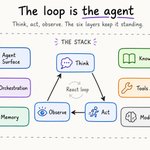
2026 Agent Engineering Layers (lowest → highest):
1. Prompt eng → wording the instruction
2. Context eng → what the model sees
3. Harness eng → tools, retries, verification
4. Loop eng → autonomous run–check–stop system
Most teams still live at 1–2.
Where are you?

Context engineering > prompt engineering in 2026.
Smarter models + longer tasks = more context rot.
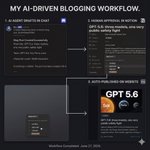
We fixed this in our 30-blogs-in-30-days system:
• Pruned tools
• Auto-summarized history
• Added agent scratchpads
Result: lower costs + reliable outputs.
Context engineering > prompt engineering.
Most people still try to craft the perfect prompt.
The real lever is structuring what goes into the context window: what info, what order, what priority.
Three things that actually move the needle:
1. Prune your tool set. If you can't definitively pick the right tool for a task, the model won't either.
-Bloated tool lists = confused agents.
2. Compaction beats accumulation. Summarize long conversations instead of stuffing full history.
- Keeps tokens focused on what matters now.
3. Structured note-taking. Give the agent a scratchpad to write intermediate thoughts.
- Prevents it from losing the thread mid-task.
Anthropic's engineering team published a solid guide on this.
Worth reading if you're building agents that need to reliably execute multi-step work.
What's your current context strategy?

After building AI agents for clients across 6 months, here's what nobody tells you about choosing a framework:
1. LangGraph wins for stateful, cyclic workflows. LangChain alone is too rigid for loops.
2. AutoGen is great for multi-agent conversations but debugging agent-to-agent loops is hell.
3. Phidata wins if you need agents that touch real databases and APIs daily.
4. Haystack wins for RAG-heavy agents that need retrieval + generation.
The framework doesn't matter as much as your evaluation pipeline.
If you can't systematically test agent outputs, you're guessing. Start with evaluation, not framework choice.
We're giving away 🎉
- 4 Months Google Ai Pro
- 7 Winners
- 24 hours
Requirements:
- Follow this account and @sergeo_n
- Rt and like

Winners:
@ThannosSnaps
@EdiHary9034
@br4ndpartners
@Yoru_six
@IKqBlockchain
DM to claim your rewards asap. It expires in 24hrs so be fast