

mostly monochrome nihilist 1/1 art // experimental music // @99fiends #41 // @neotokyocode S1 #1453 // PFP: VØiDPUNK // https://teapaw.org/t.co/2raWwcHkDB
Joined June 2021
- Tweets3.2K
- Following3.9K
- Followers1.6K
- Likes23.8K






Pinned Tweet
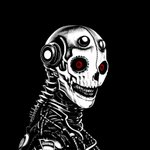
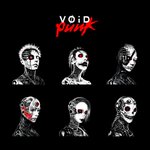
VØiDPUNK
1/1 PFP series
We crawl ever towards the slow death of existence; eyes hollow, voided into oblivion.
VØiDPUNK 1 & 2 sold
Remaining auctions live @ 1 SOL
Winner gets to name their punk
Link below


digibo // VØiDED retweeted

We are excited to welcome @SolGangLeader to the FiveDollarFamily. Art for all.
See you on March 6, 2024 for Serial Experiments.
Over a year of creating and molding these 3D legends. SUPPORT ARTISTS.
it's almost a meme at this point for any NFT project to tout its community as its main value aka *vibes*, but the ones that have persisted and poised to ride the next bull have had it at its core.
beyond proud of what @icunucmi and @arcthecommunity have achieved

THE WINNING EFFECT:
Why Community-As-A-Brand Entities Will Be The Next Gen Unicorns
ARC is without a doubt, the hardest thing I have ever done in my life. If you had asked me 5 years ago, if I had ever thought I would be doing the things I’m doing today, being a co-founder of a project in Web3, and not just any project, but one that has never been attempted before, I would have said that you’re crazy.
I guess I should have realised that community-building seemed interesting in theory when I was reading and researching about it, but community-building in reality is a tough nut to crack. Unlike building an app, people are literally our product. And to scale this into a commercially viable business (which not many have succeeded at previously), we really are on our own here.
In many ways, starting ARC has been a bit of a crazy thing to do. No one really believed that Kiat, @JJ_Lin or myself were actually in this for the long haul. But in it, we are.
And the thing is, when you do crazy things, you sometimes end up having to take some wrong turns. You read what others do, you toss it around in your head, then you try and make sense of how to apply that same thing with @arcthecommunity, but in a different way that works for us. Sometimes it works, sometimes it doesn’t.
Having said that, I think today, we’re in a place where we’re confident enough to say that a lot of the decisions we made for ARC have shaped up to be the right ones that are bearing fruit. As I write this, we are at the cusp of a potential new bull cycle for crypto in 2024. ARC has grown from its humble beginnings into a 600-strong curated community that is poised to ride the highs of this wave in a big way.
The team and I decided that it’s time for me to pen down how I’ve always thought about community-building and our strategy for ARC. Whether you’re a builder in Web3 searching for a commercially successful approach to community-building, an investor looking for the next big bet, or just a curious observer who wants to understand more about us, I hope you find this a provocative read that challenges and informs your perspectives on communities and how they can be run.
-------------
Our Shared History
Every human has an innate yearning for connection. As a species, we are wired biologically to thrive at connecting with others. In fact, it’s the only reason why our ancestors won the evolution race (working together as a group and building strong emotional connections with each other helped Homo Sapiens outlive Neanderthals [I]).
This ability to connect and maintain relationships with others in a collective led to the formation of the earliest communities (or hunter-gatherer tribes) in human history. People found that it was a lot easier to survive when you have a large enough group of people that could be segregated into various ‘roles’ like hunting, protecting, nurturing and so on.
And so it was that all early communities had a common, larger goal in that they were formed to ensure survival of the human race. Everyone, no matter what role you played, did their part to help advance that goal. Today, it could be about slaying that woolly mammoth for food and tomorrow, it’s about defending your community against the neighbours who are trying to take over your home.
However, as time passed, people got better and better at mere survival and so increasingly basic human needs like food, shelter and safety were taken care of. They started asking more and more questions to help them understand the world in which they lived.
How does the world work?
(Why did they experience droughts one year and famines the next?)
What do they believe in as a collective?
(Was all of it the work of an omniscient being or beings or were there ways to explain everything through observing, recording and pattern-recognising?)
Are there behaviours that should be encouraged / discouraged?
(How do they go about paying respect to their gods? Was it more important to prioritise harmony or progress?)
Over time, a new kind of community began to emerge. One where people felt connected to each other because of a common world-view. They shared the same values, the same beliefs, the same larger purpose in life.
What Are Community-As-A-Brand Entities?
I define Community-As-A-Brand entities as communities where people are united by a shared narrative and can act collectively as a single entity that is represented by the brand.
The shared narrative includes their shared purpose and core values that the community stands by which are also one of the first common threads that bring a community and its members together. At the same time, the brand is essentially the representation of this single entity in the minds of its members. A hallmark trait of a Community-As-a-Brand entity is the strong emotional attachment that members feel towards the brand that represents it.
The earliest examples of Community-As-A-Brand entities in history were our major religions - Christianity, Islam, Hinduism and Buddhism. Each religion has a different world-view and shared narrative that appeals respectively to different individuals. Members of each religious community were not necessarily bound by geographic locations but by what they believed in and the values they had in common. The respective brands of each religion (with years of ‘brand-building’) also take on distinctive meanings and attributes of their own.
The Collective Power of Community-As-A-Brand Entities
Community-as-a-brand entities have always been powerful because of their potential for collective action. Members are united by a common shared purpose, due to the shared narrative, which allows for many decentralised individuals to take actions that still add up to a coherent larger whole. This means any member can find their own way of contributing, in their own capacity, towards the larger vision. (Think again about our earlier reference above on the in earliest entities like our major religious communities.)
But today, Community-As-A-Brand entities have become even more powerful. Why?
Because technology has exacerbated the need for community-as-a-brand entities.
At the same time, technology has facilitated the rise of these entities.
First, the need. In an increasingly digital (social media galore) and fast-paced world exacerbated by COVID, people increasingly feel alone even when they might be surrounded by many others in densely packed urban cities [II]. Our universal human need for connection translates into a deep desire for personalised, relatable shared experiences with others. Communities achieve that - by offering individuals opportunities to connect, share, and build relationships around shared interests, values and a larger shared purpose.
Before the Internet, most communities centred on in-person connections and physical proximity to others [III] (even for religious communities, members are most active in the ones closest to where they live). This dramatically changed at the dawn of Web1.0, where the newfound ability to connect with people cross-borders enabled the proliferation of interest-based communities. From BBS to IRC, new ways sprung up for people to connect with like-minded friends around their personal passions or interests like gaming, music or cooking.
With the evolution of the Internet and a maturing of social media platforms and collaboration/community-management tools like Gsuite, Slack, Telegram, Discord, Facebook Groups etc, we observe a new shift in community trends. From connecting with others around shared interests or hobbies, we now see a noticeable increase in people coming together as a single entity (Community-As-A-Brand entities) to do things together. People are actively seeking out brands and organisations that align with their values and allow them to contribute to a greater purpose.
While most brands understand this, very few have successfully tapped on it in a ‘whole-of-company’ way that led to huge commercial success. One of these rare examples of success is Harley Davidson. In the last 25 years, Harley has gone from operating at the brink of extinction to becoming a top-50 global brand valued at $7.8 billion [IV]. How did they achieve this? By organising the entire company and brand around the community of riders and their shared ethos around “the spirit of freedom” [V]. They were able to create a strong emotional attachment to the community and brand by rallying people around this philosophy of liberation.
In the world of tech and business, some of the earliest examples of such communities include entrepreneurship and innovation-based communities that support start-ups, founders and investors e.g. Y Combinator. These communities provide resources, mentorship and networking opportunities that aid individual members to succeed in global, competitive markets.
In popular culture, communities where individuals have come together to act collectively as a single entity have shown the power of what can be achieved. A decade ago, no one would have expected that a community of small-time, retail traders on the Reddit forum could help drive a meteoric rise in GameStop’s stock price that would eventually force halts in trading and cause significant impact on the institutional investors who were ‘shorting’ against GameStop [VI]. But in the hyperconnected world where we live in today, where information can travel at the speed of a ‘click’, this is no longer just possible, but a reality for what everyday users will be capable of - taking actions into their own hands as a community and a unified entity to build a new world for themselves.
The Winning Effect:
How Community-As-A-Brand Entities Will Rise and Outperform All Others
When Stuart Haber and W. Scott Stornetta [VII], first published their work in cryptography in 1991, they probably did not imagine how it would revolutionise the world. 23 years on, many of us are now familiar with this idea of Web3.0, the third generation of an Internet that emphasises the ethos of an open, decentralised Internet that’s owned and controlled directly by individual users like you and me.
In this new era, Community-As-A-Brand entities now have the technology and tools to manage and coordinate actions of individuals. In this new era, Community-As-A-Brand entities will in fact, flourish and out-compete all other entities as we know them today.
This is possible because of the idea of shared ownership that isn’t just a concept in theory, but a feasible mechanic that can be implemented in the management of all Community-As-A-Brand entities through the usage of NFTs. Members who own the NFT to a community now have genuine shared ownership because every NFT acts as proof-of-access to the community but also proof-of-contribution as an individual member. When the community as an entity performs well collectively, the NFT grows in demand and appreciates in value, with positive value accrued directly to individual holders.
We are now at a perfect moment in history to unleash the full potential of individuals acting collaboratively as a single whole.
In Web2 companies, leaders may talk about the importance of community-building, but the governance structure of traditional for-profit companies is just fundamentally misaligned with the idea of shared ownership. You have CEOs and senior management executives that report into a board and shareholders that are profits-driven without necessarily having a stake in the long-term future of the company. Very often, shareholders are neither users nor loyal advocates of the brand. They’re looking to yield profits from their investments, and more likely than not, they want that profit earlier rather than later.
On the other hand, in a modern Community-As-A-Brand entity that taps on Web3 technology to coordinate individual members towards a common goal (like ARC where individual holders are motivated to contribute in order to elevate the value of the shared digital asset, our Stellar NFT), community members are investors, users and advocates rolled into one. And when that happens, you get the ultimate combination:
INVESTOR + USER + ADVOCATE = HIGHEST-PERFORMING CONTRIBUTOR*
(*Note the intentional use of the word ‘contributor’ vs ‘employee’)
Think about how this compares to the traditional FAANG that still leverages on an employer-employee relationship where retrenchments are the norm and both parties seek to extract the most amount of value from each other vs extracting value together from others.
How ARC is Living & Breathing the Winning Effect as a Community-As-A-Brand Entity
At ARC, Kiat, JJ and myself have always believed in the power of collective action that Web3 can help empower. Through curating a tight-knit community of members that are aligned with our shared purpose and values, the potential for what we could achieve together as a single entity is immense. If ARC is successful at building out the kind of community we envision, it will be the start of a new generation of investment and project incubation powerhouses.
We were very clear that building such a community takes effort and so everything that we do has been by-design right from the get go.
One of the most critical parts has always been the shared narrative of the community, which is a work-in-progress that we continue to refine, evolve and align with individual members regularly. Some key components of our shared narrative include the following:
Shared Purpose - ARC to be at the frontier of pushing the Web3 space in Asia forward through collective value creation.
Shared Values & Beliefs - Give value to receive value | Alone we can do so little, together we can do so much
Who ARC Is For - People who are passionate about the future of Web3 and are currently building / investing / learning / growing actively in the space
Beyond this shared narrative itself, what is more important is how we communicate and align this with members, and how we create various community-building mechanisms that help us ensure the above happens.
One of the core differences about Community-As-A-Brand entities is the idea of shared ownership and how it is implemented. Membership to ARC is unlocked via our Stellar NFT. Not only does the NFT act as a token to gate access, it is also a digital asset that motivates members to participate and contribute (the more the community grows and performs well commercially, the more likely the NFT gains value and the more an individual member benefits).
Having said that, just the Stellar NFT by itself does not help us achieve the ideal of shared ownership. Members also have to:
Feel a deep sense of pride to be part of this community and to a brand that they want to be associated with - As a highly-curated community, members know that when they join ARC, they join the ranks of a community that’s unlike no other in Web3. This gives them a strong sense of pride but also a sense of belonging that they’re part of something unique and special.
Understand and believe in what we’re looking to build and achieve - constant communication and alignment through 1-1 conversations and regular town halls
Live and breathe our shared values - building in mechanisms like 1-1 onboarding conversations and community programmes that reward what we preach e.g. rewarding contributors through our Keystones programme
Form tight and deep relationships with each other and with the brand (core team) - a digital app that adds new features and builds as community grows and in-real life events and gatherings which humanise member-interactions and turns connections into genuine friendships.
Be convinced that ARC delivers on both intrinsic and extrinsic value to all members - deriving intrinsic joy from being part of a collective of like-minded individuals in ARC, gaining extrinsic value from our real-world utility like lifestyle benefits, investment yields from community alpha and being able to connect with people that helps them expand their networks, their knowledge and their horizons.
All of the above involve highly unscalable, high-touch community-building work which might come across as unfathomable for traditional Web2 startups. After all, their modus operandi is to grow mercilessly by cutting out competitors, becoming the top market share leader in their category and earning through economies of scale. But the rise of Community-As-A-Brand entities whose power can be unleashed with Web3 tech and tools like NFTs makes us believe that this is the new startup model for a new digital era.
We believe that doing the above will help us build a highly-aligned community that has a massive potential for collective impact. Our 600-strong community now has a social media following in the tens of millions across multiple social media platforms. Imagine every member acting together as a single entity to advocate for any new venture that ARC launches (Web3 or Web2). We are in essence building a community that functions like a DAO without being encumbered by the complexity of one.
As more and more people jump onto the Web3 bandwagon (this is an inevitability when people understand the true benefits of shared ownership of the Internet), there will be a growing demand by everyday users to re-assess the relationships they have today with the products and services they transact with.
Will they continue to be satisfied being treated as mere business units or data points that are being leveraged on for profits (which is how Web2 companies operate today), OR
Will they demand for a different relationship, one in which they see themselves aligning with communities, brands and entities that share the same values and beliefs as them?
Will they seek to be part of a shared ownership model, one in which they can be users, advocates and also investors that profit from the brand they are loyal to?
I think the answers to the questions above are obvious. In which case, which kind of entity do we think is more likely to succeed in a hyper-connected, digital, urbanised world where people innately yearn to connect with others that share the same interests, beliefs and values as them?
Will it be one that merely employs people who are working for a monthly salary, which ultimately has management that is acting in-conflict between users and shareholders?
Or one which relies on the contributions of members of the community, people who have a personal invested stake in the financial growth of the business, but who are also users and advocates that want the best for the brand?
We believe that it’s the latter.
As we continue to grow and scale the community, we’ll always remind ourselves about how we can leverage on the idea of the shared ownership model for ARC.
With the collective might of our members coming together to share their networks, resources and expertise together, we are confident that we’ll be able to unleash the winning effect and the full potential of a Community-As-A-Brand entity.
-------------
[I] newscientist.com/article/mg2…
[II] whatsuppiyush.medium.com/the…
[III] lisamxu.medium.com/the-next-…
[IV] hbr.org/2009/04/getting-bran…
[V] etsy.com/listing/1304349990/…
[VI] vox.com/the-goods/22249458/g…
[VII] geeksforgeeks.org/history-of…

digibo // VØiDED retweeted

here are the 2022 releases.
sending my gratitude to all holders:
@BU___UB @celstialbody @bayfragile @diosaonis @bo_digi 🙏🏻✨
link to series below 👇🏻


an amazing piece i have held onto dearly for a long time by @kiramotosan just started a bid at 8 SOL
their 1/1 works have sold on primary for much higher
a minimalist work that expresses so much with so little, resonating deeply with my existentialism
exchange.art/single/BNR293o6…


digibo // VØiDED retweeted

Storytime: The worst bull-run experience ever had.
—————————————————————————
Three parts:
1. The Solana program that cost about ~$30,000 to deploy.
2. Using a rugging dev team's guilt as a way to create a ecosystem "public good."
3. How it all crashed and burned, very, very brutally.
————————————————————————
Part 1: The Idea & a $30,000 Program Deployment
Not talking dev pay, not talking pay for anything, we're literally just talking account storage.
Back in 2021, me, @redacted_j, @levicook, @ExiledApes, @angered_bees, @SlorgoftheSlugs & some now Solana expats went a little maxi on the @metaplex token Entangler.
What did this tech do?
Well, it was essentially a re-mint technology. It allowed us to soft-fork any NFT collection we wanted to. This is the same Entangler that @MonkeDAO decided not to use in favor of the buyout.
It allowed holders to swap for a "new" version of an NFT — this meant a completely new NFT, which could have new art, new royalties, new metadata. It also worked with entirely immutable NFTs because it was user-actioned and didn't change the metadata.
Why would you use it?
1. Art Upgrades, even on Immutable NFTS:
@ExiledApes used it to complete the first-ever art upgrade on Solana. They also are the first actual "mint" of @DegenApeAcademy: the "fuck up" if you will.
2. Forking an NFT collection
Perfect for de-rugs, subDAOs who had out-grown their parent, or any situation in which a community
3. Raising more money
This tech allowed a transaction fee to be placed on the intial swap, so, the fork could raise a bit of money in the process.
We worked with Senshi Samurai to help them raise around $20k on the last of their many de-rug attempts. 💀💀💀
4. Maintaining provenance.
Because it was a reversable swap it maintained the original provenance of the first NFT in @ExiledApes's case, each "New" NFT can forever be swapped back to the original, first DAA mint.
In @BearsReloaded case, every Bear is backed by a SolBear (the first hard rug on Solana) with matching trait rarities.
The problem?
Well, we had to mint all of the NFTs up front, a 10k collection would cost 0.01 to the developer to mint each NFT, and another 0.01 to store it in the Entangler vault. At Solana's all time high that meant around ~$26,000 to attempt a de-rug that maintained provenance/ability to go back to the original team.
Basically was a non-starter. We couldn't afford it for large collections, only sub 2k supplies — we got paid by a ~$20 fee when people swapped.
—————————————————————————
2. Guilt as a Weapon for Ecosystem Benefit
We had no money.
We didn't want to raise via NFT for this crackpot thesis.
So we had to front the money OR, build a better version of the tech we'd planned out.
So what did we do? Well, @SlorgoftheSlugs & Saint Eclectic, with the help of @grapeprotocol & several other investigators found alllll of the dirt on Sol Souls NFT & Novalaunch.
You can read that here if you're interested:
teapaw.org/sainteclectic/st…
TLDR? They raised millions, rugged their NFT collection, and started a launchpad.
After the thread came out @SlorgoftheSlugs, Saint & I lambasted the founder on Twitter spaces for about 3 hours. They had pre-planned the rug for months, and, for the most part, got away with it.
How did it end? Well, he agreed to:
1. Fix the problem with Sol Souls (they didn't)
2. Build this permissionless remint technology so that we could de-rug all the rugs we wanted to (they did).
Why?
We were incredibly bullish on this (now disproven) thesis:
Derugs were the best place for actual, on-chain, NFT DAOs.
Why tf would we think that?
Well, you have to remember the conditions back then.
There weren't 25,000 projects on Solana, there were less than 100. We had assumed provenance and that these communities would want to stick together.
We were very wrong.
—————————————————————————
3. How it all crashed and burned, very, very brutally.
Our magnum opus as a team was @bearsreloaded.
It used the new technology called the "Reloader" that we'd ripped from the hands of a rugging dev team.
It had fully rendered, ray-traced, 3D art that I directed — an attempt.
We were able to raise around $40k USD for the remint.
About ~1/4 of this went into the DAO wallet, the artist was paid $12k, I got around $5k, and the team split the rest.
My first real paycheck on Solana. Sweet. About 1 year of work for $5k. Not bad. Definitely covered all the debt I'd accrued.💀
But then the 0 royalties thing hit, we stopped getting remint clients, Sol was at $30, FTX happened — and the "Sanctuary" model of reminting collections slowly but surely was disproven.
It was no longer ethical nor profitable to remint collections whatsoever — though, the profits were never really there.
The Bears artist completely ghosted me. Someone I've known and considered a best friend for almost 7 years.
Why? I have no idea. Likely because I continue to work in NFTs. The art just brings me pain now.
We'd drained our savings on this stupid idea, went into immense debt, but, we tried something new, something that nobody else would (for good reason).
Why am I still here?
Cuz there's something special here, there are special people making special things, and there are a million new ideas to try.
Additionally, my experience with this ecosystem is wholly unique.
Who else has watched the homies @SlorgoftheSlugs and @crypto_devour investigate literally hundreds of rugs?
Who else knows that there was likely half a billion dollars lost to rugs?
Who else turned down a de-rug project because an Australian drug trafficker wanted to fund it?
Who else was sitting in recently-rugged Discords, chatting with people who had just lost thousands of dollars besides me @angered_bees, and @dickySOL?
We have perspective. We know the bullshit. And there are very few of us.
And, shameless plug, all of this led to @RadiantsDAO, an idea nobody else could have had — because nobody else experienced what we did.
—————————————————————————
Footnote:
This longpost was going to be about being wary of program deployment costs, but, obviously my fingers had something else in mind.
As of right now that $30k program would cost around $4k to deploy with regular NFTs.
With cNFTs it would cost less than $1k, in the peak of the bull, likely less than $3k.
If you read this far, well done LMAOOOOOO

This is Part II of the thread on Sol Souls. After Part I, NFT launchpad @nova_launch publicly disassociated themselves from Souls. Interestingly Part I never even mentioned them.
As you can guess they are indeed the same team. So what do you need to know?🧵👇 #Solana #nfts


digibo // VØiDED retweeted

After tough negotiations, we are pleased to announce that 99Fiends/GEIST has acquired @mindfolkART for 69,000 $REE.
While this is a bit more than we anticipated paying, we feel it is worth it in the long run.

digibo // VØiDED retweeted

Good morning ☕️
Get ready for @UndergroundD0A Decoders 🌀

