
Ex-tradfi turned crypto degen
London, England
Joined February 2021
- Tweets1.8K
- Following630
- Followers1K
- Likes2.6K







My takeaway from EthCC: crypto's funding model is facing an existential crisis. 🧵👇
1/ Retail is GONE
Tier-1 projects are actively exploring IPOs. Why? Because they need access to real liquidity in traditional stock markets.
The crypto retail investor base has been systematically destroyed by cycle after cycle of getting dumped on by VCs and insiders.
There's barely any exit liquidity left for institutional players like crypto VC funds to realize their paper profits.
2
5
369
2/ Crypto VCs are rekt
VCs are struggling to raise new rounds as their LPs realize there's no one left to buy their bags.
Massive discounts on locked tokens are being hawked in secondary markets, reflecting a huge mismatch between buyers and sellers as everyone rushes for the exit.
Performance numbers are brutal. Top-tier crypto VCs delivering 2-2.5x MOICs.
You could literally just buy Bitcoin and get similar returns - with actual liquidity.
1
278
Institutions aren’t coming—they’re already here.
And they’re asking for clean books, not hype.
Big thanks to @cryptio_co for hosting the Crypto Finance Forum.
Compliance, reporting, and treasury infra are the real unlocks for the next bull.
Great convos with folks from @bankofengland @1inch and more.


9
332
1/ @blockworks just dropped the Token Transparency Framework (TTF) — a self-reported checklist for crypto teams to “signal transparency.” But how does it stack up to tradfi disclosure rules? Spoiler: It doesn’t. 🧵👇
2/ The TTF scores projects on 18 criteria across:
☑️Project & Team
☑️Token Supply
☑️Market Structure
☑️Financials
You get a “Transparency Score” out of 40.
But here's the catch: it's voluntary, unaudited, and non-comprehensive.
If you thought tradfi transparency was bad, Blockworks’ TTF is even worse. For example:
SEC requires disclosure of related-party transactions in exact $$ terms.
TTF “recommends” disclosure within 30 days, with no format or enforcement.
Result: you’re trusting vibes, not GAAP or IFRS.
1
46
Back tested this over years. Live traded it recently. 155% total return since mid-April 📈 Here's the breakout strategy that printed it 👇
Here’s what the algo was built to look for:
✅ Tight range or squeeze
✅ Low realized volatility relative to implied
✅ Liquidity conditions stable
✅ Catalyst or narrative potential (manual overlay here but powerful)
The idea is simple: anticipate the breakout and enter at the start, not chase it.
The algo flagged $HYPE (@HyperliquidX) in mid-April.
The signal was clean:
• Multi-day volatility compression
• Price hugging key levels
• Volume drying up (a classic sign)
• Implied vol ticking up quietly
A spot position was entered at $15.246.
No leverage. No options. My rule of thumb is to never take leverage for directional trades. The breakout kicked in shortly after.
Most traders:
• Enter too late
• Wait for confirmation that’s already priced in
• Don’t quantify volatility
Breakouts work because they mark the beginning of a new consensus regime. Volatility is the truth before the news.
Markets spend ~70% of the time in consolidation. That means only ~30% of the time do you get real movement.
But that 30%? That’s where the money is made.
Breakout systems are built for those windows.
The algo systematically identifies breakouts with sell triggers, leading to more consistent returns over time, as well as reduced drawdowns.
No system is perfect. But breakout strategies tend to work for most of the large tokens in crypto, with limited overfitting.
Volatility is the edge most people ignore.
What trade strategies have you been running? Love to hear what's been working for you.
3
11
376

I’m excited to share that I’ve been appointed to lead DAO Treasury & Trading for @odosdao!
Odos is building one of the most sophisticated smart order routing platforms in DeFi today, operating across 16+ chains such as Base and Avalanche (often the largest smart order router on these networks).
I’ll be working with the DAO on key initiatives across treasury management, asset allocation, and tokenomics structuring to support long-term DAO growth.
Since I left JP Morgan, I’ve been incredibly fortunate to partner with DAOs, protocols, and funds on treasury design, liquidity deployment, and token market structure.
As always, deeply grateful to the founders and teams like Odos for the opportunity to support their growth.
Onwards 🚀
Someone tried to scam me today. And it was the most complex scam I've ever seen. It took place over the course of 3 calls.
They reached out on Linkedin and pretended to be interested in doing business, acting like they knew nothing about crypto and were trying to break in as a web2 startup.
They pointed to a site (unit.co) that could be real or fake - I honestly have no idea.
Here's what transpired:
First call: just wanted to "learn about the space", nobody had their cameras on.
Second call: asked what platforms to use, name-dropped legit people like Amber, Bancor etc.
Third call: asked me to screenshare a demo of smart order routing
Here's where it got dangerous: Once I shared my screen, a prompt appeared from their "Fanthom Notetaker" asking for REMOTE ACCESS. I ignored it.
Then they said I HAD to give remote access or it "couldn't record the demo properly."
I refused and offered to send a recording after. Immediately the call ended and the entire Telegram group was deleted.
🚨 LESSON: Never give remote access to your computer during calls, no matter how legitimate the counterparty seems. Sophisticated scammers will invest weeks building trust before making their move.
Red flags along the way:
1. Their cameras were off the entire time
2. The CEO, despite being very proactive in the gc and promising to join the calls, never actually joined any
3. Their calendly only had time availabilities on the 15 min and 45 min mark of each hour (weird one, I know, but gave me strange vibes)
Stay vigilant out there. These aren't your typical "send me Bitcoin" scams anymore. If it smells like a scam, it probably is a scam.


Everyone talks about launching a crypto token.
But almost no one talks about how much it costs to run one 💸
I’ve worked with over 20 crypto teams, with a touchpoint of over $800m in assets since I started @FydeLabs four years ago.
𝗔 𝘁𝗼𝗸𝗲𝗻 𝗶𝘀𝗻’𝘁 𝗮 𝗳𝗿𝗲𝗲 𝗺𝗼𝗻𝗲𝘆 𝗽𝗿𝗶𝗻𝘁𝗲𝗿.
Here’s the cold, hard math behind launching (and maintaining) a token on CEXs and DEXs.
Spoiler: it’s not cheap!👇
(1/5)
I've spoken to hundreds of crypto companies. Most don't know what to look for when hiring for finance roles. Here are 𝗳𝗶𝘃𝗲 𝗰𝗼𝗺𝗺𝗼𝗻 𝗿𝗲𝗱 𝗳𝗹𝗮𝗴𝘀 to avoid when hiring a Web3 CFO 👇
1⃣ 𝗛𝗶𝗿𝗶𝗻𝗴 𝗘𝘅-𝗧𝗿𝗮𝗱𝗲𝗿𝘀 𝗼𝗿 𝗔𝗰𝗰𝗼𝘂𝗻𝘁𝗮𝗻𝘁𝘀 🟥
Traders, accountants, bankers, CFOs all do very different things, and have very different skill sets.
Treating them the same is like hiring a web developer to audit your smart contracts because they both know how to read code.
2⃣ 𝗛𝗶𝗿𝗶𝗻𝗴 𝗢𝗻𝗹𝘆 𝗪𝗵𝗲𝗻 𝗙𝗼𝗿𝗰𝗲𝗱 𝗧𝗼🟥
I've witnessed projects leave millions on the table (or waste it) because they lacked proper financial leadership early on.
The lost revenue for one such protocol worked out to be around $15 million in fees - every year!
3⃣𝗢𝘃𝗲𝗿𝗽𝗮𝘆𝗶𝗻𝗴 𝗙𝗼𝗿 𝗕𝗮𝘀𝗶𝗰 𝗦𝗸𝗶𝗹𝗹𝘀🟥
Many crypto companies provide CFO-level compensation for accountant or a junior banker who can build nice Excel models. Back in 2021, I saw banking associates go straight into leading teams, without necessarily having the right experience to do so. There's enough TradFi people in crypto now that you can be more selective in who you're hiring.
4⃣𝗛𝗶𝗿𝗶𝗻𝗴 𝗙𝗿𝗼𝗺 𝗕𝗶𝗴 𝗡𝗮𝗺𝗲𝘀🟥
Large firms like Goldman Sachs, Morgan Stanley, or JPM are incredibly hierarchical.
Often times, junior folks from these places were Excel or slide deck machines that lack the strategic experience you need.
Smaller shops give junior employees more responsibility, and a greater opportunity to learn as they interact more with the senior staff. And often times, these senior team members came from the likes of GS, MS, or JPM.
5⃣ 𝗡𝗼𝘁 𝗨𝘀𝗶𝗻𝗴 𝗧𝗲𝗰𝗵𝗻𝗶𝗰𝗮𝗹 𝗔𝘀𝘀𝗲𝘀𝘀𝗺𝗲𝗻𝘁𝘀🟥
No one hires software engineers without a technical evaluation. But crypto companies hire for finance roles all the time without it!
I wrote a practical guide on how crypto founders can avoid these common mistakes 👇
I used AI to write 5,000 lines of code for a yield-farming bot on @aeroxyz that generates 50%-100% in delta-neutral APY 👀
Like most people in finance, I have practically zero coding skills.
In two weeks, I built and deployed a bot that automatically manages liquidity on Aerodrome by rebalancing positions within a concentrated range, similar to how Uniswap V3 works.
To reduce price risk, the bot also hedges the same positions on Hyperliquid using perpetual futures.
The strategy currently generates 200% to 300% annualized returns (APY) before hedging, largely from the high incentives paid in $AERO tokens.
The bot continuously checks whether the liquidity is still "in range" - meaning it's actively earning fees - and if not, it unstakes, repositions, and restakes liquidity within the optimal price range.
The fact that it is now possible for even non-technical people like me to turn their ideas into working code is wild 🤯
I’ve written a short guide containing practical advice from my own experience, using AI to code my yield farming bot on Aerodrome.
It could help you avoid some common headaches when writing your own scripts.
Read it here: avernamethyst.substack.com/p…
Two years ago, the VC arm of @Consensys invited me to teach crypto treasury management to their portfolio companies. The ones that didn’t make it ☠️ all made these 3 fatal mistakes 👇
1⃣ Not cashing out in bull markets
Many teams hesitate to sell their own tokens for cash as markets rally, either to reduce sell pressure, or because they get overly confident.
Just remember, “give up trying to catch the last eighth, or the first. These two are the most expensive eights in the world.”
Token prices will crash faster than you can react. When this happens, liquidity evaporates, leaving treasury teams holding bags of worthless tokens that can’t pay the bills.
But there are other ways to unlock working capital during bull markets.
Institutional lenders offer up to 75% LTV in no-recourse loans against altcoin collateral. They charge projects a 10% origination fee on the loan value as well as annual interest, and lend up to 50-75% of the collateral value in cash or stablecoins like USDC.
This unlocks working capital without the sell
pressure on token prices.
2⃣ Launching a token to stay afloat
The best time to launch a token is when you don’t need the money. Especially in a bull market when valuations are high.
If you launch a token only when you need to extend your runway - it’s over. This is because most teams underestimate the costs to do so.
Managing a token after launch can easily cost $1m - just in the first year alone.
💸Exchange listing fees (budget $500k for MEXC, Gate, and Kucoin alone)
💸Retainers for market makers ($10-20k/mo assuming you don’t use the loan model)
💸The capital you need to post on the exchange for market makers ($150-200k for three exchanges).
That doesn’t even include the marketing budget required to generate sufficient demand for the token before it launches.
3⃣ Spending too little, too late on marketing
Teams will spend millions hiring cracked developers to build amazing products, but then scrimp on the marketing budget for user acquisition, community building, and brand awareness.
Founders (especially highly technical ones) tend to fall into the trap of obsessing over engineering, only to realize no one knows or cares about either their token, or their product.
The token is not the product, and the product is not the token. Token investors and users are (mostly) separate target audiences that care about vastly different things.
Build in public from day one. Focus on selling the story and journey for at least 6 months, and paving the way for a successful token launch.
De-prioritize anything that doesn’t contribute to this mission, and don’t be afraid to use a marketing agency. They’ve been there before, and will often have a better pulse on crypto marketing strategies than you do.
I've worked with the @MANTRA_Chain team quite closely, and I know them on a personal basis.
I don’t think the Mantra team rugged. It wouldn’t make sense. Here's why:
1⃣ They spent quite a bit hiring @FydeLabs to make sure their airdrop was Sybil resistant.
2⃣ The team has been working around the clock on their new ecosystem fund, which they’ve just announced and which they already have investor backing for.
3⃣Their CEO is going to be speaking at very public events this week.
This doesn’t look like the game plan of a team that was about to rug their own token.
And now, with the latest updates, it seems like this was directly the actions of a centralized exchange forcibly liquidating positions.
So if team didn’t rug their own token, does it make sense to put in a bid for $OM?
Crypto runs on momentum - in fact it’s one of the biggest driving factors of price performance.
So until the team can figure out a PR strategy to mitigate this, price will keep dropping. Now the question is what can the team do to assuage concerns?
At this point, just stating facts won’t be enough for market participants to come back - they’ll need to lay out a course of action to correct the token price.
This would mean conducting significant buybacks. But would the cost benefit be worth it for the team?
At $600M market cap, and let’s say that the team owns 90% of token supply of $OM as speculated, that’s a free float of about $60M.
All it’d take is a $30M capital deployment in the form of token buybacks to move prices 3-4x from here.
Given they were a $6-7B FDV project, I think they have at least $30M of MM capital lying around.
Their team has been building in the space for over 5 years now, understand the token game, and have come back multiple times.
For me, there is a sizable chance $OM bounces.
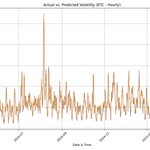
I built a volatility prediction engine for #Bitcoin with an RMSE of 0.2% in forecasting next-hour volatility using data going back to 2021 👀
That means, on average, my model’s prediction of hourly vol. is off by just 0.2% - which is extremely accurate for forecasting something as volatile as Bitcoin.
If you manage a crypto treasury, this matters 👇
Most crypto CFOs are focused on generating yield. But when downside volatility spikes, yields on DeFi strategies - especially ones like @ethena that rely on funding rate arbitrage - can collapse or even go negative.
That’s where accurate volatility forecasting comes in.
When you know volatility is about to rise - and the market is mispricing it - you can trade that mispricing to generate returns that offset declining DeFi yields.
📈 Example:
If my engine predicts 80% annualized volatility for BTC, but the market’s only pricing 60% (based on implied vols), there's a mismatch you can trade on.
You could buy at-the-money options while placing the opposite trade on BTC. If realized volatility ends up higher than implied, you profit from the option’s rise in value (vega) - regardless of the direction BTC takes.
Options get more expensive as implied volatility rises. So predicting volatility isn’t just academic—it’s profitable💰
If you want access to my Bitcoin volatility prediction engine (for free), follow me and leave a comment below!
I’ll DM you the link.

Earlier investor vibes

We just earned 8,606 OP this month from the
@Optimism Retro Funding Round.
We're giving 30% back to our community 🫡

I’ve worked with over 20 crypto teams, with a touchpoint of over $800m in assets since I started @FydeLabs four years ago. Here’s what I’ve learned about managing crypto treasuries.
👉 Founders desperately lack CFOs who know how to manage on-chain assets.
As more institutional capital flows into crypto, there will be more crypto-native organizations whose treasuries are largely on-chain.
But over the years, I’ve watched massive crypto companies with large treasuries worth hundreds of millions, bleed out and die in bear markets when token prices collapse.
Many would still be alive today, if only they had basic treasury management skills, like:
✅ practicing basic asset-liability matching (ALM),
✅ learning to implement hedging strategies, or
✅ knowing how to borrow up to 63% LTV against their treasury assets
I spent nearly five years as a portfolio manager at J.P. Morgan’s Chief Investment Office, helping manage over $500 billion in client capital.
Now, I’m making it my mission to help founders and crypto CFOs level up their game, by sharing practical insights on crypto treasury management.
Tag someone you know who might find this useful!