

A registered 501(c)(3) dedicated to alerting society about the increased risk of acute and chronic illness for mother and baby from infant formula use.
Los Angeles, CA
Joined October 2024
- Tweets4.9K
- Following651
- Followers557
- Likes11.9K
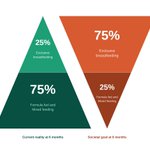


We talk about breastfeeding as nutrition.
We talk about it in relation to maternal health, infant development, obesity and bonding.
But breastfeeding is also an infection-prevention intervention. And if it reduces infections, it has the potential to be an antibiotic-sparing intervention as well.
Women are told to weigh breastfeeding against sleep, work, freedom, equality and mental health, as though feeding their babies at the breast were an optional activity competing with the rest of their lives.
Instead of organizing society around the biological realities of motherhood, we have made breastfeeding something women must justify, manage and, ultimately, decide whether they can afford to continue.
If we genuinely care about maternal mental health, we should be asking how to make motherhood more sustainable, rather than treating the replacement of breastfeeding with formula as the default response to exhaustion.
Instead of looking at the whole experience of motherhood, we have allowed breastfeeding to become a convenient explanation for maternal exhaustion, while the lack of paid leave, practical support and realistic expectations receives much less attention.
We have become increasingly concerned about maternal mental health without adequately examining the circumstances that influence it.
Instead of looking at the whole experience of motherhood, we have allowed breastfeeding to become a convenient explanation for maternal exhaustion, while the lack of paid leave, practical support and realistic expectations receives much less attention.
Antibiotic stewardship should not begin with the prescription. It should begin with prevention: breastfeeding
Formula feeding removes a major layer of infection protection, increasing the number of illnesses that can lead to antibiotic treatment - and therefore increasing the child’s exposure to a class of drugs that medicine is simultaneously trying to use more sparingly.
@HHSGov @CMSGov @FDA when will this be discussed? When will mothers and babies access to breastfeeding be protected? You protect formula but not female biology.
Antibiotic stewardship and breastfeeding belong in the same conversation.
138 excess antibiotic prescriptions per 1,000 child-years with formula-only feeding compared to breastfeeding only.
Extrapolating that research we find that for one million children, approximately 138,000 fewer antibiotic prescriptions per year would be written.
@CMSGov @hhs @seckennedy support breastfeeding to support your goals
Breastfeeding is not simply an alternative way of feeding a baby. It is part of the infant's natural infection-prevention system.
And every infection prevented is an opportunity to avoid an antibiotic prescription.
Every antibiotic prescription avoided is one less disruption to a developing microbiome.
And every unnecessary antibiotic exposure avoided in infancy may matter—not only for the child's immediate health, but potentially for the health trajectory that follows.
If health policy is serious about using antibiotics more judiciously, it should look upstream.
Sometimes the best antibiotic stewardship is not finding a better antibiotic or persuading a doctor not to prescribe one. It is preventing the infection that made the prescription necessary.
Check out Morgan Tripp ✨'s video! #TikTok tiktok.com/t/ZPL1A4GH6/

The Breastfeeding Foundation retweeted

They say don't let your baby get used to sleeping on your chest that's a bad habit
To suggest that pregnancy, birth and breastfeeding can be equated with ordinary “caregiving” is both patronizing and misogynistic.
Maternity Leave to Parental Leave - the language shift and subsequent lack of change for women has harmed them.
To suggest that pregnancy, birth and breastfeeding can be equated with ordinary “caregiving” is both patronizing and misogynistic.
It pretends that the physical trauma of childbirth, the weeks of recovery, and the establishment of lactation are somehow equivalent to a father’s desire to bond with a baby. They are not. The change makes it appear that women do not need dedicated recovery time at all.
That fiction has proven costly to women’s health.
Maternity Leave VS Parental Leave
Many fathers want to support their partners and bond with their children. Partner leave can serve those goals without erasing the distinct needs of the mother. The problem arises when the language and design of policy treat the physical recovery from pregnancy and the establishment of lactation as equivalent to general caregiving.
That pretence is not equality. It is a form of institutional blindness to female biology.
Bring back maternity leave. Women need protecting.
The formula convenience illusion in action: we count the convenience of the bottle, but not the inconvenience of the illness that is more likely follow with formula use than with breastfeeding.
The greatest inconvenience of formula isn’t making bottles. It’s increased risk of illness.
Compared with breastfeeding, formula feeding is associated with higher rates of infectious illness during infancy, including gastrointestinal infections, respiratory infections, ear infections, and other common childhood illnesses. Those increased risks translate into something parents understand all too well: more visits to the pediatrician, more emergency department visits, more hospital admissions, more prescriptions, more days caring for a sick child, more lost income from time away from work, and more sleepless nights comforting an unwell baby (Victora et al., 2016; Stuebe, 2009; Bartick et al., 2017).
Yet these very real consequences are almost never included when people talk about convenience.
The formula industry’s decline will not occur because of a single law or campaign. It will happen because the cultural and economic conditions that sustained it no longer exist.
Mothers are the original manufacturers of human milk - a biological system refined over millennia. As science continues to reinforce the unmatched properties of breastmilk, the long-term viability of a massive industrial substitute becomes increasingly difficult to justify.
Ignoring that inevitability delays meaningful change. Accepting it allows us to design the systems mothers actually need.
Thinking we can bypass innate and immutable human needs leads to frustration and even depression.
We are a carrying species. Infants don't want to be put down because it's hard wired. Knowing this can lead to more peaceful early parenthood.
Topic #2. Milk Composition and Mothering Styles: Cache, Follow, Nest, Carry thelactationcollege.substack…
Should sleep training courses have a warning?
Most women don't know that a 12 hour stretch of not feeding or pumping at night will result in diminished milk supply. Women with an abundant milk supply are often heartbroken to find their milk supply dwindle when they institute sleeping training. This often occurs at the 4 month mark.
Warnings could include: This lifestyle choice has risks - it's associated with diminished milk supply in the absence of regular breastfeeding or pumping over night.
What do you think?
thebreastfeedingfoundation.s…