

building NoClutterCRM 17+ years shipping software, now learning to sell it. I talk about AI and Softwares.
Joined April 2022
- Tweets828
- Following342
- Followers255
- Likes537


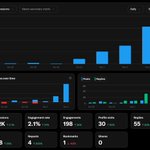


This weekend people have been passing around an NBER paper on more than 500,000 GitHub developers. Autocomplete raised commits by about 30%, interactive agents by 180%, autonomous agents by 240%. Releases only rose 30%. New apps across stores roughly doubled, and overall use stayed flat. The share of new repos that went quiet after the first month went from 60% in 2021 to 69% in 2026. It is a working paper, not peer reviewed, and "releases" here means GitHub releases.
I don't need a paper to feel the gap.
I can produce more now. That is not the same as something people actually come back to. Writing got cheaper. Getting it in front of someone, and making it worth using, did not.
That is the part I am spending more time on, and I still find it harder than the code.
After the code is written, what is actually taking your time now?
1
13
Landed in Singapore last week. Immigration took less than 2 minutes.
No officer. No queue. Just scanned my passport, looked at a camera, and walked through.
As an Indian national, this genuinely impressed me.
India has e-gates too, but using them requires separate registration and approval, which can take up to a month.
Singapore lets a foreign tourist use them without separate enrolment.
Same technology. Very different experience.
The more time I spend here, the more I realise that great technology isn't just about innovation.
It's about execution.

1
16
openrouter told a user their zero data retention requests may have been read by a third party for almost a month. thats painful, that label was the whole reason to pick that endpoint

"Zero Data Retention" meaning NOTHING.
Just got this from OpenRouter.
"Your account sent 579 requests to MiniMax models and ERNIE 4.5 VL through MiniMax, Novita, StreamLake and AtlasCloud, from September 23 at 15:06 to October 19 at 18:25 UTC.
This means a third party may have read the prompts and outputs of these requests. While we investigate, we have removed the Zero Data Retention label from these MiniMax-model endpoints."
It would be naive to think this is an isolated case and unique to OpenRouter.
RUN MODELS LOCALLY & KEEP YOUR DATA PRIVATE !!!

19
I don't think better models are the missing piece for most teams anymore.
Harrison Chase wrote yesterday about what LangChain has been running internally. He calls it a knowledge factory. The idea is simple. Agents need to know how the company actually works, and a lot of that still lives in people's heads or in scattered docs. So they collect it, curate it, and keep it up to date. Agents can flag what is missing or wrong while they work. A separate curator agent in the background reviews those flags and updates the knowledge. He is quite clear that the working agents should not also be the ones writing that store, because it gets messy and full of contradictions.
That last part is the one I agree with.
I would still want a person to look at those updates before they become the new default. The loop is useful. Unchecked writing is how you end up teaching the next run the wrong habit.
Where does your agent still get stuck because it doesn't know how you actually work?
2
1
124
Most agents still go quiet the moment they ask me a question. Everything waits until I come back.
OpenAI just added something for that in the Agents API. The model gets periodic reminders of the current time, so it can adjust its work to a deadline. And if it asks you something, it can keep working while it waits. In their example, you want a briefing a few minutes before a meeting. If you never answer, the question expires and the agent still hands you something useful on time, even if it has to cover more than one possibility.
I like that it does not freeze. I am less sure about the "just keep going" part.
If I stay quiet, I would rather it finish a simpler version than go deeper down a guess. The deadline is the useful bit. I would still tell it, up front, what to do if I don't reply.
If you don't reply in time, do you actually want the agent to keep going?
1
17
People are going to give the model the credit for this. That is not what actually settled it.
On Friday, Levent Alpöge released a proof of the Riemann Hypothesis as a Lean library of 17 million lines. He wrote that he found it working with Claude. Yesterday the Lean and Mathlib communities put out a joint statement, endorsed by the Lean FRO and the Mathlib Initiative, saying they have full confidence the statement and the proof are correct.
I am not a mathematician, and I will not pretend I can read that library.
The part that resonated with me is simpler. He did not leave the argument in a chat. He put it in a form other people, and other checkers, could inspect. Even then, the Lean people say they still want the wider math community to explain the new ideas.
A summary saying "it is done" would not have been enough. That is true for a proof like this, and it is true for the much smaller work I look at every day.
41
Google just added a check in front of agent tool calls. Before an action runs, it is compared with what the user actually asked for, and with rules you write in plain language, like "don't send unreleased numbers to a personal email." Both checks have to pass. The check sits outside the agent, not inside the system prompt.
That last part is the one that matters to me.
Permissions only say what an agent is allowed to do. They don't stop it from doing something you never asked for, or from being talked out of a rule in its prompt. A file or a follow-up message can nudge it into an extra step. A rule sitting outside the model is the right place for that.
I would still run it in dry run first and read the logs. Google says the judge is itself a model, so the verdicts can vary. I would not turn enforcement on and walk away.
Have you caught an agent trying to do something you never actually asked for?
4
1
93
one vibe coded log line made a welcome screen take 15 seconds. ai wrote exactly what was asked, nobody asked if it should. pushing back on requirements is the real job now, and nobody told the juniors
1
17

people said inkling 2 small at 594b was too big and thinking machines shipped a 26b that runs on a laptop. thats how you listen to users.

Some of you thought that Inkling 2 Small was too big at 594B parameters. We heard you: Inkling 2 Mini is a looped transformer with just 26B parameters, small enough to run on your laptop, powerful enough for agentic work with a score of 20.1 on AA Index.
thinkingmachines.ai/news/ink…

9
signal now blocks screenshots by default so ai agents on your phone cant read your private chats. and they say the protection is incomplete.
what do you know, we went from apps protecting us from hackers to apps protecting us from our own assistant.
1
3
114
apple makes chatgpt's computer use 14 steps on mac and the same week google ships computer use in gemini for mac. good luck slowing this one down.
2
3
241
meta's muse charm is reportedly $300 with a free year of 5G from verizon. the free data is the real product here, the device just comes with it lol
1
107

google built a fake internet with fake social media and fake bank dashboards just to test its ai agents before they touch the real one. honestly the right call, i'd want that before giving one my card
19
masayoshi son says skipping anthropic in 2023 was a mistake because he had already picked openai. now its the biggest ipo ever. ouch
14
anthropic up 17% on day one and my weekly limit is still the same size

Remarks from Anthropic CEO @DarioAmodei on our initial public offering:
My co-founders and I started Anthropic because we believe that the most powerful technology of our time should be built for the benefit of humankind.
Daniela and I lost our father to a disease that, just a few years later, became curable. I started my career in biology, hoping to help future cures come sooner. In the lab, I saw the vast thicket of complexity that scientists face when they’re trying to understand disease and develop new treatments.
So many of the scientific tools that can cut through that thicket—tools for gene editing, gene synthesis, controlling brain cells with light—started as pure ideas. In other words, they came from thinking. From intelligence.
Human intelligence has already made diseases like plague, smallpox, and polio history for most of the world. But progress on other diseases has been too slow for so many patients and their families. Going from a great idea to a treatment can take decades: it took many years from the first discovery of a strange repeating pattern in DNA to the approval of the first treatment for a disease using CRISPR.
Nature is full of these patterns. But we’ve had too little intelligence to decipher most of them; too few scientists, with too little time. Now we can build that intelligence. Whether it’s protein folding, drug design, cancer genetics, or clinical trial administration, scientists across many areas of biology and medicine are finding Claude can help them do their research in a fraction of the time it would’ve taken just a couple of years ago. I believe sufficiently powerful AI, working in concert with humans, could compress a century of scientific and medical progress into a decade.
I don’t want to get ahead of myself. At this point all we have are early results. Experiments and clinical trials will still take time. And although they involve slow and ponderous processes, I believe those processes can be substantially accelerated by AI. We hope that in the future fewer families miss a cure by just a few years.
Medicine is just a particularly vivid example, but there are many others. Our customers—the world’s most ambitious companies, nonprofits, and individual people—are already applying the intelligence we’ve built to stimulate economic growth; lift people out of poverty; protect democracy and free societies; even make everyday services like the DMV work better. We’re proud to work alongside them. And I’m extremely optimistic about what we can do together in the future.
At the same time, we have always been honest that this technology has very real risks. These range from misuse of the technology by individuals or nation-states, to economic disruption, to losing control of AI systems. We discuss these risks not because we think they are inevitable, but because we think they are avoidable.
Avoiding them depends on the choices made by the people building AI. There is a gigantic difference between how AI will go if we pay little attention to safety, versus how it will go if we are obsessed with safety. And an obsession with safety and with public benefit has been woven into Anthropic’s DNA from the start. From safeguards against biological and cyber risks, to alignment training and testing, to looking inside our models like an X-ray, Anthropic has pioneered methods for understanding and steering the behavior of AI systems.
There is much work still to be done, and the most difficult safety work lies ahead of us. The incredible talent of the company that has enabled us to build the most capable AI systems will need to be directed, even more so than it has already, towards double- and triple-checking that those AI systems are safe and secure.
And to state it unequivocally, we will pace the training and deployment of AI systems, taking as long as is necessary to have confidence that they are safe and will remain under human control. We will not bend to either business or political pressure. Today puts the company in a stronger financial position, and in doing so only strengthens our resolve to do the right thing.
If we can show it’s possible to make the right choices on safety and still build an incredibly successful company, others in our industry will be inspired to do the same. We call this a race to the top. When the race to the top is working properly, it doesn’t matter which company has the best models—everyone wins because everyone is building safely. The race to the top works best when driven from the front of the pack, and we fully hope and expect to do so, but the goal is to make the whole industry better, regardless of whether Anthropic is winning or losing at any given time.
The advent of machine intelligence is one of the seminal moments in human history, and we have a rare opportunity to shape it for the better.
This moment is bigger than any one company, or any one country. It will take all of us, working together, to ensure this technology goes well for us and the many generations to come. Starting today, we hope that you’ll join us on this mission.
13
intuit paid $12b for mailchimp and sold it for $3.68b. the revenue grew. so now you wonder what the other $8b was for

Bending Spoons bought MailChimp for $3.68 billion. That's a 70% reduction over the last sale price, after revenue grew!
I don't understand why Intuit would sell for such a huge loss so quickly.
But now everyone on MailChimp can get ready for the Bending Spoons playbook of higher prices, team cuts, etc.


13
apple took chatgpt's computer use setup on mac from 4 steps to 14 while building its own agent. security, sure. but the timing, man

As Apple develops its own computer-use agent, it’s making it harder for rival agents to control Macs. In macOS 27.3, enabling ChatGPT’s third-party computer-use support now requires 14 distinct steps, up from four. Apple cites security; Some users see anti-competitiveness.

19