

Quantum Blockchain — BTX TG:https://teapaw.org/t.co/UhJJTe0Wwz Links: https://teapaw.org/t.co/l4twvQIU00
Joined October 2025
- Tweets91
- Following28
- Followers652
- Likes78

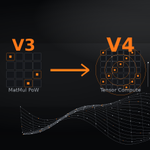





What matters most about BTX right now is not just V4.
It is the growing number of contributors helping build the network together.
Developers continue improving BTX Core, strengthening GPU ExactReplay, node synchronization, block propagation, chain recovery, and network security around V4 mainnet operation.
Miners provide real compute, allowing the new consensus system to be tested under live conditions.
Node operators keep the infrastructure running and feed back issues discovered in real network environments.
CUDA, Metal, and other hardware paths are also being continuously tested for consistency and reliability.
This is how an open-source PoW network actually grows:
Not through one company’s servers,
but through code, miners, nodes, and infrastructure contributors working together to make the network more stable, secure, and resilient.
V4 is a major technical upgrade.
But what truly moves BTX forward is everyone contributing compute, code, and infrastructure.
Thank you to every BTX builder.
Mine. Verify. Build.
#BTX #MatMulPoW #V4 #ProofOfWork

BTX MatMul V4.7 Mainnet Upgrade Announcement
BTX is entering its next major compute era.
MatMul V4.7 Epoch A will activate at mainnet block 185,000.
Estimated activation: around August 15, 2026
Final activation condition: Block 185,000
This is a height-based hard fork. The block height — not the clock — determines the transition.
What changes at Block 185,000?
Below block 185,000:
MatMul V3
512 × 512 matrix workload
Existing MatMul nonce / transcript mining flow
From block 185,000:
MatMul V4.7 — Epoch A
Profile 1 Resident Curriculum
4 sequential compute rounds
16 FFN layers per round
4,096 MatMul dimension
Batch sequence: 16,384
~141 trillion exact MACs per episode
Full deterministic ExactReplay consensus verification
Qualified CUDA / Metal accelerator execution
This is not simply a faster version of MatMul.
V4.7 changes the structure of BTX Proof of Work.
BTX is moving from repeated matrix computation toward a GPU-native, deterministic and verifiable compute consensus workload.
The key transition is:
V3: MatMul PoW
↓
V4.7: Resident Curriculum + ExactReplay
GPU compute is no longer only used to accelerate mining.
The computation itself becomes a deeper, structured and consensus-verifiable workload.
Important for miners and node operators
BTX Core v0.33.2 is the required consensus release for the upgrade.
Miners, pools, validators, exchanges, custodians, explorers and node operators should upgrade before block 185,000.
Older software will not follow the upgraded consensus after the fork.
Official resources
BTX:
btx.dev/
V4.7 specification:
btx.dev/docs/specs/matmul-po…
Mining upgrade guide:
btx.dev/docs/node/mining/
BTX Core v0.33.2:
github.com/btxchain/btx/rele…
Source:
github.com/btxchain/btx
Block 185,000 is not simply another upgrade height.
It marks the point where BTX moves from MatMul PoW into a new generation of verifiable GPU-native compute consensus.
V3 proved MatMul PoW could work.
V4.7 begins the next stage.
More compute.
Stronger verification.
A new BTX compute era.
Mine. Verify. Build.
#BTX #MatMulPoW #V4 #V47 #AICompute #GPUMining

2
11
1,144
🤫

BTX just became safer!
The mining algo was upgraded to make it more difficult for hackers to take control of the chain.
Now that BTX is getting more attention, it becomes more attractive for malicious actors to execute a 51% attack.
This means they rent so many GPUs to mine BTX that they can take over the network, and make any decisions they please.
The new upgrade introduces MatMul v4.7, AI-aligned PoW mining.
Renting enough modern GPUs to attack the chain has become considerably more expensive, because every mining attempt is now one heavy ~30-second computation instead of millions of cheap guesses.
As an added bonus, it makes specialized ASIC farms less dominant, so people with modern high-end GPUs can keep competing and mining stays more spread out.
BTX MatMul V4.7 is moving forward.
V4.7 will bring:
More complete matrix computation tasks
CUDA, AMD, and Metal GPU support
ExactReplay verification
Phased computation and validation upgrades
Stricter device fault detection
BTX PoW is evolving from matrix-based mining into a verifiable GPU computing network.
3
7
804
Together, we build toward the post-quantum era. BTX is building a live PoW network for post-quantum asset security @projecteleven
bitcoin-risq-list.projectele…

BTX V4 is not just a version update.
It is designed to improve:
More efficient INT8 tensor matrix computation;
Better utilization of GPU tensor cores;
Stronger multi-GPU and data-center-scale support;
Broader CUDA, HIP, and Metal backend compatibility;
More efficient verification and mining-pool integration.
Simply put:
V3 proved that MatMul PoW works.
V4 is designed to move BTX from an early GPU mining network toward a larger-scale, more professional compute network built for modern AI hardware.
More compute.
Better infrastructure.
Stronger network security.
#BTX #V4 #MatMulPoW #GPUMining #AICompute

BTX Community Statement
Recently, there has been a significant increase in malicious FUD surrounding BTX. Unverified claims and deliberately created fear will not change the reality of a project that is continuously being built.
As Satoshi Nakamoto once said:
“If you don’t believe it or don’t get it, I don’t have the time to try to convince you, sorry.”
We will not waste our energy responding to every piece of noise. Instead, we remain focused on what truly matters: technology, ecosystem growth, and community building.
Time will reveal true value. Actions will answer the questions.
Thank you to everyone who believes in BTX and continues to build alongside us.
Keep building. Stay focused.
#BTX
BTX Has Turned a Future Migration Into a Network Running Today
This is exactly why BTX matters.
From the beginning, BTX adopted P2MR as its transaction output structure and integrated NIST-standardized post-quantum signatures directly into consensus validation:
ML-DSA-44 as the primary spending path;
SLH-DSA-SHAKE-128s as the backup and recovery path.
Different signature algorithms can coexist within the same Merkle spending policy, supporting everyday payments, recovery keys, post-quantum multisig, and institutional-grade asset control.
This means BTX is not merely promising a future migration in a white paper.
Post-quantum addresses, wallets, transaction construction, signature verification, and asset recovery are already part of the live mainnet.
At the same time, BTX uses MatMul PoW to transform GPU matrix computation into an open network security resource.
Post-quantum signatures protect asset ownership.
MatMul PoW protects consensus and settlement.
P2MR provides an extensible asset security framework.
Together, these three components form a computational settlement network designed for the next generation of cryptographic infrastructure.
Bitcoin is researching how to migrate historical assets.
Institutions around the world are beginning their transition to post-quantum cryptography.
BTX is already operating a PoW network built around post-quantum asset control from day one.
This is why BTX matters:
It is not waiting for the quantum era to arrive.
It is building the settlement infrastructure that era will require.
BTX technical documentation:
btx.dev/docs/specs/post-quan…
btx.dev/docs/specs/matmul-po…
BTX is not waiting for the post-quantum future.
It is building for it.

This is the first early OG proof on the BTX network. Thank you @MendeMatthias @BonuzMarket pq-wallet.com/relics

2
9
1,540
Post-quantum migration is shifting from “Should we do it?” to “When will it be completed?”
1. The standards are already here
In 2024, NIST finalized its first post-quantum cryptography standards:
ML-DSA — FIPS 204
SLH-DSA — FIPS 205
ML-KEM — FIPS 203
In 2026, NIST also began exploring how ML-DSA and ML-KEM could be integrated into the U.S. government’s PIV identity infrastructure.
The discussion is no longer about whether post-quantum algorithms can be used.
It is now about how existing systems will migrate.
NIST:
csrc.nist.gov/projects/post-…
nist.gov/news-events/news/20…
2. Governments and technology companies are setting timelines
The United States is pushing federal systems toward a phased migration to post-quantum cryptography.
France plans to gradually stop certifying security products without quantum-safe capabilities from 2027.
Google has identified 2029 as an important migration milestone.
This is not a prediction of when quantum computers will break existing cryptography.
It reflects a more practical reality:
Large cryptographic systems take years to migrate. Preparation cannot begin after the threat arrives.
Google:
blog.google/innovation-and-a…
U.S. migration memorandum:
whitehouse.gov/wp-content/up…
3. Major blockchains are beginning to plan migration
Bitcoin researchers are studying post-quantum signatures, quantum-safe addresses, wallet architecture, and the migration of existing assets.
Ethereum has published a post-quantum roadmap, but migrating accounts, the execution layer, and the wider ecosystem remains a long-term engineering challenge.
Algorand plans to introduce native post-quantum accounts and later expand support across wallets, consensus, and staking.
The difficult part is not simply replacing one signature algorithm.
It also involves:
Signature size.
Verification cost.
Wallet compatibility.
Migration of existing assets.
Community consensus around upgrades.
Bitcoin:
bitcoinops.org/en/topics/qua…
Ethereum:
ethereum.org/roadmap/future-…
Algorand:
algorand.co/blog/algorand-po…
4. BTX brings the migration problem into a live network
BTX did not wait for a future migration.
Post-quantum signatures were integrated into its addresses, wallets, transactions, and node-validation process from the network’s early stage.
BTX uses:
ML-DSA-44 as its primary signature path;
SLH-DSA-SHAKE-128s as a backup and recovery path.
This does not mean BTX is certified by NIST.
It also does not mean post-quantum cryptography automatically creates adoption or value.
But BTX provides an important live-network example:
While mature blockchains are still researching how to migrate existing accounts and assets, BTX is already operating a network that combines MatMul PoW, post-quantum signatures, and asset settlement.
BTX technical documentation:
btx.dev/docs/specs/post-quan…
The standards have been published.
Government migration has begun.
Technology companies are setting timelines.
Major blockchains are developing roadmaps.
Post-quantum security is no longer only a concept.
It is becoming a real engineering task.
That is the long-term direction BTX is already exploring.
BTX Community Security Alert
Scammers discovered the link to the BTX discussion group.
Because the original group was made private, they created a fake group and added a fraudulent “verification bot” designed to steal Telegram login credentials.
BTX is currently facing a wave of malicious attacks.
That is fine — in a way, it is interesting to see this level of attention.
But please stay extremely careful.
Do not click unknown links.
Do not enter Telegram verification codes into any bot.
Do not share passwords, private keys, seed phrases, or wallet information.
Do not trust anyone claiming to be an official BTX representative.
Only trust content and links published or confirmed by this community.
Protect your Telegram account.
Protect your wallet.
Protect your BTX.
Verify before you trust.
2
10
1,142
Recently, a large amount of short-term, profit-driven “jeet compute” has entered the BTX network.
It arrives quickly, mines aggressively, sells immediately, and leaves as soon as profitability changes.
This can push network compute higher in the short term, but extreme volatility and constant sell pressure do not support the healthy development of BTX.
BTX has always been open-source, decentralized, and permissionless.
Anyone can mine.
Any compute can enter or leave.
The protocol does not rely on centralized control to select participants.
But long-term network security is not built by temporary compute peaks.
It is built by miners who remain online, stable infrastructure, professional compute providers, and participants committed to securing the network over time.
This is why V4 matters.
V4 is not about restricting participation.
It is about expanding compute capacity, improving miner and hardware integration, and enabling more stable, data-center-scale infrastructure.
BTX needs growth.
But more importantly, it needs compute that strengthens network security and long-term value.
Short-term compute can create numbers.
Long-term builders create the network.
Mine. Verify. Build.
#BTX #MatMulPoW #ProofOfWork #GPUMining

BTX Community Safety Notice
We have received reports regarding the availability of BTX services on SafeTrade.
Until SafeTrade provides a clear official update, users are advised to:
• Pause new BTX deposits and trading
• Check whether withdrawals are available
• Verify all wallet addresses and network details
• Keep assets under your own control whenever possible
Do not trust private messages, unofficial links, or anyone claiming they can recover your assets.
Protect your BTX.
Protect your private keys.
Verify before taking action.
#BTX #SafeTrade


$BTX is now listed on SafeTrade.@safetrade
The BTX/USDT trading pair is officially live.
This marks the first step in BTX’s public trading journey.
At the same time, a large amount of liquidity is currently being connected, and more market access points are being pushed forward.
Thanks to SafeTrade for the support.
BTX is moving step by step toward a larger market.
#BTX #SafeTrade #MatMulPoW #PostQuantum

BTX is entering a new milestone phase.
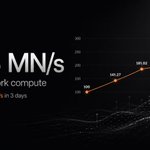
Over the past period, BTX network compute has continued to rise and is now approaching 300 MN/s.
From a difficulty perspective, BTX network difficulty is now close to 0.923% of BTC, with 30-day growth exceeding 4600%.
This is not just a price signal.
It is a deeper network signal:
more GPU compute is entering BTX.
At the same time, the WBTX Ethereum wrapper bridge has entered public testing:
github.com/evxdev/wbtx-eth
This means BTX is no longer just an early PoW network.
It is gradually evolving toward a more complete asset layer and settlement layer.
Community OTC pricing is now around the $6–8 range.
But the real point is not short-term price.
What matters is that several structural changes are happening at the same time:
Compute is growing.
Miners are joining.
Cross-chain infrastructure is being tested.
Price discovery is beginning.
The post-quantum security narrative is being understood by more people.
Many people compare BTX with PRL.
But they are not the same thing.
PRL is more of a bet that future AI inference and training demand will feed back into mining.
BTX operates at a deeper layer:
in the era of post-quantum security and AI compute, the market may need a new secure settlement chain.
BTX is still early.
But early networks are not judged by slogans alone.
The real signals are:
Is compute entering?
Is code moving forward?
Is infrastructure appearing?
Is the market beginning to price it?
Those signals are now happening.
BTX is no longer just a narrative.
It is becoming a network.
#BTX #MatMulPoW #ProofOfWork #PostQuantum #AICompute


