

The official Twitter feed of the BU Chobanian & Avedisian School of Medicine Chronic Traumatic Encephalopathy (CTE) Center & UNITE Brain Bank #BUCTE
Boston, MA
Joined January 2022
- Tweets2.4K
- Following810
- Followers1.7K
- Likes2K



Pinned Tweet
Thank you to @BU_Tweets and @BUexperts for the new series “CTE: How BU Is Changing the Game.” We are grateful for the opportunity to share a more in-depth look at our research and the work that our team does everyday. And most of all, we are grateful to highlight the critical role of our brain donor families who generously and bravely contribute to this work and continue to share their stories. It is an honor to work with these families and our work is not possible without each and every one of them.
We look forward to sharing more as we work toward new milestones and research achievements.
Stay tuned to learn more and you can check out the five-part series now at: bu.edu/brink/series/cte-how-…

As Domestic Violence Awareness Month continues, we'd like to share more about national domestic violence and head trauma resources. #WithSurvivors #DVActionMonth #DVAM2026

Congratulations to Dr. Miner! We are proud of all her accomplishments and important contributions to this field of research 🎉


With generosity from the National Institute on Aging, the BU Alzheimer’s Disease Research Center received funding for the next five years, where investigators are leading studies on memory and aging, genetic risk factors, caregiving, and brain imaging: bit.ly/BU-NIA

October is Domestic Violence Awareness Month—a time to raise awareness, share resources, and support those affected. Swipe to learn more about local domestic violence and head trauma resources.


Today is World Mental Health Day. Individuals with CTE may suffer from anxiety, depression, and other mental heath symptoms.
Visit bu.edu/cte/resources to find organizations that can help treat these symptoms. There is always hope.

As week 2 of the 2026 NHL season commences, we hope for safe play and proper attention given to head injuries. We encourage you to check out our clinical studies (bit.ly/CTE-clinical-studies) as well as our 2024 publication on hockey and CTE (bit.ly/CTE-Hockey-Study).


A new study of 2,732 former female soccer players suggests cumulative heading exposure may be linked to self-reported cognitive complaints, behavioral changes, and depressive symptoms in middle age. Learn more here: bit.ly/4ddL5xQ

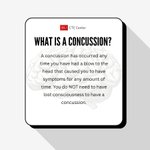
During Concussion Awareness Month, it’s important to understand that a concussion is a serious injury that deserves proper attention. Swipe through to understand the signs, symptoms, and where to find help if you or someone you know has experienced one.


A new BU CTE Center study of 3,000+ former football players explores potential links between repetitive head impacts, memory function, and PTSD and suggests that military service may affect cognition primarily through trauma-related pathways: bit.ly/4hmakQP

September is National Suicide Prevention Month. Suicide prevention starts with us—recognizing the signs, showing up for each other, and knowing where to turn for help. If you or someone you know is struggling, here are resources that provide compassionate, evidence-based support.


This #AlzheimersAwarenessMonth, we're honoring those affected by Alzheimer's and supporting their families and caregivers. Learn more about the Boston University Alzheimer's Disease Research Center team for the 2026 Walk to End Alzheimer's: bit.ly/w2ea2026


A new BU CTE Center study of former NFL players reveals most cases of dementia go undocumented as neurodegenerative disease on death certificates—masking the real scale of the crisis. Understanding these gaps is essential for accurate research. 🧠
bit.ly/4xEpiHA

Stunt performers are a critical part of the TV + film industry but are often exposed to head trauma due to their jobs. As we watch tonight’s Emmy Awards, learn more about the efforts + research aimed at the safety + well-being of stunt performers: bit.ly/bucte_clinicalstudies


As the 2026 NFL season begins, we hope for safe play and proper attention given to head injuries throughout the season.

Boston University CTE Center retweeted

A new @bu_cte study examined 33 former NFL players with autopsy-confirmed CTE.
Of 7 with advanced CTE, 6 showed measurable cognitive impairment while alive.
Yet all 7 received the lowest impairment rating, making it very difficult to receive a settlement payment from the NFL.
Read more: usatoday.com/story/sports/nf…


The BU CTE Center and Michael Alosco, PhD, are featured in @usatoday discussing groundbreaking research on chronic traumatic encephalopathy and concussion outcomes. 🧠 Read the full story here: bit.ly/46FAuaX

In the latest study from the BU CTE Center, researchers characterized cognitive symptoms of 33 NFL players antemortem, utilizing neuropsychological testing. This reveals what to expect on neuropsychological tests to aid in diagnosis during life. 🧠🔬
bit.ly/4ydhAnD


Boston University CTE Center retweeted

New study in @bmj_latest: Among NFL players who died between 2016 and 2021, at least 25%, and as many as 98%, had CTE. From @bu_cte, @MassGenBrigham, and @ConcussionCTEfn.
nytimes.com/2026/08/25/us/nf…
How do contact sports affect your brain in the long-term? A new study from the BU CTE center found that at least 1 in 4 former NFL player donors who died between 2016 and 2021 had CTE at death: bit.ly/4gwd0K3
Boston University CTE Center retweeted
The @BU_CTE Center is cranking out more publications than we can share thanks to a dedicated research team & nearly 1,800 brain donors. Here is a new one:
Proteomic analysis of CTE brain implicates proteasome and ribosome dysfunction in disease severity. link.springer.com/article/10…
