build_r&d (@build_rd_) header
build_r&d (@build_rd_) profile picture

Crafting the blueprint of tomorrow for the pioneers of today. Networked Think Tank - @buildcities

Joined January 2024
Photo by build_r&d (@build_rd_)Photo by build_r&d (@build_rd_)Photo by build_r&d (@build_rd_)Photo by build_r&d (@build_rd_)Photo by build_r&d (@build_rd_)Photo by build_r&d (@build_rd_)Photo by build_r&d (@build_rd_)Photo by build_r&d (@build_rd_)Photo by build_r&d (@build_rd_)Photo by build_r&d (@build_rd_)
𝑪𝑨𝑳𝑳 𝑭𝑶𝑹 𝑺𝑼𝑩𝑴𝑰𝑺𝑺𝑰𝑶𝑵𝑺: build_journal 01: Territories Is your research/work geared towards understanding and redefining our ever-changing built environment? We want to hear from you:
2
2
2
11
1,079
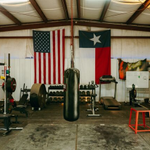
Silver State Supremacy 🪙
This one is for all the Battle Born builders...
1
23
build_r&d retweeted
This one is for all the Battle Born builders...
2
5
5
12
988
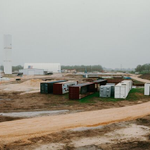
Proto-Town is a recently developed “innovation hub” in Caldwell County, Texas, positioned between Austin and San Antonio. Conceived as a company town for hardware startups, it reflects a renewed interest in spatially concentrated production ecosystems.
1
3
9
402
Socially, Proto-Town operates as a communal living environment, where founders reside on-site in shared or temporary housing. This arrangement collapses distinctions between labor, domestic life, and experimentation, producing an always-on culture of innovation.
1
21
As interest in new cities, special economic zones, and startup enclaves grows, Proto-Town raises a central question: can engineered communities for innovation remain open and democratic, or do they inevitably reproduce new forms of control and dependency?
18
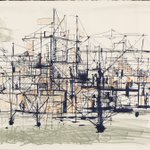
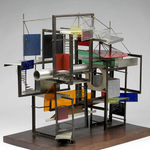
New Babylon (1956–1974) by Constant Nieuwenhuys is a speculative urban project envisioning a post-capitalist society structured by automation. Developed alongside Situationist theory, it proposes the abolition of labor in favor of continuous creative production and social play.
1
2
3
140
Constant developed the project through drawings, models, texts, and films, positioning architecture as a speculative and critical practice. New Babylon operates less as a buildable proposal than as a theoretical apparatus for rethinking social and spatial organization.
1
1
15
As a foundational work of radical architecture, New Babylon continues to inform discourse on post-work futures, mobility, and spatial agency. It asks whether architecture can support a society organized around play, contingency, and collective authorship rather than necessity.
1
8
The Pepsi Pavilion at Expo ’70 in Osaka, developed with Experiments in Art and Technology (E.A.T.), marked a shift from architecture as object to architecture as immersive system, foregrounding experience, perception, and information.
1
2
3
164
Internal conflicts between artists, engineers, and sponsors revealed the limits of collaboration, exposing tensions within corporate-supported avant-garde practice.
1
1
16
The Pepsi Pavilion remains a key moment in media architecture, reframing space as programmable and experiential, rather than static and formal.
1
14