
Cyber Security Expert, virtual CISO, Public Speaker, Retired Paramedic, Father, Husband and Lover of Life.
North of Toronto
Joined December 2009
- Tweets3K
- Following154
- Followers238
- Likes165






🗣 I've always thought the real impact of a talk isn't measured by how much information the audience receives. It's what they remember and do afterwards.
#vciso #canadciso #cybercanada

💁 Risk management works best when responsibilities, decision-making authority and escalation paths are understood.
This is especially important when an issue crosses several departments, such as IT, finance, legal and operations.
#riskawareco #vciso #canadciso

💡 Every business has risks. But sometimes, the biggest risk is the one nobody wants to bring up in the boardroom.
What happens when everyone agrees with the plan, but nobody questions what could go wrong?
#riskawareco #canadciso #vciso

A risk register can tell you what exists. It cannot tell you what matters most.
#vCISO #CanadaCISO #RiskAwareCo

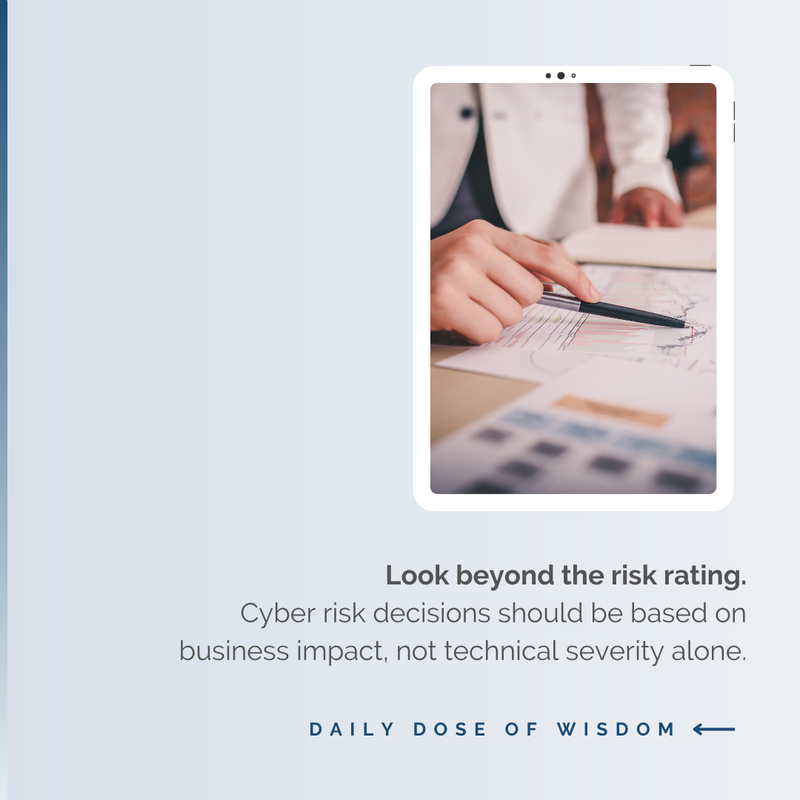
A vulnerability may be technically severe, but its real priority depends on what systems, operations, revenue, or critical business functions could be affected. 🔐
Senior leaders make better cyber decisions when technical risk is translated into potential business impact.
👥 A digital twin for cyber risk creates a virtual model of an organization’s critical systems, dependencies, and potential points of failure.
Leadership can then model different cyber scenarios and see how a disruption could affect business operations before it happens.

A cyber risk belongs in the boardroom when it can materially affect business objectives, critical operations, financial performance, or the organization’s ability to respond.
❓ Where do you draw the line between an operational cyber issue and a board-level risk?

✅ True. Risk decisions should consider more than likelihood alone.
A low-probability event can still demand attention when the potential business impact is severe, especially if the organization has limited ability to respond or recover.
#vCISO #CanadaCISO #RiskAwareCo

AI adoption is moving faster than many organizations’ governance frameworks.
💡 For boards and senior management, the question is becoming how AI risk is being governed, not simply whether the organization is using AI.
Source: IBM
#vCISO #CanadaCISO #RiskAwareCo

Cyber risk belongs in business conversations.
💰 Cyber risk can affect revenue, operations, reputation, and strategic decisions, so it deserves the same attention as other major business risks.

👉 A risk assessment can become outdated long before anyone realizes it.
New markets, suppliers, technology, acquisitions, and business priorities can all change the risk picture.
#vCISO #CanadaCISO #RiskAwareCo

A cybersecurity talk becomes more engaging when the audience can connect with the message and see why it matters:
#vCISO #CanadaCISO #RiskAwareCo

When speaking to senior leaders, context often matters more than technical detail.
💡 Start with the business problem, the potential impact, and what is creating the risk, then work towards the response that makes sense.
#vCISO #CanadaCISO #RiskAwareCo

A cyber strategy can lose relevance as the business changes.
New technologies, vendors, priorities, and operating models can all introduce new risks or change existing ones, so strategic reviews should keep pace with those changes. 💡
#vCISO #CanadaCISO #RiskAwareCo

A business may have strong internal controls and still be highly exposed through a critical vendor, platform, or service dependency.
🛡️ Resilience means understanding what the business relies on and what happens when one of those dependencies fails.

🌐 When too much of the business depends on the same platform, vendor, or digital service, one disruption can have a much wider impact than expected.
Digital concentration risk is about recognising those dependencies before they become a single point of business disruption.

A strong cyber discussion should connect technical risk to the decisions the business may need to make.
❔ What could happen?
❔ What is the business impact?
❔ How prepared are we to respond?
#vCISO #CanadaCISO #RiskAwareCo

Resilience goes beyond having the right technology in place. It depends on leadership decisions, clear accountability, and the ability to keep critical business priorities moving when disruption occurs.

The most dangerous assumption may be that someone else owns the risk.
🧑💻 Cyber risks often cross technology, operations, vendors, finance, and executive decision-making, which can make ownership surprisingly unclear.

