

Dedicated to promoting the message of justice and the common good found at the heart of the Catholic Social Tradition.
Washington, DC
Joined July 2009
- Tweets6.4K
- Following1.4K
- Followers3.6K
- Likes850



Catholics United retweeted

I wrote about my pluralism hero, Sargent Shriver, for @interfaithusa. interfaithamerica.org/articl…
cc: @RSargentShriver @mariashriver @bobbyshriver @Mark_Shriver @TimShriver

Catholics United retweeted

Yes. Thank you for posting! This is indeed the right question we American Christians should ask as we cast our ballots this fall.


Catholics United retweeted

With good reason, Bishops are emphasizing the right to vote more than I recall from the past few cycles. I've been really impressed with the efforts from Catholics in Communion.

US bishops speak out on voting rights before midterm elections ncronline.org/node/341856 via @NCRonline by @BrianFragaNCR

Catholics United retweeted

Though policy change is necessary, we need people to embrace norms that can strengthen our democracy from the bottom up, Robert Christian writes.
ncronline.org/opinion/5-ways…

Yeah you guys are so similar…


Friends, Fr. Ted Hesburgh served on 16 presidential commissions under nine administrations, on matters as broad as civil rights and the great public questions of his time. Like Fr. Hesburgh, I see it as an important responsibility of Catholic leadership to advise those in the highest offices of government as they formulate policy, bringing the Church’s teaching to the table. That’s the work.
111

It makes sense to have sympathy for treasonous confederates when you support current attacks on American democracy.

1
103


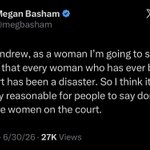
If women are so incompetent, why should anyone value Meg’s commentary? Surely everyone should just ignore everything she says.

3
62
Racism is intrinsically evil. Should she be denied communion until she accepts Church teaching and turns away from this evil?

2
2
32
Your close collaboration with Trump confirmed the worst suspicions that many had: that you are a moral relativist that puts power above principles
In a recent interview, Archbishop Vincenzo Paglia, former grand chancellor of the John Paul II Institute on Marriage and Family Life, confirmed the worst suspicions that many of us had.
He admitted that the changes he made at the Institute during the Pope Francis years were designed to initiate a "very profound" reform of the idea of the natural law.
Instead of absolute moral norms grounded in a keen understanding of the basic goods, he and his colleagues were proposing a moral theory rooted in historical discernment of subjective and cultural experience--not an "armchair theology" but one operating "within history and within people's lives."
This, of course, is the language of trendy postmodernism, and it is dangerous indeed.
Allow me to illustrate the principle with one example. Is slavery wrong?
Intrinsically wrong? Wrong no matter what public opinion polls say about it, no matter what the current consensus on it might be? I imagine any decent person would say yes.
But that yes is predicated upon precisely what the tradition calls the natural law and the basic goods. There are some values so fundamental that acts repugnant to them are by their very nature wicked.
If you want a highly articulate presentation of this idea, go to St. John Paul II's Veritatis Splendor.
If we say that this is just "armchair theologizing" and that morality is a function of ever-shifting cultural and experiential data, then why couldn't slavery be justified?
One of the very smartest persons that ever lived, the philosopher Aristotle, thought it was; extremely bright and morally upright persons in our country, well into the 19th century, thought it was permissible.
Who is to say whether the consensus might shift back again? Who is to say that "lived experience" might come to justify it?
What any truly coherent moral program requires is the very thing that Archbishop Paglia and his colleagues were endeavoring to eliminate, namely, absolute moral norms.
Ridding ourselves of these in the name of freedom or pastoral sensitivity actually renders moral discourse dysfunctional, just as relativizing the basic principle of logic would render any rational conversation impossible.
The Archbishop's interview, frankly, reminded me of the discussions I had at the Synod on Synodality with some of my German colleagues. Under the rubric of the development of doctrine, they were eager to relativize or radically change the principles undergirding classical morality. If this was and is truly the game, we have ventured onto perilous seas.
Link to the article below.
73
Catholics United retweeted

Catholics United retweeted

A prayer for the country’s 250th anniversary from @JamesMartinSJ for @Sojourners

Catholics United retweeted

1/3 I don’t share that fear. She’s an energetic, articulate communicator, likeable, and by all accounts an excellent manager. Her record reassures: she has sought to bring EWTN into the mainstream, and deplores the work-of-the-devil Arroyo show.

I fear this was a very bad decision, which will have Vigano level implications ncregister.com/cna/montse-al…

Perhaps this could be modeled by responding to the White House aide calling someone transgender for no reason. Feel free to show us an adult response, @FrMatthewLC

2
94
Catholics United retweeted

I told CNN today that Pope Leo XIV views Silicon Valley’s original sin as thinking they’re greater than God.
That’s why the first U.S.-born pontiff has called for a “disarmed” AI that cannot perpetrate war devoid of human conscience.
That’s why he wants to partner with Christopher Olah and @AntrophicAI, who courageously stood up to the Pentagon.
He wants to work together to build an AI that serves humanity.
Catholics on social media are saying Marco Rubio is in Miami every Sunday. How is the US Secretary of State in Florida every single weekend?
I love these people who run propaganda for Republicans then pretend like they are impartial while being outraged that others point out things that are publicly known.

Chris Hale, "Mr. Catholic," is once again spreading vicious lies to achieve a political end.
Here's a feature I wrote on Rubio's religious journey a few years ago:
ncregister.com/news/marco-ru…

1
58
The President does not believe in Just War Theory. The war is obviously unjust, and the President doesn’t care. He believes might makes right. Instead of undermining the Church to help Trump, you could try being a good bishop.
There is a way past the absurd and deeply divisive “war” between the President and the Pope, which has been enthusiastically ginned up by the press. And it is indicated in the Catechism of the Catholic Church, paragraph 2309 to be precise. After laying out the various criteria for determining a just war—proportionality, last resort, declaration by a competent authority, reasonable hope of success, etc.—the Catechism points out that “the evaluation of these conditions for moral legitimacy belongs to the prudential judgment of those who have responsibility for the common good.” The assumption is that the just war principles function, to use the technical term, as heuristic devices, designed to guide the practical decision-making of those civil authorities who have to adjudicate matters of war and peace.
The role of the Church, therefore, is to call for peace and to urge that any conflict be strictly circumscribed by the moral constraints of the just war criteria. But it is not the role of the Church to evaluate whether a particular war is just or unjust. That appraisal belongs to the civil authorities, who, one presumes, have requisite knowledge of conditions on the ground. So, is the war in question truly the last resort? Is there really a balance between the good to be attained and the destruction caused by the war? Are combatants and non-combatants being properly distinguished in the waging of the conflict? Do the belligerents have right intention? Is there a reasonable hope of success? The posing of those questions—indeed the insistence upon their moral relevance—belongs rightly to the Church, but the answering of them belongs to the civil authorities.
The Pope has said, on numerous occasions, that he is not a politician and that his role is not the determination of any nation's foreign policy. But he has just as clearly said that he will continue to speak for peace and for moral constraint. In making both of these claims, he is operating perfectly within the framework of paragraph 2309 of the Catechism. If we understand that the Pope and the President have qualitatively different roles to play in the determination of moral action in regard to war, we can, I hope, extricate ourselves from the completely unhelpful narrative of “Pope vs. President.”