

Airline Pilot A320 | B737 | Flight Sim Enthusiast. (Views and comments are personal)
India
Joined September 2020
- Tweets3.4K
- Following100
- Followers7.7K
- Likes14K




Pinned Tweet
A 1st in commercial aviation & one of the most distinctive features of the 777X's design is its innovative folding wingtips.
The 777X boasts an impressive 235 feet and five-inch wingspan, a bit too wide for most airport gates.
🧵 The Boeing 777X Folding WingTip (FWT) operation.
That’s the CVT smoke from the LEAP engine, which typically occurs when the engine is operated in hot conditions.
The Center Vent Tube (CVT) functions as a venting mechanism within the air exhaust system and is designed to ventilate the oil. Oil accumulation and coking inside the CVT is a normal design-related phenomenon that can potentially lead to smoke. Such smoke is usually observed after engine shutdown, when the lack of ventilation causes higher temperatures in the CVT during the soak-back period.
In exceptional cases, this can even produce a small flame. It remains completely safe, however, as the flame is contained and the materials in this area are specifically selected to resist fire. The flight crew always has the option to treat it as a tailpipe fire and take remedial action if desired. A fire or flame in the CVT is not considered a safety issue and is expected to self-extinguish without any intervention.

When the A320 cargo door weighs a whopping 116 kgs, manual assistance becomes essential for safe opening and closing.
The hand pump, installed on the ground service panel of the Yellow Hydraulic System, serves for manual cargo door operation. On the ground, when electrical power is unavailable, the pump enables operators to open or close the cargo doors.
It acts as a reliable backup tool within the Yellow Hydraulic System, allowing cargo door operation in the absence of electrical power or the electric yellow hydraulic pump.
One of those two ducts is the reason the A320 cabin smells fresh on the ground.
The Airbus A320 Lavatory and Galley Ventilation System is a fully automatic, continuous extraction system designed to remove heat, moisture, and odors from the galleys and lavatories, preventing them from entering the cabin recirculation loop.
The duct network leads toward the rear underfloor area, discharging the extracted air directly into the vicinity of the outflow valve using an extraction fan that runs continuously at over 11,000 RPM.
The other duct is for cargo ventilation. This allows us to carry live animals in the cargo compartment.
Under specific conditions, even when following the best loading practices, the A320 family can be outside operational CG limits. A simple solution is sometimes using a catering trolley as ballast, but this does not work every time.
Then comes the need to load ballast bags. Load them with gravel, which is preferred as it is less abrasive and scatters less than sand, or rubber granulate in the cargo compartment. Operators even put a layer of fleece or thin plywood between the bags and the floor panel surface to prevent damage. The bags come with custom cut-outs at the necessary tie-down points so that the ballast sits flat, makes complete contact with the floor panel over its entire area, and does not bunch up.


Notice the line of vortex generators on the tail plane; that is the SHARP effect.
Certified back in 2017, the A320neo Short Airfield Package (SHARP) incorporated several key aerodynamic and control enhancements: an improved leading-edge root fillet, vertical tail plane vortex generators (VTP VGs), a VMCG law that enables asymmetrical spoiler deployment in the event of an engine failure at takeoff, enhanced aileron anti-droop, and an alternate forward CG limit at 28%.
Each of these features is specifically designed to optimize performance during both takeoff and landing phases. Overall, the package delivered slower landing speeds, better lateral controllability at takeoff, and improved braking efficiency.
At takeoff, the VTP VGs increase rudder effectiveness and thereby reduce minimum control speeds, while the VMCG law further lowers these speeds by commanding asymmetrical spoiler deflection if an engine fails.
On landing, the refined leading-edge root fillet improves airflow quality at high angles of attack, allowing a lower approach speed. The aileron anti-droop function increases lift-dump capability, shortening the ground roll, and the alternate forward CG limit simultaneously reduces approach speed and improves braking performance by placing greater weight on the main landing gear.
SHARP provided a unique combination of aerodynamic, flight control, braking, and software modifications, improving both the takeoff and landing capabilities of A320neos operating at complex airports.


Airbus further developed and introduced the SHARp (SHort AiRfield Package) specifically for the #A320 NEO meant to increase wing lift at low speeds.
The modification optimizes the airflow over the root fillet fairing panel which will also be available as a retrofit.

One of the first books I was recommended when I transitioned to the Airbus side was : How to Land an A330 Airbus And Other Vital Skills for the Modern Man by James May.
Today he teaches us to land an A350; 42.7% of this video is accurate to a T.
youtu.be/9Ogxn8IHZgw?si=JUTx…
If you look very closely at the A350's ailerons, you cannot miss the aileron fairings; look even closer, and you will see the scoops for cooling these actuators.
The A350 uses Electro-Hydrostatic Actuators (EHAs) as backups on the inboard ailerons and other surfaces. These self-contained units allow the jet to keep flying even after a total loss of both main hydraulic systems, requiring only electrical power.
They are not the absolute first commercial jet with this capability, the A380 pioneered the 2H/2E + EHA approach, but the EHAs do generate intense heat under load, which is managed through careful thermal design, sometimes involving external airflow pass through.


Quieter Skies: How the LEAP-1A’s Acoustic Liners Cut Engine Noise in Half
Honeycomb acoustic treatment is strategically applied to the composite panels of the A320neo nacelle. Hundreds of thousands of precisely drilled holes in the composite skin allow noise to enter and be absorbed within the honeycomb core, significantly attenuating engine noise.
The nacelle’s tuned acoustic liners covering the inlet, fan case, and bypass ducts target key frequencies, primarily the fan blade passing frequency (BPF) and its harmonics. These liners deliver 4–6 dB of transmission loss.
By eliminating longitudinal panel splices in the inlet barrel, the continuous 360° liner provides an additional 1.5–3 dB of modal attenuation compared with older segmented designs. In legacy liners, splices reflected and scattered duct modes, converting otherwise cut-off modes back into propagating acoustic energy.
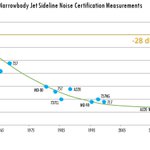
Overall, the LEAP-1A engine is approximately 12 dB quieter than its predecessor. On the logarithmic decibel scale, every 10 dB reduction corresponds to a perceived halving of sound intensity to the human ear.
As a result, the total 85 dBA ground noise contour during takeoff and landing is reduced by roughly 50% relative to previous gen A320ceo aircraft.


What better view than this by @caaptainbrad to see a unique feature on the LEAP's called platform front shroud.
The platform front shroud is a critical component located in the fan module immediately behind the front spinner cone. It forms the forward aerodynamic and structural interface with the fan blade platforms.
The shroud provides a continuous smooth surface that allows airflow to enter the fan cleanly without steps or gaps, thereby avoiding turbulence and helping maintain engine efficiency. It also receives the fan blade balance weights that are used to correct residual imbalance of the rotor assembly, and it secures the position of the composite fan blade platforms while assisting in the retention of the spacers.
Made of titanium, the shroud is clocked with an offset hole and features a 12 o’clock mark on the flow-path surface to identify fan blade number one.
The platform front shroud delivers a smooth aerodynamic surface, accommodates the fan blade balance weights, and locks the fan blade platforms in position.


Rather than drawing air through the legacy bottom-mounted intake flap on the lower tailcone, the New Cobra Duct on the A320 Family relocates the APU air intake to the upper aft fuselage.
On the ground, bottom-fuselage intakes are prone to ingesting tarmac-level contaminants - including engine exhaust, ground support vehicle fumes, fuel vapors, and de-icing fluid spray. Because the APU compressor provides bleed air directly to the Environmental Control System (ECS) packs during ground ops, moving the intake to the top of the aircraft drastically cuts the risk of apron-level odor and fume events in the cabin.
Locating the intake above the fuselage boundary layer reduces the ingestion of water spray, de-icing fluid runoff, and ground debris thrown up by gear or jet blast.

The Camera Sensor exaggeration!! 📸🤳✨
Jet-engine hot sections (combustor and turbine stages) routinely reach temperatures high enough to emit visible thermal radiation (typically starting around 525 °C as a dull red glow, and brighter orange-red at higher operating temperatures of roughly 650 °C or more for the visible turbine face).
This glow can be seen with the naked eye under dark conditions, especially when looking into the exhaust or (in some installations) through the inlet toward the core.
Digital camera sensors (silicon-based CMOS/CCD) are sensitive to near-infrared light roughly up to 1,000–1,100 nm. Most consumer cameras and smartphones include IR-cut filters to keep images closer to human vision, but these filters are imperfect, especially on phones.
Residual near-IR from the hot metal therefore often leaks through, making the glow appear brighter, more saturated, or sometimes shifted in color (stronger red or even pinkish/purple tones) on the screen than it looks to the eye.

Ever seen an aircraft’s APU glowing like this? 🔥
That pink red glow is not the APU burning it’s the hot exhaust area radiating intensely at night. An APU (Auxiliary Power Unit) is a small turbine engine that provides electrical power and pneumatic air when the main engines aren’t running.
Can you guess this aircraft?
Arjun Singh retweeted
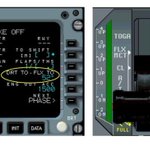
Fun Fact : The Soft GA on the A320 has a thrust target that is upper-limited by Max GA thrust and lower-limited by 60% of Max GA thrust of actual flight conditions.
The objective is to smoothly reach a vertical speed that avoids excessive acceleration, V/S, and pitch up of the aircraft.

Did you know: The A318 was created by shortening the fuselage, removing 1.5 frames from the forward section and three frames from the aft section. To compensate for the reduced moment arm of the shorter, more tightly coupled body, early designs included a small dorsal fin, similar to the extension used on the Boeing 737 at the base of the vertical stabilizer.
In the final design, Airbus abandoned the dorsal fin. Instead, the tip of the vertical stabilizer was extended 75 cm (30 in) higher than on other A320-family aircraft. The shorter fuselage reduces the moment arm, so the extra vertical tail surface is needed to maintain directional stability.


Fun Fact : Before the world’s largest passenger jet ever rolled out as the Airbus A380, the program went through a surprising number of name changes.
In the very early Ultra-High Capacity Aircraft (UHCA) studies, the project was briefly referred to as the A350. When it became the A3XX, the first serious designation Airbus considered was A360 - a nod to the compass point for due north.
A370 was also floated for a short time, but the number “7” was quickly rejected. Airbus didn’t want any association with the competition 7-series.
In the end they settled on A380. The numeral 8 was chosen because it perfectly symbolized the aircraft’s revolutionary double-deck design. It also happened to resemble the symbol for “good luck” in several parts of Asia.
From A350 to A360 to A370… and finally A380. One of the more interesting naming stories in modern aviation history. ✈️

Did you know : That shiny metallic strip you see on the back part of the Airbus A380 belly fairing, right by door 4, is actually a flexible joint. It lets the composite shell bend a bit so it can soak up the bending loads coming from the fuselage.
Even though the fairing isn’t really meant to carry those fuselage loads, Airbus designed it to handle the ones that inevitably transfer over through the belly structure anyway.
And one more bonus of the design: it helps shave some weight off the whole aircraft, as the belly fairing can now be lighter.


The next time you walk down the aisle, look for these “gaps” in the overhead lockers. Cabin temperature sensors are located behind them. As air circulates from the cabin, it passes over the sensors, allowing them to accurately measure the actual zone temperature.


The trickle-down of technology
The CFM LEAP also features a Surface Air-Cooled Oil Cooler (SACOC) - sometimes called a dual-surface air-cooled oil cooler - mounted in the cold stream. The visible fins inside the fan section and bypass duct use cold secondary airflow from the large fan bypass stream to extract heat from the engine oil circuit.
It works in conjunction with the main fuel-oil heat exchanger to keep the engine oil within its proper operating temperature range.


This is a photograph of an old version of the GEnx-1B engine that was never certified for use on the 787. You can tell because it features an Block Oil Cooler on the engine fan case. The purpose of this component is to cool engine or VFSG oil using air that is taken off the fan bypass duct, passes through the heat exchanger, and is exhausted through louvers in the fan cowl.
Between the first GEnx-1B engine tests and delivery of the first 787, GE changed their design so it uses surface cooler heat exchangers where the components are installed in the inside of the fan bypass duct and air passes over the heat exchanger cooling fins.
It is worth noting that the Trent 1000 engine retained oil cooling blocks like these until the introduction of the Trent 1000-TEN in 2017.
via u/approx_volume.
