







Deepinder Goyal and his 'Temple' device are all over the internet.
No, Temple won't be reading your thoughts: it just measures blood flow like a fitness tool, but it still managed to raise $54 million in funding at a $190 million valuation.
The Temple isn’t a big deal because it’ll read your mind. It’s a big deal because it makes wearing a sensor on your forehead all day feel normal, like wearing a watch, even ‘stylish’.
'Cranial consent'
People always say the body is a temple. But a real temple has a door, and the person inside decides when to open it.
Maybe not this 'Temple', not this company, but make no mistake. Bigtech is coming for your brain, eventually.
What’s coming is neural colonialism. It doesn’t need to force implants on anyone. Instead, it operates far more quietly. People just hand over their cognitive data voluntarily, for a bit of convenience, a productivity boost, a piece of tech, safety, or just to be part of a popular trend.
The brain is the last frontier left to conquer.
When the mind becomes data, what happens to privacy?
chapter1mag.com/stem/when-mi…

Punjab’s farm fires have fallen sharply, yet Delhi still struggles with toxic air. What do the numbers reveal about the other major sources of pollution?
chapter1mag.com/polity/delhi…

From Naxalbari to Bastar and beyond India, why does the romantic idea of ‘revolution’ so often end in violence, disorder and broken institutions?
chapter1mag.com/polity/from-…

39
India’s NSAM 2.0 puts industrial 3D printing at the centre of a push for stronger domestic manufacturing across aerospace, defence and infrastructure.
chapter1mag.com/polity/nsam-…

42
Getting an organ transplant in India involves far more than surgery. Registration, matching, allocation, money and geography can all shape a patient’s chances.
chapter1mag.com/polity/india…

33
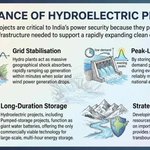
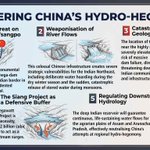
India’s mega dams are about more than electricity. They can support grid stability, water security and strategic interests in sensitive Himalayan regions.
chapter1mag.com/polity/hydro…

41
Government hospitals may offer low-cost treatment, but families still spend heavily from their own pockets. Where does the cost of ‘free’ healthcare really arise?
chapter1mag.com/polity/medic…

35
A Chapter 1 investigation traces a financial web linking Kashmir hotels, a Dubai businessman and the family of former Supreme Court judge Sanjay Kishan Kaul.
chapter1mag.com/polity/hotel…

AI, drones, autonomous systems and resilient logistics are changing warfare. India’s Land Warfare Doctrine 2026 lays out how the Army plans to adapt.
chapter1mag.com/polity/land-…

34
The pressure around the India-US trade talks has shifted. The President who wanted to show the world how tough he could be now needs a partner who can help him look like a winner. And for India, that is a much stronger position to negotiate from
chapter1mag.com/geopolitics/…

1
66
Who shaped the history generations of Indians studied? A look at the institutions, historians and ideological battles that influenced textbooks and academia.
chapter1mag.com/society/who-…

42
Brain-stem death is only the beginning. How does a deceased organ donation move from family consent to retrieval, allocation and transplantation under Indian law?
chapter1mag.com/polity/india…

41
India's aviation sector just received a structural overhaul. The Bharatiya Vayuyan Niyam 2026 buries the archaic 1934 Act, enforcing swift aircraft deregistration for lessors, long-term operational approvals for MROs, and stringent statutory penalties for safety violations.
The regulatory jungle raj is over.
Read the deep-dive: chapter1mag.com/polity/bhara…
32
Texas, Kansas, South Carolina, Iowa and Ohio are not swing states. These are the states that Republicans usually win without much effort.
The midterm results are US citizens rejecting a war they never asked for.
What it means, and why the chemistry of the India-US trade deal just changed, @dhruvmishra601 explains in the article.
Did Americans vote against the Iran War?
chapter1mag.com/geopolitics/…
76
From 2009, Supreme Court judges were free to publish their asset declarations, and several did. Justice Kaul, who had publicly declared eight properties as a High Court judge in 2010, did not
chapter1mag.com/polity/hotel…
1
87
The Vajpayee government replaced the textbooks in 2002; the UPA threw the replacements out in 2004 and handed the field back to the old ‘ecosystem’. Since 2014, the BJP government has rebuilt the curriculum with slow changes
chapter1mag.com/society/who-…
When death gives life: How deceased organ donation works in India
chapter1mag.com/polity/india…
"The textbooks, the top departments, the funding body and the profession’s main association were all in the same hands. Their scholarship may have been remarkable, but they allowed their political bias to be reflected in their work"
A deep dive into the systems and levers that controlled how Indians view their own past.
'Who wrote India’s history' by @dhruvmishra601
chapter1mag.com/society/who-…
1
78
Hotels in Kashmir, Dubai businessman and Justice Sanjay Kishan Kaul: The financial web
chapter1mag.com/polity/hotel…
The Indian Army's Land Warfare Doctrine 2026 marks a decisive institutional pivot from manpower-intensive formations to multi-domain, algorithmic warfare.
Explore how AI, autonomous swarms, and resilient logistics will secure India's territorial integrity.
Read the comprehensive analysis here: chapter1mag.com/polity/land-…