

rewrite all of finance in rust
Brooklyn, NY
Joined September 2026
- Tweets214
- Following577
- Followers14.1K
- Likes759





Pinned Tweet
I built a working AI computer by hand from Amazon parts for under $10k. It replaced a cloud bill that was pushing $10k a month.

1
32
9,930
Charlie Martin retweeted

Traders circulating this old gold from 2017 by Citigroup today.
Worth a read:
$SMH

The quarter that the dotcom bubble burst, Q1 2000, Nvidia overstated their gross profit by about 6.4% and net income by about 15.3%. After an SEC investigation, Nvidia restated results covering fiscal 2000, fiscal 2001, and the first three quarters of fiscal 2002. The CFO later resigned and settled SEC civil charges of financial reporting fraud, books-and-records violations, and related issues.
teapaw.org/financialjuice/status/…

🔴 US Securities and Exchange Commission probe into NVIDIA is exploring potential accounting issues - Sources. $NVDA

When the US invented the internet, we gave it out to everyone for free. That's what confident, thriving countries do. We believed nobody would outcompete us and we were right. The internet giants are all American companies.
As the weaker party, China was threatened by it and created their great firewall to ban US websites. Now, China is giving away their AI models for free like a confident country and the US is contemplating bans. Feels like the beginning of the end of the empire 💔
teapaw.org/DeItaone/status/212381…

The “slow down” calls from frontier AI labs are not pure altruism. They're caught in a Prisoner's Dilemma.
The cleanest path to profitability is to stop training new models. Pure inference margins are strong (like 70-90%). Training costs erase them.
But they can’t stop alone.
Mutual restraint is better for the group. But the dominant individual strategy is to keep racing, because you can’t trust the others not to.
The recent “pace the frontier” rhetoric is the usual attempt to coordinate on the cooperative outcome. But it’s unstable without government enforcement or unrealistically high trust.
1
131
I was half joking when I posted this, but I'm dead serious now. Time to download those weights!
My essentials:
- GLM 5.3
- GLM 5.3 Flash
- DeepSeek V4.1 Flash
- Qwen3.8-27B
teapaw.org/char_mar_/status/21050…

Go download the GLM 5.3 weights while you still can. The great regulatory games have begun anthropic.com/research/glm-5…

3
6
885
Here we go teapaw.org/zerohedge/status/21237…

131
This market in a nutshell: S&P 500 is down 8% and WSB is on suicide watch
teapaw.org/SlopeOfHope/status/212…


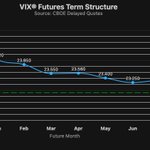
Not sure I have ever seen the entire VIX term structure in such backwardation. Be careful out there bulls

3
735
This is the most 2026 headline yet 🔥

“.. lenders have expressed concerns that if the group later decided to shoot the valuable chips that underpin their loans into space, it would prevent them from reclaiming and selling the semiconductors in the event of a default ..”
@FT $SPCX
ft.com/content/33b5643c-2957…

4
853
Charlie Martin retweeted

No.
1. In the presence of superhuman bug finding machines, humans cannot write safe code without extreme levels of care and planning.
2. That care has almost never been applied to the critical systems in our lives. Not because software engineers don't care, but we aren't really engineers, not in the way civil engineers are engineers. The title is stolen valor.
3. Even careful, experienced "engineers" have difficulty writing code that is safe against modern models in C/C++ and other low-level languages.
4. We are finding that CVEs are overrated; huge numbers of organizations are being owned by custom vulns in the 100s of billions of lines of non-standard enterprise code out there or misconfigurations in heterogeneous systems, which LLMs can find and write exploits for live.
5. @dinodaizovi is right, we need architectures for which one RCE is not game-over and that buy us time for AI-driven response.
6. Everything is going to have to be re-written by AI, in type/memory safe languages, with minimal libraries, using formal methods, contracts, solvers, etc...

The vulnpocalypse is caused by security vendors.
Their inability to convey risk accurately, due to either incompetence or ignorance, causes tremendous damage and stress on responding teams.
There is a lot of weight associated with vulnerability announcements. We can no longer trust many security vendors’ blog posts, since their purpose is marketing & fanfare, not accuracy.
Exploitability needs to be demonstrated, in realistic environments, and its likelihood accurately conveyed. So that responders can make informed decisions on what to prioritize. But instead we are seeing fake PoC videos set in contrived & controlled lab environments, that give an illusion of exploitability when it’s unrealistic in any real-world scenario.
And vendors now try to show off who found it first, rush to send you marketing emails and call you without your consent; to sell you snake oil they pulled out of their ass two hours earlier, with no intention on actually making anyone safer, only to meet their quarterly sales quotas.
The core responsibility of a security professional is to accurately communicate risk, and let people make informed decisions. Too many vendors are failing at this, that I cannot consider them security vendors, only snake oil salesmen taking advantage of people in vulnerable positions due to their lies.
I am so excited that we can just see Anthropic's financials now instead of the overly optimistic speculation, FUD, and bizarro accounting headlines. It's not healthy for private companies to grow to $1T+ valuations. After this IPO, there is only one of those left: OpenAI.
1
1
739
Charlie Martin retweeted

Anthropic going public with only 6% of its shares is worse than many crypto scams. A majority of millions of retail investors will not have a clue they are fighting for crumbs, at the asks.
When Nvidia first came under scrutiny for export controls back in late 2025, they switched their geographic revenue reporting basis from customer billing location to customer headquarters location in their SEC filings.
It seemed clear to me then why they were doing that and it's all but confirmed now. Many others shared similar suspicions publicly like @1CoastalJournal. The CFO, and now interim CEO, would have been privy to the reasons behind this change of course. Ultimately, Jensen was in charge but I suspect the entire C-suite was involved.
It's likely there's more information yet to come out, but one thing seems clear: this was not all about the affairs.
teapaw.org/BillAckman/status/2123…

I believe the @nvidia board is not acting in the best interest of shareholders nor in a manner consistent with their fiduciary duties.
What we know is that the board fired Jensen or forced his resignation for violating company policy and/or in response to the accusation of an affair with a spy.
They did so without careful consideration of the impact on the company, its customers, its shareholders or other stakeholders.
They rushed to judgment without the benefit of careful due diligence or even with a basic understanding of the facts.
How do we know this?
We know this by how quickly Jensen was fired and how little was known at the time of his firing.
It takes time to convene a board meeting. There was time, maybe, for one Zoom.
And this is a decision that should have been made by a board sitting in person and carefully deliberating the facts once they are known.
And they should have slept on the decision and met again the day after to discuss the facts, the risks and the other implications of their decision.
The timing and lack of information did not allow for careful board deliberation.
While boards can fire a CEO for an inappropriate relationship with a subordinate, it should not be an automatic decision. That is why we have boards comprised of humans and not agents.
A board should consider whether or not such a relationship was consensual or whether it was an abuse of power dynamics. And a board has to consider what the impact of the firing is on all stakeholders.
If I were in this board, I would not have rushed to judgment based on articles in the media. I would have made sure the board had all of the facts so it could make a careful and informed decision.
Boards of Delaware companies have a duty of care which means they must make informed, prudent and good faith decisions. This clearly did not happen here.
What law firm is advising this board?
Or is the board even taken good legal advice?
It doesn’t look like it.
And now the board is compounding its failures by insisting that there is no possibility for Jensen’s return as CEO.
Why is it in the best interest of the company to foreclose the possibility of Jensen’s return and to do so before all of the facts are known? This is yet another breach of their duty of care.
Furthermore, the board has launched an investigation whose scope is unknown. Investigations can be extremely damaging to a company and should be carefully targeted to address whatever facts need to be known rather than be overly broad in scope.
In short, this looks like a series of major governance failures by directors that panicked due to headlines in the media. They likely felt compelled to do something because they were afraid of looking bad in the media, not because it was the right thing for them company.
They couldn’t stand the heat.
The board’s conduct here is shocking for a company of this scale and importance to our country and the world at large, particularly at this moment in history.
Recent filings showed massive NVDA selling from hedge funds colliding with massive buying from retail. Could this be the retail trade that finally proves they're no longer the dumb money?teapaw.org/negligible_cap/status/…

Retail absolutely piling into $NVDA dip per Citadel:
"NVDA: Retail traders at Citadel Securities accumulated a record $3.5 billion, the largest weekly net buying in our data since 2017, and 26% above the previous weekly record set in June 2024. NVDA was the most heavily bought security on our platform in all five sessions last week, with total buying 5x that of the next closest name (AMD).
-Persistence of demand: Retail has now been a net buyer of NVDA for 9 consecutive sessions, accumulating ~$4.4 billion on our platform over that period and reversing half of the ~$8.8 billion sold year to date before the streak. Demand persisted even as NVDA rallied 3% on Wednesday (suggesting buying interest extended beyond simply buying the dip).
-Thursday’s Activity (November 12, with stock down 4.3%): The second-largest NVDA net buying day on record, surpassed only by January 27, 2025 (DeepSeek), with net purchases approximately 6.5x the average NVDA buying day over the past year. Excluding the SPCX IPO, retail purchased more NVDA by dollar value than any security on any single day in our platform's history. Gross activity reached 4.7x its one-year average, among the three highest trading days for any security.
-Options activity: Retail traded >$3.2 billion of NVDA options premium on our platform last week, ~3.4x its trailing three-month weekly average, peaking at nearly $1 billion on Thursday alone (5.2x average), with a record number of executed trades. Opening bullish premium outpaced bearish by 2.6 to 1."

Charlie Martin retweeted

The #1 thing young people don't get is the concept of luck surface area.
The more things you do, the more people you get to meet, to learn from, to interact with, the more interesting things happen to you.
Nothing lucky happens playing video games in your room. Get out there.
"Sometimes in my career, I've had clarity and sometimes I have no clarity. And when I have clarity, I like to play big. And when I don't have clarity, I'll almost sometimes not play"
youtube.com/watch?v=6r3D-CMJ…
657