Bader (@classicstudies) header
Bader (@classicstudies) profile picture

𝘖𝘤𝘤𝘪𝘥𝘦𝘯𝘵𝘢𝘭 𝘏𝘪𝘴𝘵𝘰𝘳𝘺 𝘢𝘯𝘥 𝘊𝘶𝘭𝘵𝘶𝘳𝘦.

Epicurean Garden
Joined September 2021
Photo by Bader (@classicstudies)Photo by Bader (@classicstudies)Photo by Bader (@classicstudies)Photo by Bader (@classicstudies)Photo by Bader (@classicstudies)Photo by Bader (@classicstudies)Photo by Bader (@classicstudies)Photo by Bader (@classicstudies)Photo by Bader (@classicstudies)Photo by Bader (@classicstudies)
How did ancient Greek music sound? Listen to the first choral performance with reconstructed aulos of reconstructed ancient scores of Athenaeus Paean (127 BC) and Euripides Orestes chorus (408 BC), with the evidence presented and explained by Professor Armand D'Angour @ArmandDAngour - Jesus College Oxford.
69
999
236
3,433
782,182
Forever impressed by the architecture and art of Rome 🏛️
4
99
8
515
14,860
Civilisation is the long victory of order over impulse.
56
796
36
6,313
119,555
There is something quietly fascinating about how much patience used to be built into a simple morning routine. Before zippers, Velcro, and slip-on sneakers turned getting dressed into a thirty-second afterthought, stepping out the door required a small, deliberate ritual. Button boots from the Victorian and Edwardian eras weren’t just footwear—they were an exercise in discipline. Because the leather and fabric uppers were cut stiff enough to hold a sharp, tailored silhouette, forcing those tiny buttons through tight buttonholes with bare fingers was nearly impossible. You actually needed a dedicated tool—a slender metal buttonhook—just to fasten your shoes. Slip it through the hole, catch the shank, twist, and pull. Repeat a dozen times per foot. When the First World War reshaped daily life in the 1920s, speed and practicality rightly won out. Lace-ups took over, and the buttonhook quietly disappeared from dressing tables. Yet looking at a pair of bespoke green leather and tweed button boots today, it is easy to see why collectors and traditional shoemakers refuse to let them fade away. We gained convenience when we traded buttons for zippers, and nobody misses running late because of a stubborn boot. Still, we lost a certain intentionality—the feeling that even the smallest everyday object was crafted to last, and worth taking five extra minutes to wear properly.
10
46
5
261
11,970
Vétéran français des guerres napoléoniennes, photgraphié un demi siècle plus tard. 🇫🇷
16
151
4
1,282
22,792
Finding beauty in places that still remember how 📍Teatro La Fenice, Venice 🤍
8
84
5
407
9,686
The Excavations at Pompeii by Filippo Palizzi Art Prints from $12.90: archaeologyart.shop/products…
1
26
1
256
14,401
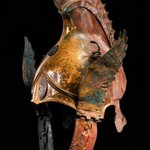
2000 year old bronze shield still bears the name of its owner: King Pharnakes of Pontos. 185-160 BC.
14
153
7
811
12,903
The left nave of St. Peter's Basilica, in Vatican City: a walk among marble floors, sculptures and gilded vaults.
2
119
9
760
11,720
Great British grammar at it’s very breast!
29
210
18
1,268
100,408
"The Civilisation of the Horse." — François Chamoux, on the ancient Greeks
2
5
43
745
🚨🔥 من الكويت 🇰🇼 مقابر الصبية في شمال الكويت تضم نحو 1000 مدفن أثري، بعضها يعود لأكثر من 5000 عام (العصر البرونزي وحقبة العُبيد). بعضها محاط بجدران دائرية يصل قطرها إلى 15 متراً، ويُعتقد أن الكبيرة منها لوجهاء المنطقة وتحتوي مقتنيات زينة. تقع على طرق التجارة القديمة بالقرب من آبار المياه. المصدر الرئيسي للتصريحات: د. سلطان الدويش (مدير الآثار والمتاحف السابق)، الذي درسها في رسالة ماجستير (2010) ونشرها في كتاب «مقابر مدينة الصبية بدولة الكويت» (2015). البعثة الكويتية-البولندية (KPAM) من المركز البولندي لآثار البحر المتوسط (PCMA) عملت في المنطقة 2007–2012، وسجلت أكثر من 200 هيكل، منها نحو 130 تل قبر، ونقبت عشرات منها بالتعاون مع الجانب الكويتي. روابط مفيدة: - مقال الراي (تصريحات الدويش): alraimedia.com/article/17857… - صفحة مشروع KPAM / الصبية على موقع PCMA: pcma.uw.edu.pl/en/2019/04/26… - ورقة علمية عن نتائج المسح والتنقيب (Rutkowski 2018): archaeopresspublishing.com/o… حتى الآن لا توجد نتائج DNA قديم منشورة من هذه المقابر، والسبب الرئيسي ضعف الحفظ بسبب المناخ والنهب.
4
2
18
4,078
"I will not go among men alone; no modest woman would do that." — Penelope, The Odyssey
4
11
211
3,547
The Homeric phrase for "waste of space" is ἑτώσιον ἄχθος ἀρούρης, literally “a useless burden on the earth” From Iliad 18.104. (Just came to mind when I was dealing with an irritating interlocutor.)
12
45
4
397
7,957
The Gods did not abandon mankind. Mankind abandoned the Gods. And still the sun rises ☀️
13
62
4
432
4,988
Greek Lesson: Greek Gestures explained... 🙃💙🇬🇷🤷‍♀️🇬🇷💙🙃
11
51
8
368
11,712
Bader retweeted
Anton von Werner
1
47
3
446
9,017
Alexander the Great offered to pay off his soldiers’ debts. They thought it was a trap. At Susa in 324 BC, he asked his men to declare what they owed. Few wanted to put their names down. Arrian says they feared he was checking who had spent beyond their pay. So Alexander had the debts paid without recording their names. The men could clear what they owed without the king knowing whose debts they were. Left: Tom Lovell’s illustration of the weddings at Susa. Right: a gold coin from Alexander’s reign, showing Athena.
3
19
1
216
9,614
This is one beast of an organ: built in the 18th century, it's all gilded muscle and thunderous sound. Located inside Braga Cathedral in Portugal.
2
42
2
223
7,374
What Your Ancestors Spoke Across Europe Around 500 AD
41
100
4
589
91,019