

ClearPath’s mission is to accelerate American innovation to reduce global energy emissions. Check out the Rundown: https://teapaw.org/t.co/tR7Ve3Cp1s
Joined February 2016
- Tweets3.9K
- Following1.3K
- Followers2.8K
- Likes3.2K


Pinned Tweet
America has an opportunity to lead the world in clean energy innovation.
At ClearPath, we’re making that possible by equipping policymakers with real solutions that accelerate American innovation to secure a stronger, cleaner future built in America.
A broken permitting system raises costs and stalls American investment. BAAJA gets energy and infrastructure built on time.

America has the resources, workforce and ingenuity to lead the future. But for too long, a broken and outdated permitting system has killed job-creating, price-lowering innovation and delayed the energy and infrastructure we need to compete. These counterproductive delays have real consequences for every state and community, driving up the cost of EVERYTHING, stalling billions in investments and blocking opportunities for hardworking Americans.
The Bipartisan American Affordability and Jobs Act will help break through decades of gridlock created by bureaucratic mission creep and red tape, unleash American investment, create good-paying jobs and lower energy costs for American families and businesses.
The Department is committed to timely processing of permits for ALL projects that meet the relevant procedural and substantive requirements. Under @POTUS' leadership, we will move quickly and efficiently to process permits for projects that advance American Energy Dominance to supply more affordable, reliable, secure energy nationwide.
58
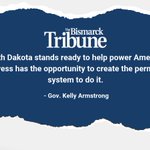
"North Dakota stands ready to help power America. Congress has the opportunity to create the permitting system to do it."
@GovArmstrong makes the case in @bistrib for why Congress should pass the Bipartisan American Affordability and Jobs Act.
Link in comments 👇

1
1
100
🔗 Read the full op-ed: bismarcktribune.com/opinion/…

37
Energy demand is growing fast, but federal permits take years.
Lisa Epifani explains how the Bipartisan American Affordability and Jobs Act gets projects built faster and lowers costs for families 👇
New York won the chips. Now it needs the permits.
Micron's $100 billion investment in New York depends on new power plants and transmissions lines that federal permitting can stall for years.
Hillary O'Brien in @syracusedotcom on why Congress should pass BAAJA this year 👇

🔗 Read the full op-ed:
syracuse.com/opinion/2026/11…

48
ClearPath Action retweeted

Nuclear history in the making!
Yesterday, we issued the construction permit for the Long Mott Generating Station, achieving several regulatory firsts - including our first permit for a high-temp gas-cooled reactor in ~60 years - a major step forward for America's energy future.


🔗 Read the full piece: reuters.com/legal/litigation…

1
66
The Senate voted to begin debate on the Bipartisan American Affordability and Jobs Act.
BAAJA lowers costs, applies one set of permitting rules to every energy technology and keeps environmental protections in place. Fact vs. fiction 👇

Tonight’s vote is the first step to getting BAAJA signed into law, building energy projects faster and lowering costs for families.
Pass BAAJA and let America build.
9
365
ClearPath Action retweeted

A vote against the Bipartisan American Affordability and Jobs Act is a vote against bipartisan compromise.
BAAJA is a major WIN for the American people and central to lowering costs and getting our country back to building. Let’s get this bill passed!
Developers and investors need certainty before they break ground. Under the Bipartisan American Affordability and Jobs Act, an approved permit stays approved and timelines are enforceable.
ClearPath Action CEO @jharrell on why Congress should pass it 👇
6
13,524
🧵 ClearPath Action supports the Bipartisan American Affordability and Jobs Act, and the manager’s amendment makes a good bill better. The updates from @SenCapito, @SenMikeLee, @SenWhitehouse, and @SenatorHeinrich address stakeholder concerns in a wholistic way to protect tribes and ratepayers.
Here is what changes, and why it makes the bill stronger 👇
Every federal authorization that does not require an environmental assessment or impact statement would face a one-year decision deadline. For FAST-41 projects, the window to file a lawsuit would drop from two years to 150 days.
1
37