

Fusion Dance of Biology and Material Science Engineering. Nerd at heart. Laugh even if it's at yourself. PNW and 'little blue marble' born. Love all ❤️💙✌🏼🖖🏼
Spokane, Washington
Joined May 2011
- Tweets17.3K
- Following620
- Followers286
- Likes164K


Pinned Tweet
If you are ever in doubt (which I honestly hope is never), you are loved, you are special, you are made of STARDUST! <3
Making O2 from lunar regolith 🚀🩵

Oxygen does more than keep astronauts breathing. It also supports lander propulsion and fuel cells, making it a vital resource for lunar missions. Our work on Earth uses a reactor and purification system to extract oxygen from regolith simulant, shown here being collected in a bag. Air Pioneer offers a path to bring that capability to the Moon, using in-space resources to help sustain a future lunar base. By working together, industry and government can advance technology from demonstrations on Earth to missions and operations on the Moon.
15
Carl Rodgers retweeted

Oxygen does more than keep astronauts breathing. It also supports lander propulsion and fuel cells, making it a vital resource for lunar missions. Our work on Earth uses a reactor and purification system to extract oxygen from regolith simulant, shown here being collected in a bag. Air Pioneer offers a path to bring that capability to the Moon, using in-space resources to help sustain a future lunar base. By working together, industry and government can advance technology from demonstrations on Earth to missions and operations on the Moon.


Carl Rodgers retweeted

ULA reports the Vulcan first stage failure was due to a problem in the fuel supply from the tanks to the engines, not in the BE-4 engines themselves. The BE-4s worked ok (good news for New Glenn), as did the Centaur CV-L.
Carl Rodgers retweeted

Two million pounds coming through. Our self-propelled motorized transporters (SPMT) were back in action, moving the launch table into position. We built a bridge to drive the launch bridge across the deck, and next we’ll use climbing jacks to assist with placement. For the launch table, we upgraded the blast shielding and solid-state mounting for the aft launch ring and set up support for new umbilical connections for our revised CONOPS.

Carl Rodgers retweeted
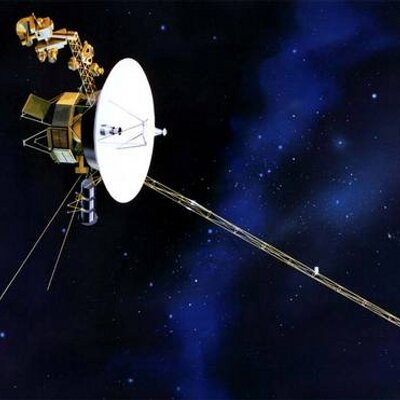
cont'd… It will take until late February to reach 1 light-day from the Sun. 1) Why the difference? …and 2) why 25,902,000,000 km and not 25,902,068,371 km?
Carl Rodgers retweeted
Sister ship Voyager 1 is currently ~24h 00m 00s of light travel time from Earth, or 25,902,000,000 km / 16,095,000,000 mi / 173.145 AU (2026:322:120000:1L) ONE LIGHT-DAY from Earth! …
Carl Rodgers retweeted

Nov. 18, 2026, 5:16am EST
The Voyager 1 spacecraft has reached a distance of one light-day from Earth.
Carl Rodgers retweeted

Voyager 1 is now one light-day from Earth, an extraordinary @NASA achievement for a spacecraft assembled by human hands and launched nearly 50 years ago. As we celebrate this milestone, with Voyager continuing her journey through interstellar space at nearly 38,000 mph, consider what those brilliant minds made possible with the technology of 1977 and how much farther we should aspire to go with the tools, resources, and ambition of our time.


Carl Rodgers retweeted
For those of you watching and waiting, the time is NOW. Sister ship Voyager 1 reached one light-day distance from Earth at 10:16:07 UTC today, in 2026. V1 will be one light-day _from the Sun_ on February 4, 2027. Why the difference? Because Earth is currently orbiting on the near side of the Sun, and so is closer (for now).
Because Voyager 2 lost speed during the Neptune encounter, it will take longer to reach these milestones: one light-day from the Earth on November 1, 2035, and one light-day from the Sun on November 27, 2035.
Carl Rodgers retweeted

The final phase of fueling has begun with liquid hydrogen loading into the LEO-optimized Centaur V upper stage at Space Launch Complex-41. We have a green board with no issues being addressed today by the ULA launch team as we continue to target liftoff for 12:11 p.m. EST (1711 UTC). bit.ly/vulcan_leo1


Solo night of :
Counter strike watching , champagne sipping , and Afrojack set jammin.
-- Kiiiinda perfect.
1
27

Geography centered conferences would come in handy at a time like this. Can't fly, but you play across the state in 36 hours? Hop on a bus-- or a train !
1
42

Carl Rodgers retweeted

We caught the flashing lights of Russians thrusters from the MLM module. Hydrazine and Nitrogen tetroxide. If you wait until the end of the video you will see what the module looks like during the day.

