
Çağımızın bir kahramanı. Düşünüyorum. Philosophy & cognitive science @cog_ist / @theanalytichub / @the_holistic_
Joined July 2026
- Tweets1.1K
- Following568
- Followers877
- Likes9.8K




Pinned Tweet
Bu yeni hesap. Gören eş dost takip ederse makbule geçer. Takip etmediklerim alınmasın lütfen, fırsat olmadı herkesi arayıp taramaya...
1
17
10,486
Dün @ankarausatolyes 'nin ev sahipliğinde @aginbasak ve Mustafa Yavuz hocaların konuşmacılığında "Çağdaş Biyoloji Felsefesinde ve Yeni Materyalizmlerde Canlılık Tartışmaları" etkinliğine katıldım.
Çok keyifliydi, emeği geçen herkese teşekkürler!
Vibrant'ı Türkçe'ye "kıpraşık" olarak çevirme konusuna ben ikna oldum doğrusu, çoğunluk çekimser kaldıysa da. :)

Mustafa hocamızın Twitter'ını bulamamıştım, şimdi denk geldim, onu da etiketlemeden geçmeyeyim.
@phytocentrist Mustafa hocam emeğinize sağlık tekrar.
1
30


Yunus Şahin retweeted

As Jean Piaget is famously quoted as having said: "Intelligence is not what you know. It is what you do when you don't know"
Funny that Galen is clever enough to realize this almost 2000 years ago but contemporary cognitive scientists mostly fail to do so.


What most people miss is that constructing a theory is not just a logical procedure that you might find an objective "optimal" way of doing it but rather, to some extent, it's like art in that it is affected by the personality and non-rational -and sometimes unconcious- preferences of the theorist.
Same goes with the most theoretical activity, philosophy.

Analytic philosophy often modeled itself on math and the sciences. Given that AI has proven superintelligent in math, what consequences does this have for philosophy?
My view is that philosophical progress, insofar as there is any, will be jagged *within* the profession. I expect lots of logic advances, but I don't expect anything like progress in broad philosophical systems. Maybe some people will invent some new ones, but I don't expect us to refute Kantianism or Hegelianism or Thomism.
I'm not sure why I think that, though, but I suspect most philosophers who are familiar with AI progress in mathematics will agree with me.
3
329
Matematikteki bu konu, bana bilgisayarlar yaygınlaştıkça artan "matematiksel modelleme" tartışmasını hatırlatıyor.
Bu tartışma biyoloji ve bilişsel bilim başta olmak üzere pek çok alanda gerçekleşmişti.
Bilgisayarlardan önce matematiksel modelleme, birkaç etmen faktörü ve bunların birbiriyle ilişkisini elegant şekilde, kısa ve öz ifade etmekti.
Bilgisayarlardan sonra belli türden girdiler verip, belli türden kısıtlar -bazen de idealize koşullarda- makineyi çalıştırıp çıktıya bakmak "matematiksel modelleme" halini aldı.
Fakat kimileri bunu "matematiksel modelleme"den saymıyordu çünkü "matematiksel bir açıklama" sunmuyordu. Meseleyi insanın anlamasını sağlamıyor, belki yalnızca kavrayışa giden yolda bir adımı kolaylaştırıyordu.
Kimileri ise bunu yeterince "matematiksel" görüyordu.
Bugün matematikteki tartışmada da bir paralellik var.

i too have solved the Riemann hypothesis but my proof is 250k+ pages, I haven't read the whole thing and it is admittedly slop, so you'll have to take my word on it. very definitely the lean verification actually reflects the intent of the proof itself, just trust me on it
1
3
650
Benim naçizane fikrim, bu eski matematiksel modelleme vs. simülasyon tartışmasında, gerçekten simülasyonların "açıklayıcı" olmadığı ve yalnızca "simülasyon" oldukları.
Burada da, zibilyon satırlık/sayfalık "ispatların" matematiksel ispat denen şeyin raison d'etre'sine ters olduğunu düşünüyorum.
Belki gerçek bir ispata giden yolda atılan bir adım olabilir, bir ihtimal. Fakat o kadar...
1
4
128
Yunus Şahin retweeted

This is how adults work.
They patiently get experts to review what they've generated, share human understanding, allow their work to be stress-tested and focus on exposition.
They don't just lean-drop something they don't understand, timed suspiciously with an IPO of a company.

An independent, 100% human, claimed proof of RH (only 940 pages long). (Seems like this was finished months ago, but has been privately being reviewed.)
math216.wordpress.com/2026/1…
Yunus Şahin retweeted
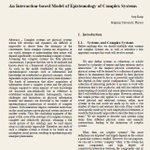
Bu sabah müthiş bir makale okudum!
Felsefe, fizik ve hatta bilişsel bilimi çok iyi birleştirmiş.
Fiziksel indirgemecilikten başlıyor, karmaşık sistemlere, oradan enformasyon teorisine, termodinamiğe, oradan neden "belirimin" zorunlu olduğuna uzanıyor.
Yetmiyor, tüm bunların, "bellek, hatırlama, öğrenme, algı, normativite, fenomenoloji ve benlik" gibi kavramları temellendirmek için nasıl bir zemin sağladığına değiniyor.
Uzun yıllardır okuduğum en sıkı felsefe işi.
Hatta bana kalırsa ideal bir felsefe metninin neye benzemesi gerektiğine çok güzel bir örnek.
Bilim felsefesi, metafizik, fizik ve bilişsel bilimle ilgilenen herkese şiddetle öneriyorum.

Yunus Şahin retweeted

Found you in footnote 91: "inspired by and in loving opposition to Şahin's thesis." Loving opposition — surely the sincerest form of academic flattery. 😄

Bu sabah müthiş bir makale okudum!
Felsefe, fizik ve hatta bilişsel bilimi çok iyi birleştirmiş.
Fiziksel indirgemecilikten başlıyor, karmaşık sistemlere, oradan enformasyon teorisine, termodinamiğe, oradan neden "belirimin" zorunlu olduğuna uzanıyor.
Yetmiyor, tüm bunların, "bellek, hatırlama, öğrenme, algı, normativite, fenomenoloji ve benlik" gibi kavramları temellendirmek için nasıl bir zemin sağladığına değiniyor.
Uzun yıllardır okuduğum en sıkı felsefe işi.
Hatta bana kalırsa ideal bir felsefe metninin neye benzemesi gerektiğine çok güzel bir örnek.
Bilim felsefesi, metafizik, fizik ve bilişsel bilimle ilgilenen herkese şiddetle öneriyorum.
Tabi ki bu çalışma esasında taslak mahiyetinde ve geliştirilecek yanları mevcut. Hatta benim "katılmadığım" bazı net kısımlar da mevcut - ki Sarp benle nerede ayrıştığını aralarda açıkça belirtmiş :) - fakat hem "philosophizing" hem de yazım tarzı itibariyle mest oldum.
Beni düşüncelere sevk etti ve kafamda yeni sekmeler açtı.Bir süredir felsefe okurken yaşayamadığım bir histi doğrusu...
Yunus Şahin retweeted

Geçen hafta Viyana'daki Erwin Schrödinger Enstitüsü'ndeki "Quantum Probes of Gravity" çalıştayında yaptığım konuşma: youtube.com/watch?v=ixBe1gdO…

Yunus Şahin retweeted

You know, it's interesting how it never occurs to these guys that the supercomputer will simply say "X simply isn't possible".

Philosopher Nick Bostrom says delaying superintelligence could mean delaying breakthroughs that radically extend human life:
"Eliezer Yudkowsky and Nate Soares had this book, 'If Anyone Builds It, Everyone Dies.' And it seemed to me that we have at least as strong evidence for the claim that if nobody builds it, everyone dies."
"Successfully developing safe superintelligence, I think could lead to enormous breakthroughs in biomedicine and in anti-aging interventions that could radically extend the lifespan of currently existing people."
"If you think about what our life expectancy would be if we weren't aging, it's something on the order of 1,200, maybe 1,400 years or so. And that maybe is a quite conservative lower bound because in this situation you might also have other ways of reducing other mortality risks like accidents and so forth."
"You might think that if we spend more time doing AI alignment research, the existential risk from developing AI goes down at some rate. And then on the other hand, every year that we delay it, we have millions and millions of people dying."
"You don't want to delay a single day longer than you really need to."

Yunus Şahin retweeted
Bilim, akademi, üniversite... radyo, tiyatro ve opera gibi "bir şeye" dönüşecekler.
Belli bir grup insanın yalnız sevdiği için yaptığı, sevdiği için ilgilendiği, kendinde kıymetli bir uğraş.
Ve bilimi kalabalıklar, siyasetçiler ve mühendisler rahat bıraktığında ne müthiş bir şey olduğunu yeniden deneyimleyebileceğiz.