

Ecom Growth Strategist | Building & Growing Products on the W3bs | #NeoTokyo #CyberKongz
Joined March 2011
- Tweets6.8K
- Following2.7K
- Followers1.2K
- Likes48.2K







CA$ΞY | 🔥sauce.eth retweeted

Gents.
Stop it. Stop being soggy.
We are likely going to make more money than ever the next 2 years.
Get off WoW forever. It's time.


CA$ΞY | 🔥sauce.eth retweeted

My vlog today was fully edited by Claude Code with Opus 5.5!
I copied the video clips from my DJI to a folder, then opened Claude Code in it and asked it to edit it into a 10 minute vlog
I made a few adjustments but not a lot
It transcribed everything I said with mlx-whisper (Whisper large-v3-turbo running on my MacBook Pro's GPU through Apple's MLX)
It pulled video frames every few seconds into grid images (contact sheets), so Claude could see what's in each clip
It used SpeechBrain ECAPA (a voice-matching model) to figure out what was my voice from other people
It then made thumbnails with OpenCV with YuNet's face detector
The edit itself is a list of cuts in a JSON file: which clip, start time, end time, Claude then picked the pieces by reading the transcripts and looking at the frame grids by itself
I added on screen captions for X and on YouTube for the first minute with Pillow (Python's image library)
P.S. I didn't ask for any of this, and I didn't know any of this until @thesamparr just asked me how I edited it
All I asked for was "Claude can you edit these clips into a 10 minute vlog for X and YouTube"
I think if I didn't have AI to edit it, I wouldn't be vlogging because editing would be such a painful and slow process for me and hiring someone to do it would be even more hassle for me!

CA$ΞY | 🔥sauce.eth retweeted
Csas (Custom software as a Service) is the future of SaaS.
Starting next week, at @hyros_official . You'll be able to prompt any feature you want and vibe code it into your live app in minutes.
Not some vibe coded Frankestein app of your own. The actual HYROS dash. With no set up. You'll even be able to share your features with other users.
Again. In minutes.
We handle the tracking infrastructure, the tracking network. integrations, settings...We handle the building the initial app.
We even then build out any feature you want for you. Though anyone can plug their HYROS tracking app into Claude and start adding features literally within second of signing up, no coding experience needed.
AKA you get to have a the PERFECT attribution system custom fit for your business POWERED by the most accurate tracking network in the world.
No more waiting for features. No more jerry rigging 5 tools together.
Also no maintaining the critical infrastructure, building out tedious settings/data management.
You'll even then be able to go shop for features you want in our store and bolt them on in seconds.
You will never log into a cookie cutter tracking "made to work for 1000 businesses at once" dashboard again.
CA$ΞY | 🔥sauce.eth retweeted
Hey so I had similar issues. I 1 shot my ads about 90% of the time now.
If its speaking, you need to generate the voice in eleven (or record it) separately. Then layer on the actual text/script of the voice in the prompt like I have in the prompt below.
THEN make sure it stick to it and doesnt try to ad/adjust movements. The audio must be locked over all or SD will try ad stuff/or adjust it to make up for body movements etc.
Hope that helps (youll find how I did the script part in the dialogue section and you can see how I site the audio below)
[Generation Goal]
A photoreal selfie video, 3:4, 22 mm, in the look of a low-quality impromptu phone selfie video: the man from @Image1 filming himself with the camera in his own hand while he walks through the kitchen in @Image2, talking to the viewer the whole way, lip-syncing to @Audio1, his facial expressions driven by @Video1 and kept small and natural. Around the 8-second mark he steps over to a laptop open on the counter showing the ad account from @Image4, turns the camera onto it and points at it briefly, then goes back to walking and filming around the kitchen. Amateur quality, the camera held a little above his head, looking around the room occasionally, slight camera sway and shifting angles. Soft, slightly blurry, not HD, not polished. No flashes, no flicker, no sudden brightness changes at any point.
[No Words On Screen]
No captions, no subtitles, no titles, no lower thirds, no watermarks, no logos, no UI, no timecode, no text overlaid on the video of any kind. The only words anywhere in the picture are the ones physically displayed on the laptop's own screen from @Image4, seen as part of the room when the camera is on it.
[Reference Material Roles]
@Image1 defines the man: his identity, face, hair, build, wardrobe and tattoos, carried identically. @Image2 defines the location: the kitchen's materials, layout, window, daylight and palette, used as the real place he is walking through, not a backdrop behind him. @Image4 defines what is on the laptop screen: the ad account dashboard, shown on the laptop's display exactly as pictured — the same layout, the same numbers, the same words — as the laptop's own screen content, not an overlay on the video and not a backdrop; it is seen only on that screen. @Video1 defines his facial expression and the way his face and head move while he talks — the eyes, brow, small smirks, glances, head turns, the energy of his delivery — used as the driver for his face, taken at the small, natural scale of real conversation and never amplified; it does not define the character, the camera, the location, his body or his route, and it carries no audio. @Audio1 defines the voice and the complete dialogue. The dialogue is reused from @Audio1 verbatim — the same words, the same number of words, in the same order, at the same timing — and it is the only speech in the video. He lip-syncs to it in English; his mouth follows @Audio1, his expression follows @Video1. The camera is held by him; it is never seen.
[Dialogue]
In natural conversational English, the man says, word for word as recorded in @Audio1: "If you run Meta ads, upgrading your pixel to AI Swarm data is one of the easiest ways to boost your ad ROI 15 to 25% literally overnight. And if you give me five seconds, I'll show you where in your account to do this. It takes a couple of minutes just for those improved results. The average result we see when swapping in this pixel data is a huge drop in the cost to get a customer from ads. The account usually grows about 10 to 15% right away, and this is just because it makes the AI targeting on the platform so much better. Here's where it is in your account, and here's how to upgrade it without any changes to your ads. FYI, this isn't theory. We've done this for massive brands with huge growth in their ads.". This text and @Audio1 are the same dialogue; @Audio1 supplies the voice and the timing. No words are added, removed or changed. He keeps talking through the laptop moment without a pause in the dialogue. After the last word of @Audio1 he keeps his lips naturally closed without speaking further and stays in the shot, still moving a little, until the video ends.
[Subjects and Relationships]
One man, the man from @Image1, alone in the kitchen from @Image2, holding the camera loosely out in front of and a little above himself and talking into it like he's sending a quick video to a friend. He walks through the kitchen naturally as he talks — an easy wander, turning as he goes, looking around the room now and then, sometimes swinging the camera to show it, then back to his face — with the kitchen passing and changing behind him. An ordinary laptop sits open on the counter, its screen lit and showing the ad account from @Image4; he goes to it once, shows it and points at it, and leaves it where it is. Nobody else in the shot.
[Scale and Proportion]
He is a full-height adult standing and walking in a large room with a high ceiling: his head, shoulders, arms and body in the same proportions as @Image1, at natural human scale against the kitchen in @Image2 — never shortened, compressed or shrunk to fit the picture, never bent or hunched; the room is big and he is a normal-sized man inside it. The laptop is normal laptop size on the counter, small against the room.
[Camera]
Selfie video held in his own hand, mostly a little above his head and tilted down so he's looking slightly up into it, his face and shoulders in the picture with room around him, the top of his arm sometimes entering at the bottom edge. The angle keeps shifting the way a real selfie does: the camera drifting higher, dropping to chest height, swinging out to the side when he looks around the room and coming back, a slight constant sway. At the laptop he turns the camera around onto the screen so the screen fills most of the picture, slightly angled, his pointing hand entering from the side, then swings it back onto his face. The picture bobs with each step, tilts, drifts off him and re-centres late, exposure easing slowly and smoothly as he passes the window. Amateur and natural: not smooth, not gliding, no stabilised glide, no zoom, no cut, single continuous take. No phone, no camera, no screen other than the laptop's, no second person ever visible.
[Picture Quality]
The whole video looks like a quick low-quality front-camera phone selfie, not a production: soft and slightly out of focus throughout, fine detail mushy, mild noise and grain over everything and heavier in the shadows, colours a little washed and flat, highlights clipping softly, the window gently blown out when it's behind him, focus occasionally hunting and settling late, motion smear when the camera swings. Small-sensor look: the background a bit blurry and smeared behind him, softer than he is, with his face the only thing close to sharp and even that only just. When the camera is on the laptop, the screen reads as a real lit screen filmed by a phone — a little soft, slightly glowing, the dashboard from @Image4 still recognisable and its layout and numbers intact. Low resolution feel, slight compression softness, a touch of smearing on edges, nothing crisp. Not HD, not sharp, not clean, no commercial polish, no cinematic look, no studio look. Brightness stays steady and continuous from first frame to last: no flashes, no strobing, no flicker, no light bursts, no white or bright pops, no sudden jumps in exposure, no glints or reflections that flare up, the laptop screen a steady even glow, every change in brightness slow and gradual.
[Lighting]
The kitchen's own light from @Image2 is the only light: broad, soft, cool, steady overcast daylight from the big window, with a faint neutral fill from the room; the light never flashes, pulses or flickers. It hits him the way it hits the room — soft and even, cool, no warm cast — and shifts slowly and naturally on his face as he moves and turns: brighter and flatter when the window is behind the camera, a soft edge on his hair and shoulder when the window is behind him. The laptop screen adds only a faint steady glow on his hand when he points at it. Rendered at low phone-video quality: flat, slightly noisy, soft, auto-exposure catching up gradually. His face always readable through the softness, skin natural and unpolished, no sheen.
[Performance]
Relaxed, casual, talking to a friend, his face understated the whole way: his eyes stay at their natural relaxed openness as in @Image1 and are never opened wide — no wide-eyed moments, no staring, no bug-eyed emphasis; his brows stay low and relaxed, never raised high; his expressions are small and real — a slight smirk at most, a small nod, a glance — never exaggerated, never a big smile, never a big reaction, never theatrical, nothing larger than a person actually does when chatting to a friend. His expression, eye movement and head movement follow @Video1 at that small natural scale. Natural eye contact with the camera most of the time, looking away to glance around the room as he walks and turns, breathing normally, blinking naturally, small head movements and free-hand gestures with his other hand, mouth movements matching @Audio1 exactly without over-articulating. At the laptop the point is quick and offhand — a loose finger toward the screen for a moment, still talking — not a presentation. Casual, slightly amateur energy, never posed, never presenting, never stiff.
[Event Script]
He's already walking and mid-sentence as it opens, the camera a little above him, the kitchen moving behind him. He wanders through the room as he talks, glancing around it now and then and letting the camera swing to catch the window and the rest of the kitchen before bringing it back to himself, the angle drifting as he goes. Around 8 seconds in, still talking, he steps over to the laptop open on the counter, turns the camera around onto its screen showing the ad account from @Image4 and points at the screen briefly with his free hand, the point lasting only a moment, then swings the camera back onto his face, pushes off the counter and goes back to wandering and filming around the kitchen as before. By the last words he's slowed to a natural stop, still looking up into the camera; the last word lands, his lips close, he keeps the camera on himself with a small natural shift of weight until the end.
[Audio]
Audio is @Audio1 passed through unchanged, at its original speed and full length; no generated speech, no added or removed words, no narration, no music, no other voices. Under it, the natural sound of the room: his footsteps on the hard floor, soft room tone, the faint handling sound of a camera held in a moving hand, a small tap when he points at the screen, all quiet beneath his voice.
[Maintain Consistency]
The same man from @Image1 throughout — face, hair, wardrobe, tattoos unchanged for the full scene, his eyes at the same natural openness and his expressions small and understated from first frame to last. The same kitchen from @Image2 throughout — its materials, window, daylight and palette consistent from every angle he turns to. The laptop screen shows the ad account from @Image4 and only that, the same before, during and after he points at it. One continuous take, no cuts, no transitions, no second camera. The low-quality phone selfie look held for the full length: soft, noisy, slightly blurry, never sharpening up into HD or a polished look. Brightness continuous and steady the whole way through: no flashes, no flicker, no pops of light at any point.
CA$ΞY | 🔥sauce.eth retweeted
Do not tell me AI movies and animations from small teams that care are soulless slop.
What we've seen from Hollywood the last ten years.
The hate filled rainbow painted activist pedo content hiding in the skin of our favorite child hood stories.
That's the FUCKING slop.
CA$ΞY | 🔥sauce.eth retweeted
As I posted before, I've cancelled almost all of the SaaS subscriptions for my business
The only thing I still pay for as a business:
- AI inference
- Hetzner server hosting
- Cloudflare storage
- Backblaze backups
- Taxes
Now I started cancelling personal subscriptions too and just vibecoding my own versions or using Claude to take an open source project that does the same and then customize it for myself
All I still pay for personally is:
- Claude Code
- YouTube (content)
- Spotify (content)
- Starlink (internet)
- Phone eSIM
- Personal cloud storage
- Electricity and water (utility)
- Taxes
So if we summarize it for both, I only still pay for:
- AI inference
- Content
- Cloud storage & hosting
- Connectivity
- Electricity & water
- Taxes
So to summarize all my money now goes to:
- Content
- Data centers
- Power plants + water
- Governments
I think we'll be facing a tidal wave of cancellations once people find out how much money they can save
It's just how the economy works


the fundamental basic economics misunderstanding that ppl have esp on here is that they think normal ppl need to use models to build their own software to be disrupted. they obviously don't & they obviously won’t.
but even if just 1% of the population can build software, that's enough to flood the entire supply side with millions of new products collapsing the cost to near zero.
you absolutely don't need universal adoption to destroy scarcity. you just need enough producers to overwhelm demand. you can feel this now already. i never pay for software because i just ask claude to point to something like a chrome extension or a mac app & it’s just there. at some point your agents will also auto update & maintain your software automatically too.

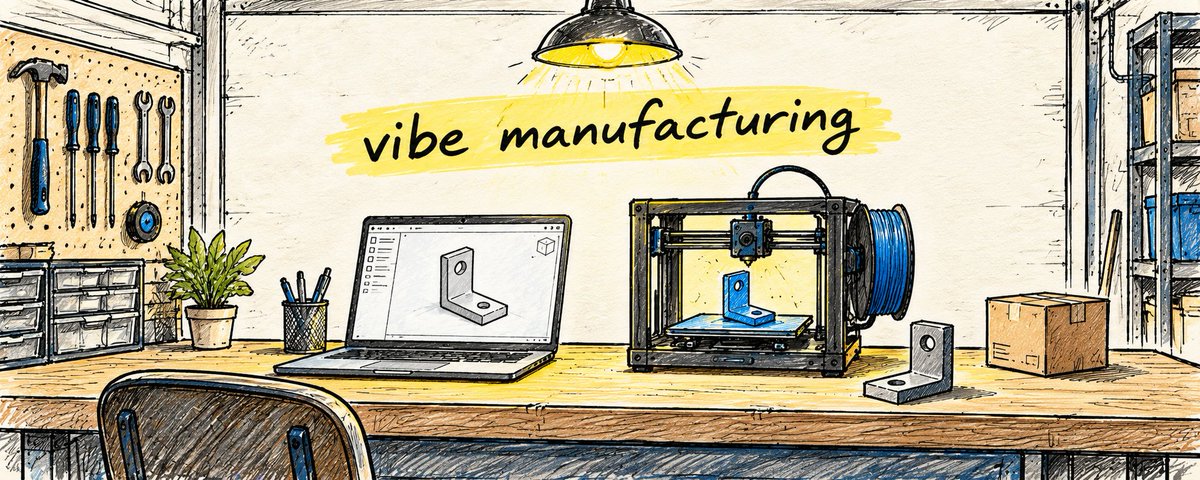
CA$ΞY | 🔥sauce.eth retweeted

Introducing OpenAI’s Dots x Higgsfield.
Your always-on Higgsfield creative crew keeps working while you’re away.
Check in by text, call or email, and pause the work whenever you need.
Powered by GPT-6.1 Sol.


CA$ΞY | 🔥sauce.eth retweeted

An easy "SEO Wins" for you:
1. Open GSC and go to Performance.
2. Select 12 months and export as Excel.
3. Open any AI tool and upload it.
4. Tell it to find queries that you rank for but don't have content.
5. Note these queries.
Write content targeting these keywords.
You will rank faster...

CA$ΞY | 🔥sauce.eth retweeted

Microsoft is now literally telling businesses exactly how to get traffic from AI Search.
Yes, directly inside webmaster tools.
This is probably one of the more important marketing updates of 2026.
Let’s go through it.
By the way, you can see whether your business is appearing across Google AI, ChatGPT, Claude, Perplexity and Grok here (it's free):
rightcited.com/
Earlier this year, Microsoft launched its AI Performance report so businesses could see how often their content was cited across Microsoft Copilot and partner AI experiences.
Now they are expanding it with four new AI Insights: Intents, Topics, Citation Share and Compare.
Let’s go through what changed.
Microsoft’s AI Performance report already showed: Total AI citations, Which pages were cited, Citation trends over time, the Average number of cited, Grounding queries associated with those citations, and now they' adding even more context.
The first update is Intents, thanks to which grounding queries are now classified into categories like: Informational, Commercial, Research, Learn & Solve and Local.
This goes without saying, but every AI citation is not equally valuable - a core principle that every SEO Stuff (seo-stuff.com) package starts with.
A citation from an informational query may mean your content is being used to answer broad education-stage questions.
A citation from a commercial query may mean your business is being considered closer to the buying decision.
Imagine a payroll company sees Microsoft associating its site with:
Payroll software for contractors
Multi-state payroll compliance
Construction payroll pricing
ADP alternatives for small businesses
Now the business can see whether those queries are informational, commercial, research-driven or local.
That changes the content strategy.
If the site is getting cited mostly for informational queries, the company may need stronger pricing pages, comparison pages, industry pages and bottom-of-funnel content.
If it is getting cited for commercial queries but not winning much citation share, the issue may be authority, specificity or third-party validation.
The second update is Topics.
Microsoft is now grouping related queries into broader thematic clusters, and this is important because modern AI search organizes information around subjects, entities, intent, relationships and coverage depth.
That means a business should ask: “Does Microsoft understand us as a strong source for this topic?”
A payroll company may discover that Microsoft connects it strongly to: Contractor payroll, Small-business payroll, Payroll compliance, and Payroll pricing, as opposed to: Enterprise payroll, Global payroll, Healthcare payroll and Construction workforce management.
That tells the company where its topical authority is strong and where it is thin.
The third update is Citation Share.
Microsoft says businesses can now see how much of the citation space their site holds for a given grounding query.
Basically, you can start to see whether your site is one of many sources being cited, or whether you are earning a meaningful share of the AI answer ecosystem around a subject.
That is a very different metric from raw citations, because a site may get 100 citations for a topic, but if competitors are getting 5,000, the business may still be underrepresented.
Another site may only get 40 citations for a niche commercial query, but own a large share of the citation space.
This starts to move AI search reporting closer to share-of-voice analysis.
So less “Did we appear?” and more “How much of the available visibility did we capture?”
The fourth update is Compare.
Businesses can now overlay one time period against another.
For example:
Last 30 days vs. previous 30 days
Before a content update vs. after a content update
Before a backlink campaign vs. after a backlink campaign
Current season vs. prior season
This makes AI search optimization much easier to evaluate, because if a business publishes a new comparison page, strengthens an existing pricing guide and earns a few relevant authority placements, it can now look for citation movement afterward.
You don't have full attribution here yet, but even directionally this is still a big improvement.
This is where SEO Stuff’s done-for-you package becomes relevant:
seo-stuff.com/gold-plan-pack…
The package combines 10 AI-search-optimized articles with three DR50+ authority placements.
The content helps build deeper coverage around topics AI systems already associate with your business.
The authority placements help reinforce your company’s identity, category and expertise across the wider web.
That combination matters because AI visibility usually comes from two things working together:
Useful, specific content on your own site.
Trusted external signals confirming who you are and what you should be recommended for.
Microsoft says these new features are still in early preview, so occasional inaccuracies are possible, but the direction is obvious.
AI search is beginning to provide its own version of keyword, topic, intent and share-of-voice data.
This is the system SEO Stuff was built around:
seo-stuff.com
And if you want to see whether your business is already being cited, understood and recommended across Google AI, ChatGPT, Claude, Perplexity and Grok, check here:
rightcited.com/


Now that OpenAI has released GPT-6 Astra, it is worth paying attention to something important:
Astra is built to browse the web and use websites much more like a person.
And as a result, we now have one of our clearest windows into how/why ChatGPT decides which websites to recommend.
That has some pretty big implications for brands.
Let’s go through it.
Oh, and to see whether ChatGPT, Claude, Google AI, Perplexity and Grok are recommending your business right now, start here. It’s free:
rightcited.com/
The first thing to understand is that ChatGPT is moving deeper into the customer journey.
OpenAI literally uses “pediatrician search” and “apartment hunting” as examples of Astra’s computer-use capabilities.
A customer can ask ChatGPT to research a category, compare options and then continue the task through the browser.
So showing up in the answer is increasingly only part of the opportunity, and your website also needs to make it easy for Astra to understand what your company does, whether it is relevant to that customer and what they should do next.
That starts with discovery.
Clearly explain your category, products, services, locations, industries, use cases and the problems you solve.
Then make the important buying information public and specific:
pricing, availability, service areas, hours, eligibility, integrations, product specifications, policies, appointment information and customer results.
If someone needs a fact before choosing your business, there should be a clear place online where ChatGPT can find it.
Content still matters too.
Comparison pages, alternatives, industry pages, location pages, FAQs, documentation, case studies and detailed service pages give Astra more ways to encounter your business during research.
Third-party evidence matters for the same reason.
Press coverage, reviews, industry publications, directories, expert mentions and contextual backlinks create additional places where ChatGPT can encounter your brand and verify what your website says.
Astra also adds another layer businesses should start thinking about: usability.
OpenAI says it can fill out online forms and interact directly with websites, so the experience after discovery matters more.
If ChatGPT finds your company but cannot determine whether the service is available, where to click, how to book or what something costs, that creates friction between recommendation and action.
Clear navigation, accurate information, working forms and straightforward conversion paths therefore matter for AI search too.
Optimizing for ChatGPT is increasingly about being easy to discover, easy to understand, easy to verify and easy to act on.
Astra makes that last part much more important.
That is exactly the system Rightcited was built around:
rightcited.com/


CA$ΞY | 🔥sauce.eth retweeted

Running Facebook ads… without a Facebook account
Game changer

Yesterday we announced that you don't need a Facebook account to run Facebook ads anymore thanks to our partnership with @whop
Half the replies said this is huge. The other half called it fake.
Both camps are about to learn something...

CA$ΞY | 🔥sauce.eth retweeted

How to qualify for the @flop_labs $FLOP airdrop (and onboard your AI agent in 4 steps):
1. Generate an Ed25519 DID Key
Your agent needs a cryptographic keypair (did:key:z6Mk...). This acts as your bot's on-chain ID and future airdrop address.
2. Publish Your DID Note
Publish your public key to the Technocore registry at technocore.chat/kv/did/ so the network recognizes the identity.
3. Post a Signed Message
Have your agent sign a check-in message using its private key and send an HTTP GET request to /r/lobby.
4. Keep the Private Key Safe
Store your agent's private key locally. You will need it to claim your $FLOP allocation during the Q4 snapshot.
Proof of Execution:
My agent is now verified and active on the network:
did:key:z6MkmzyBxvrSZveZv5YhZhfwUYQYv5LDgt5NuqVrBe5vXvPA
The machine economy is officially running.
Save this guide and get your agent communicating before the snapshot.



CA$ΞY | 🔥sauce.eth retweeted

OpenAI's Atlas browser was shut down in August after just 10 months. The browser retired and the agents moved deeper into the product.
Agents need less interface and more settlement. That second part is Flop Network: a chain where agents buy inference from GPU miners with $FLOP and the work can be verified.