


Action Blue retweeted

I want to begin with a word of thanks, and I mean it sincerely. Starlink has played an enormously important role in maintaining communications in Ukraine since the beginning of Russia’s full-scale invasion. And in February of this year, SpaceX, working with Ukraine, introduced measures to block the unauthorised use of Starlink by Russian forces. This helped counter Russian military operations, including the use of attack drones. We remember this, and we appreciate it.
But I would like to explain what the current controversy is actually about.
Musk argues that Ukraine wants to use commercial Starlink for offensive military operations. He emphasises that Starshield is a separate system controlled by the US government.
However, this explanation does not address the specific question Ukraine has raised: why are Starshield restrictions interfering with Ukrainian interceptor drones designed to protect civilians from Russian aerial attacks?
Russia uses jet-powered Shahed drones that travel at speeds well above 161 km/h. According to Ukrainian military reports, Starshield terminals lose connectivity once they exceed that speed in areas where the restrictions apply. This makes it more difficult to operate interceptor drones that need to catch up with Russian targets. On 12 November, President Zelenskyy explicitly stated that these restrictions allow more Russian strikes to reach their targets, resulting in the deaths of Ukrainian civilians.
So this is not simply about the ability to strike Russian military targets. It is about Ukraine’s ability to intercept a Russian drone heading towards a residential building, a hospital, or a power station. This is defence in the most basic, human sense of the word.
Now, who made the decision?
Musk maintains that Starshield is controlled by the US government and that decisions concerning its military use fall under the Pentagon’s authority. On 21 October, Secretary of State Marco Rubio said he was unaware of the administration having been informed in advance about the restrictions, and that access and speed limits were governed by the relevant commercial contracts. The Wall Street Journal, citing its sources, reported that Musk personally made the decision to impose the restrictions. Reuters, meanwhile, cited other officials who pointed to the White House. The Trump administration denied involvement, while SpaceX disputes reports of new changes to the restrictions in November.
I do not know which of these accounts is correct. But I see an obvious problem: Ukrainian military personnel are reporting restrictions that affect their defensive capabilities, while responsibility for those decisions remains unclear.
This uncertainty has also raised questions in the United States. On 13 November, US senators formally called on Musk and SpaceX to preserve technical records, correspondence, and documents that could establish who authorised the restrictions, when and on what grounds, and whether their consequences for Ukrainian air defence and the civilian population had been assessed.
There is another contradiction.
When asked directly in the interview whether Ukraine actually uses Starshield, Musk responded by saying that Zelenskyy was not telling the truth and that what he really wanted was to use commercial Starlink for offensive operations. Yet back in December 2024, Bloomberg reported on Pentagon contracts with SpaceX providing Starshield services for a total of 3,000 terminals in Ukraine. A US government agency confirmed that figure to Bloomberg. And in October of this year, Musk himself publicly explained that decisions concerning Starshield restrictions fell under the authority of the US government.
This does not prove that every Ukrainian terminal operates through Starshield, but it does establish that Ukraine had access to the system under these contracts. Therefore, accusing Zelenskyy of being untruthful requires a specific technical explanation, not simply a denial.
I also want to acknowledge Elon Musk’s personal role at the beginning of the full-scale invasion. On 26 February 2022, just two days after the invasion began, Mykhailo Fedorov appealed to him to provide Starlink connectivity to Ukraine. Musk responded immediately: the service was activated, and the first shipment of terminals arrived in Ukraine on 28 February. SpaceX had also been preparing to launch the service in Ukraine before the invasion.
This was critically important assistance at a moment when Russia was attempting to destroy Ukraine’s communications infrastructure. The speed of Musk’s response, his personal involvement, and his willingness to provide Ukraine with technology on which communications, defence, and human lives depended deserve genuine gratitude. I want to thank him once again for that.
A few words about history, because accuracy matters here too.
The Maidan was not a coup organised by the United States. It was a months-long popular protest movement that began after the Ukrainian government abandoned preparations to sign the Association Agreement with the European Union. The protests were marked by violence, and dozens of protesters were killed in February 2014. After Yanukovych left Kyiv, the Ukrainian parliament, the Verkhovna Rada, adopted a resolution on 22 February declaring that he had withdrawn from exercising his constitutional powers and calling early presidential elections.
The legal aspects of that decision, the role of external actors, and US diplomatic influence can all be debated. But none of this constitutes evidence that Washington organised a coup. Mr Musk presented no such evidence. Instead, this version of events is one of the central narratives Russia uses to justify its aggression against Ukraine. I find it deeply disappointing to hear it from Elon Musk.
And finally.
Musk speaks about the need to have empathy for those who die in war, including Russian soldiers. I understand this argument: every human life matters. But empathy should not erase the distinction between the responsibility of an aggressor state and the right of a country under attack to defend itself.
Moreover, the moral consequences of restricting communications cannot be judged solely by whether the technology helps carry out strikes. We must also consider how many lives it helps protect.
If a Ukrainian interceptor drone loses connectivity and can no longer catch a Russian attack drone, that does not mean the use of lethal force has been avoided. It means that other people are placed at greater risk — civilians in their homes, in their beds, in the middle of the night.
So my request is simple. Whoever makes these decisions must explain them openly, and responsibility for their consequences must be established. Restrictions on critical communications infrastructure, on which the protection of civilians depends, should not be introduced without proper justification, advance warning, and coordination with those directly affected.
Action Blue retweeted

Putin: “we did not start any wars, we are trying to put an end to this”
Sure ok bro 👍🏽
Let's not make a Blue Tsunami into a gentle squall by breaking into squabbling little cliques.

Hakeem Jeffries calls for unity among Democrats following his 251-11 victory in the party’s speaker nomination vote.
He refuses to back Medicare for All.
Strongly supports Israel and has ties to pro-Israel donors/AIPAC.
Backs the war with Iran.
Do you support his nomination?
8
Action Blue retweeted

It took nearly a year to construct the road arch of the Crimean Bridge—which weighs over 5,000 tons—yet Ukrainian drones and missiles destroyed it in just two nights.
With the German Taurus, it would have happened much faster; but unfortunately, for the past 4.5 years, Germany has not had a Federal Chancellor—it has had Federal Cowards.
Action Blue retweeted

The Times: Ukraine Did Not Use Starlink to Strike the Crimean Bridge. Ukrainians have set up their own communication channels to relay radio signals. The Ukrainian strikes on the Kerch (Crimean) Bridge on November 16–17 were intended to put Russian dictator Vladimir Putin in an awkward position ahead of his upcoming meeting with U.S. President Donald Trump and Chinese President Xi Jinping in China.
As the source noted, these strikes on the Crimean Bridge also proved that Ukraine no longer needs to rely on the Starlink and Starshield satellite communication systems (operated by Elon Musk’s SpaceX) to carry out offensive operations against Russian occupiers. Now, the Ukrainian government has the ability to circumvent recent U.S. restrictions on the use of these systems, the officer added.
“The Americans tried to paralyze our communications to prevent such operations, but this mission proved that we can create our own communication channels to relay radio signals. For the first time in history, we used all these drones to transmit video signals to missiles so they could strike precise targets on the bridge. We have shown that we can carry out such operations without Starlink.”
According to several other Ukrainian military sources cited by the publication, the strikes on the bridge were carried out as part of a complex combined operation involving missile forces and elite drone pilots from the “Ptaki Madyara” Brigade—in coordination with the 1st Special Operations Brigade of the Ukrainian Armed Forces’ Unmanned Systems Forces, the Security Service of Ukraine (SBU), the Ukrainian Navy, and units of the Ukrainian Special Operations Forces.


Action Blue retweeted
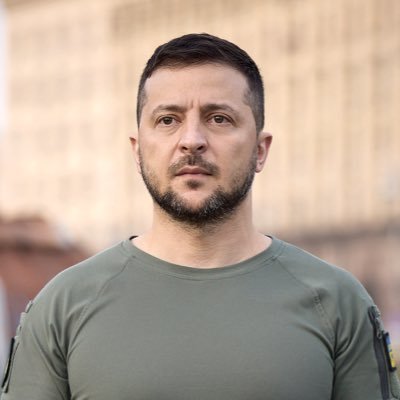
Somewhere around two years ago, there was a lot of talk in America about peace through strength. We hardly hear that anymore. But it is still relevant. Peace comes to those who know how to defend life and do so more effectively than those who seek to destroy it.
If Russia continues to bet so heavily on ballistic missiles, including those from North Korea, it would be fair for our partners to help us balance the scales in defending lives. This means missiles that Europe has and that can strike Russian weapons production facilities with great precision, as well as American technologies that could enable us to strike Russia’s ballistic missile launchers. A Russia without them is a Russia with a reason to end the war as soon as possible. America can help make that happen.
Everyone knows what is needed to achieve this. Everyone understands that it could be effective. But instead of giving us the right to defend ourselves in this way – instead of opening up satellite communications to strike Russian and North Korean ballistic missile launchers near our borders – we see the opposite. The speed limit on Starshield in the temporarily occupied territories remains in place. We are discussing this with the American side.
Action Blue retweeted

Iranians are returning to the streets to protest the regime that controls their lives.
The last time they did this, thousands of them were killed, and the morgues overflowed into the streets.
I want you to really think about that.
Life under the regime is so unacceptable that they are going out to protest, knowing how it could end.
To make a better world, even if they won't see it. This is what true courage looks like.
Action Blue retweeted
The destruction of the Kerch Bridge’s arch and the blockage of the shipping channel by its debris affect far more than Russia’s transport links with occupied Crimea. It triggers a chain of disruptions to maritime and river transport, grain and oil exports, military logistics, and the economies of entire Russian regions. Debris from the bridge blocks the Kerch–Yenikale Canal, cutting off direct access to the Black Sea for the ports of Rostov-on-Don, Azov, Taganrog, Yeysk and Temryuk, as well as occupied Mariupol and Berdiansk. But the consequences extend further. Through the Don and the Volga–Don Canal, the Sea of Azov is connected to the Volga, the Caspian Sea and Russia’s vast network of inland waterways.
The main target of the Ukrainian strike is the military logistics network supplying occupied Crimea. The Kerch Bridge remains an important supply route for Russian forces, and Ukraine will seek to put it permanently out of service. Moscow cannot count on restoring the bridge and shipping through the Kerch Strait without interference while the war continues. The loss of road and rail links forces Russia to reroute cargo through occupied southern Ukraine, where transport routes are already supplying the front. Crimea will not be completely isolated, but Russia will lose an important fallback option for its military logistics. The fewer supply routes remain, the harder it becomes for Russia to supply its troops and hold occupied territory.
The second major blow is to Russian grain exports. According to S&P Global estimates, the route through the Kerch Strait and the Azov–Don system accounted for around 28% of Russian wheat exports in August 2026. This puts more than a quarter of exports of one of Russia’s main agricultural commodities at risk. Some grain can be rerouted through other ports, but this requires rail capacity, freight wagons, grain storage facilities and available terminals. All of this costs money and takes time. Grain will accumulate in storage, export contracts will go unfulfilled, transport costs will rise, and the prices paid to Russian agricultural producers will come under pressure.
It was Russia that blockaded Ukraine’s Black Sea ports in 2022, withdrew from the grain deal in 2023, and continued destroying Ukrainian grain silos, terminals and port infrastructure. It is now also systematically targeting production facilities themselves: in November 2026, Russian strikes shut down Astarta’s soybean processing plant and damaged Kernel’s oilseed crushing plant. The destruction of the power grid further paralyses the processing and storage of agricultural products. Russia is systematically destroying Ukraine’s agricultural supply chain, from production to exports, while trying to push Ukraine out of global food markets. If Moscow now loses the ability to ship its own grain through Kerch, along with grain stolen from occupied Ukrainian territories, this is a direct consequence of the war it launched.
The third blow is to Russian petroleum product exports. Some fuel from refining centres in the Volga region and the Kama basin reaches Black Sea export routes via the Volga, the Volga–Don Canal and the Sea of Azov. Blocking passage through Kerch severs this transport chain. Russian carriers will have to find alternative ports or shift cargo to rail. This means additional costs, delays and competition for transport capacity. All of this comes against the backdrop of Ukrainian strikes on Russian refineries, which have already reduced fuel production and shipment capacity. Novorossiysk’s major oil terminals do not depend directly on the Kerch Strait, but access through the Sea of Azov has been an important export route for some producers in Russia’s interior.
The fourth blow is to the freight transport system as a whole. The problem extends beyond vessels unable to pass through the canal. A ship stuck in port cannot make its next voyage. Grain that cannot be shipped out fills storage facilities. A terminal at capacity stops accepting new cargo. A producer loses a buyer, a carrier loses revenue, and an exporter loses a contract. Even after passage is restored, these losses will not automatically disappear: accumulated cargo will have to be moved, and disrupted schedules will have to be reorganised. In this way, a single blocked canal creates problems for businesses and transport companies far beyond the Sea of Azov.
The fifth blow is to Russia’s railways. Cargo previously transported by water will have to be shifted to overland routes. But the rail network does not have unlimited spare capacity. Moving additional millions of tonnes of grain, petroleum products and other goods requires freight wagons, locomotives, track capacity and port terminals. This additional cargo will compete with existing freight flows, including military shipments. Russian Railways will be able to absorb some of these volumes, but at the cost of delays, higher logistics costs and the displacement of other freight.
The sixth blow is to naval logistics. Through the Volga, the Volga–Don Canal, the Don and the Sea of Azov, Russia has been able to transfer certain small warships and auxiliary vessels between the Caspian Flotilla and the Black Sea Fleet. Blocking the Kerch–Yenikale Canal deprives it of this direct route. The Caspian Flotilla, of course, retains its ability to operate in the Caspian Sea, while other inland waterways maintain connections to northern maritime basins. But the usual route from the Caspian to the Black Sea through the Sea of Azov becomes unavailable to these vessels. Russia loses another means of rapidly redeploying part of its naval forces between theatres of operations.
The seventh blow is to occupied Mariupol and Berdiansk. Russia is trying to incorporate these Ukrainian ports into its own transport system, using them for cargo shipments, military logistics and the removal of resources from occupied territories. Without access to the Black Sea, their role is sharply diminished. Russia will therefore lose the benefits it derives from the port infrastructure it seized during the war.
Moscow must recognise that Ukraine is unlikely to allow it to restore, without interference, transport infrastructure used to sustain Russian aggression. The Kerch Bridge supports Russian military logistics, giving Ukraine every reason to continue strikes aimed at putting it permanently out of service.
This is the central irony: the Kremlin built the bridge as a symbol of Crimea’s annexation, only to create a critical and highly vulnerable transport hub whose damage can paralyse routes deep inside Russian territory. The bridge Putin intended to bind Crimea to Russia forever may now cut off a substantial part of Russia itself from direct access to the Black Sea.


Action Blue retweeted

"Do you believe what happened in Gaza is a genocide?" Mehdi Hasan presses former Israeli official Avi Melamed and gets an unexpected counter-argument involving a secret 2021 Gaza blueprint and October 7 battle instructions.
Mehdi Hasan: So, uh, I said from Israel's perspective, the war in Gaza was a failure. For a lot of people around the world, for most Palestinians, it wasn't just a war, it was a genocide. Uh, it is a genocide. Last month at the UN General Assembly, Netanyahu dedicated an entire speech to not only rejecting the claim that Israel is committing a genocide, uh, but attacking anyone who says that, saying it's a blood libel, it's antisemitic, it's outrageous. Do you believe what happened in Gaza is a genocide?
Avi Melamed: No. What happened in Gaza is tragic. Many innocent lives were lost in Gaza Strip, and I mourn the loss of every innocent person on this planet... When you are talking about genocide, there are three boxes that you have to check. You have to have a formal ideology that calls to kill people for their gender or belief or whatever. You have to have a blueprint of how you're going to do that, and you have to have the execution... When you look at those three boxes and you try to find out who exactly checks all the boxes, the answer is, surprisingly maybe for many people, is that Hamas is checking all the boxes, not Israel.
Mehdi Hasan: They would say that's not the case; they updated their charter. I'm just saying, I'm not arguing about Hamas, but that's what they would say.
Avi Melamed: The second thing is that—here is something, you know, I mentioned earlier the issue of the blueprint... In the end of September 2021, Hamas held a conference in Gaza Strip, in a nice hotel, by the way... It ended up with some 20-articles paper, basically specifically making very clear that most of the people—the Jews in Israel will not survive... So this is the blueprint that nobody is talking about in the Western discussion.
Mehdi Hasan: Unfortunately—sorry, finish.
Avi Melamed: And then there is the last one box that has to be checked, and this is the execution. October 7, of course, was the execution... And I was reading that document, and it's very clear that this document is basically the guiding instructions for the execution of that master plan.
Action Blue retweeted
Grateful to the Security Service of Ukraine, all units of Ukraine’s Defense Forces involved, Ukraine’s Minister of Defense, the Commander-in-Chief of the Armed Forces of Ukraine and the General Staff, and all our weapons manufacturers for an unprecedented operation in response to Russian strikes on our infrastructure.
Today, everyone can see the consequences for the main military crossing from Russian territory into our Ukrainian Crimea. This is the result of the seventh stage of an operation carried out over several weeks, developed and coordinated by the Security Service of Ukraine together with the General Staff of the Armed Forces of Ukraine. Our warriors gradually destroyed air defense systems, radars, electronic warfare equipment, and other designated targets on the way to the final objective. For this, they used “Dovbush,” “Vendetta,” “Da Vinci,” “Sichen,” “Mich-2000,” “Ruta,” “Palianytsia,” “An-197,” “FP-1,” “FP-5 Flamingo,” and “R-360 Neptune.”
Today, at the key stage, the “Palianytsia” drones performed exceptionally well, striking the road section of the bridge, while “Neptune” missiles, “Ruta” drones, and FP-5 drones struck the railway section. Using “Flamingo,” our warriors carried out a precision-guided strike – and the communications uplink worked flawlessly until the very last seconds.
We have repeatedly offered Russia steps toward de-escalation – and every proposal has been met with loud rejection. Russia strikes our infrastructure every day, including bridges in Zaporizhzhia, Dnipro, Kyiv, and the Odesa region. We are restoring our infrastructure. But we are also reminding Russia that war will always return to where it began. Ukraine’s defensive capabilities are strong and will remain so, and we will never leave terror against our cities and people unanswered.
I thank the true warriors of the Security Service of Ukraine, all our Defense Forces, our intelligence agencies, and EVERY manufacturer of weapons effectively used to defend Ukraine, Ukrainians, and our national interests. Glory to Ukraine!


Action Blue retweeted

Damn. This video — if confirmed — shows the devastating destruction to the Kerch Bridge caused by Ukrainian cruise missiles.
It’s a tremendously damaging setback to Putin and his war effort. Just incredible.
#SlavaUkraïni 🇺🇦
Action Blue retweeted

Trump won Michigan by 1, El Sayed won it by 7.
8% Swing.
Trump won Texas by 15, Talarico won by 12%.
27% Swing.
The reason we're calling it an underperformance, Mehdi, is because Progressive Number Less Big.

Action Blue retweeted

🚨 HOLY HELL: Ukraine's President Zelenskyy just EXPOSED that someone INSIDE the Trump Administration — or allied with Elon Musk — is once again preventing Ukraine from using StarShield's technology.
Putin First must stop!!
Action Blue retweeted
In October, Russia suffered more than 50,000 casualties – killed and wounded. And as of today, we have disabled more than 55% of Russia’s oil refining capacity. This is our justified response to Russia’s refusal to de-escalate and its strikes on Ukraine's energy infrastructure.


Action Blue retweeted

Hey @elonmusk! A message from Poland’s Foreign Minister, @sikorskiradek
– Poland pays $50 MILLION a year for 29,000 Starlink terminals for Ukraine. We're your customers, Elon. Customers expect a service, not political games. And remember: politics is harder than you thought. 😉
One more thing. Did any Russian money help you buy Twitter? Care to answer, Elon? 🎥👇
Watch our exclusive interview at @sprawdzamto_pl
Action Blue retweeted

“If every congressional map had been drawn fairly, with party-blind nonpartisan methods, Democrats might have come close to winning a veto-proof two-thirds majority in the House, with the party winning nearly 20 additional districts in Texas, Florida and Georgia alone.” nytimes.com/2026/11/13/upsho…
